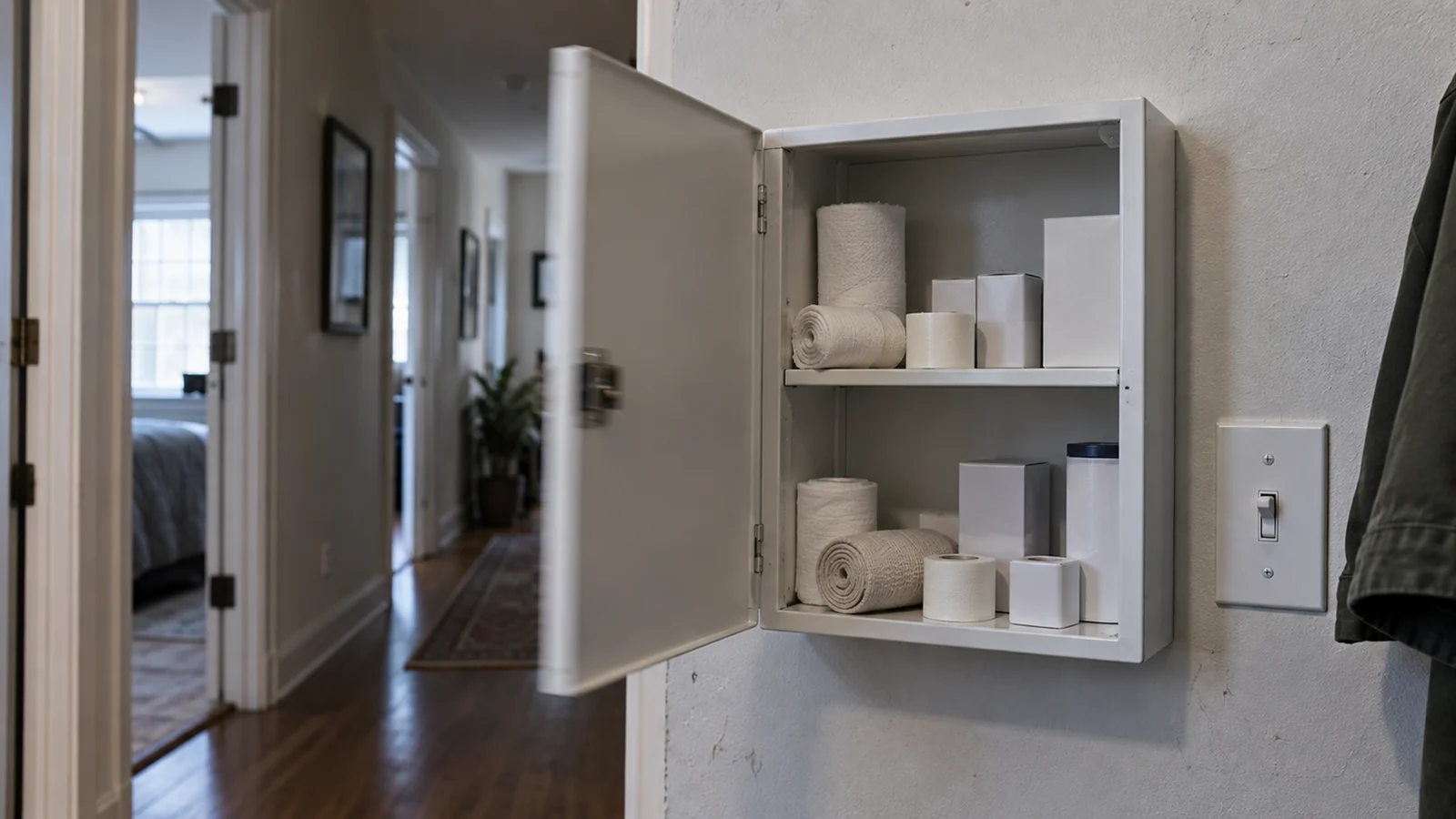

The home first aid kit most households own lives in a bathroom cabinet, which is the one room in the house where it shouldn't be. Steam degrades adhesives and paper packaging, and the bathroom is rarely where anyone gets hurt.
Where it lives matters more than what it cost. A good kit two floors away loses to a mediocre one in the kitchen drawer, every time.
How We Chose
We haven't tested these. OutdoorGearLab bought and tested 15 kits, weighed each one and rated them on quality, assortment, versatility, durability and weight. Their home-use pick and the flaws they documented are cited here by name. Prices are list prices checked in September 2026.
Where the Kit Should Live
Kitchens produce the burns and the knife cuts. Stairs produce the sprains. Bathrooms produce steam, which is the one thing a kit can't tolerate.
Keep the main kit in the kitchen, at adult chest height, in a cupboard that isn't above the hob. Then keep a second, smaller one wherever the house is awkward — a basement workshop, a garage, an upstairs landing if the bedrooms are far from the kitchen.
Tell everyone where it is. A home first aid kit that only one person can find is a personal kit.
The Home First Aid Kit Essentials
A domestic kit is not a wilderness kit scaled down. It is deeper on the boring things and thinner on the dramatic ones.
- Adhesive bandages in four sizes, including knuckle and fingertip shapes. This is what actually gets used.
- Sterile gauze pads and a roll of tape for anything a bandage won't cover.
- Nitrile gloves, several pairs. Buy more than you think.
- Shears that cut. Test them in the shop if you can.
- Antiseptic wipes and an antibiotic ointment.
- A digital thermometer — the one item almost no kit includes and every household needs.
- Painkillers and an antihistamine, with the expiry written on the outside of the case.
- A cold pack, which is worth the bulk at home even though it isn't in a backpack.
- A written medication list for the household, and the number for Poison Control: 1-800-222-1222.
The full inventory, sized by kit and printable, is in First Aid Kit Checklists & Contents.
| Kit | List price | Why it suits a house, and what it gets wrong |
|---|---|---|
| Johnson & Johnson All-Purpose | $25 | Best value for home use, score 68. Deep on bandage sizes, includes acetaminophen, and doubles as the stock you refill smaller kits from. The case is flimsy — testers described the insert tray as disposable and expected the latches to fail. Fine sitting in a cupboard, poor for travelling |
| Surviveware Small | $75 | Best overall, score 80. Trauma shears, forceps, CPR mask, watertight zippers, restocking service. No medication at all, and the heavy-duty zips are arguably overkill indoors |
| Be Smart Get Prepared 326-Piece | — | Hard plastic case that wall-mounts, which suits a garage or workshop. A smaller 110-piece version exists. Judge it on the contents rather than the count |
Medication, Dates and the Part Everyone Skips
Dressings last years. Medication doesn't, and neither does the adhesive on cheap bandages.
Write the earliest expiry date from inside the kit on the outside of the lid in marker. That single habit turns an annual audit into a two-second glance. Check it when you test the smoke alarms — one date, one job, twice a year.
Keep prescription medication out of the kit itself unless a pharmacist has told you otherwise, but keep the written list in it. In an emergency the list is what a paramedic asks for, and it is the item most households have never made.
If anyone in the house has a serious allergy, a heart condition or a power-dependent device, that changes the kit and the plan around it — see Senior Emergency Preparedness for the version built around medication and mobility.
Move the kit to the kitchen this week and write the date on the lid. That's the whole job.
FAQ: Home First Aid Kits
What should be in a home first aid kit?
Adhesive bandages in several sizes, gauze and tape, nitrile gloves, shears, antiseptic wipes, antibiotic ointment, a digital thermometer, painkillers, an antihistamine, a cold pack and a written medication list.
Where should I keep it?
The kitchen, at adult chest height, away from the hob. Not the bathroom — steam degrades adhesives and packaging, and few injuries happen there.
How often should I check the contents?
Twice a year, tied to testing the smoke alarms. Write the earliest expiry date on the outside of the case so the check takes seconds.
Should prescription medication go in the kit?
Generally no, unless your pharmacist advises it. Keep the written list of what everyone takes in the kit instead — that is what emergency services will ask for.
Is an expensive kit better for a house?
Not necessarily. The best-value home kit in OutdoorGearLab's test costs a third of the overall winner, because a domestic kit is judged on depth of basics rather than on a waterproof case.
Sources
- OutdoorGearLab — first aid kit testing, 15 kits purchased and field tested, updated April 2025
- American Red Cross — recommended contents for a home first aid kit
- Poison Control (1-800-222-1222)
- Manufacturer specifications and list prices, checked September 2026
This page is general information, not medical advice. When an emergency is underway, follow 911 dispatchers and emergency services before any general guidance. See our Editorial Policy and Sources & Fact-Checking.