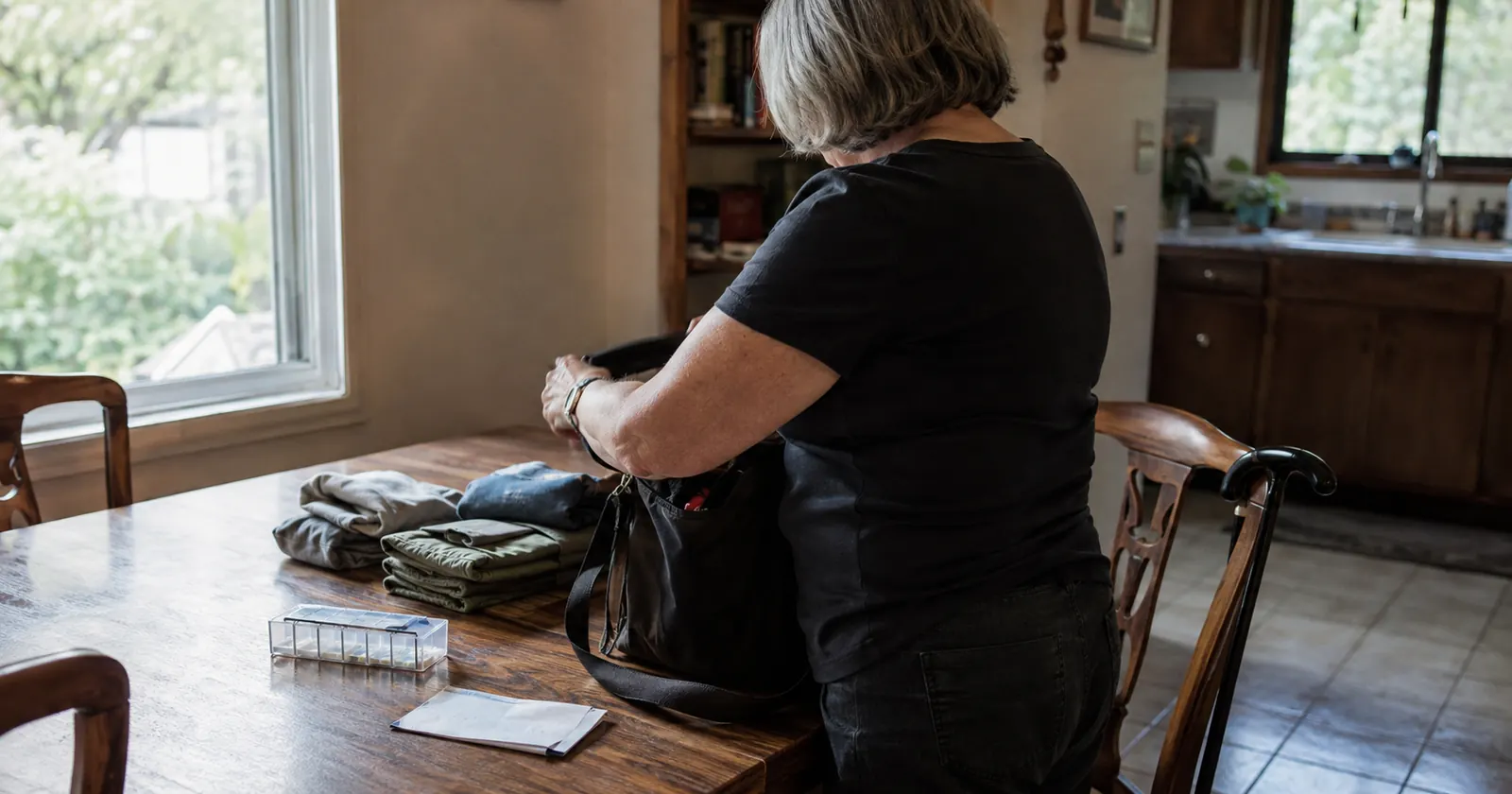

Most preparedness advice quietly assumes you can carry a five-gallon water container up a flight of stairs, drive yourself out of town, and go three days without anything that plugs in. Take those three assumptions away and a lot of standard advice stops being useful.
The good news is that the structure doesn't change. What changes is medication, power, mobility and who's coming to help — and those four are worth solving properly, because they're the ones that turn an inconvenience into an emergency. Standard household preparedness still applies as written.
Medication Is the First Thing to Solve
A week without power is uncomfortable. A week without a prescription can be dangerous, and running short is a well-recognised problem after prolonged outages and evacuations.
Three things to do, none of which you do alone:
- Ask the pharmacy about an emergency refill or an extended supply. Many will authorise one ahead of a known event, and some jurisdictions require it during a declared emergency. This is a conversation to have now, not during.
- Keep a current written list — drug, dose, timing, prescriber — in the go bag and in a wallet. If someone else ends up managing your care for a day, that list is the whole handover.
- Ask your prescriber specifically what to do if a dose is missed or delayed for each medication. The answer is different for each one, and it's their call, not something to work out in the moment.
Never stretch a prescription by skipping or halving doses to make it last. If supply is genuinely running short, contact the prescriber or pharmacy — during a declared emergency there are usually mechanisms for exactly this.
If something needs refrigeration
Insulin and some other medications have specific storage requirements and specific rules about what to do after a temperature excursion. Get those rules from the pharmacist or the manufacturer's leaflet and write them on the same sheet as the medication list. A cooler and gel packs buy hours, not days.
Anything That Plugs In and Matters
Oxygen concentrators, CPAP, powered wheelchairs, stair lifts, hospital beds, nebulisers. If a device matters and it plugs in, the outage plan has to be built around it specifically.
Start with the two free steps, and I'd make both calls before buying anything at all. Ask your electric utility what programme they run for customers who depend on electricity for medical reasons — many have a medical baseline or medical-needs register. What it provides varies: advance notice of planned outages, a different rate, or simply being flagged in their records. Ask what it does and does not guarantee — it is not a promise of faster restoration.
Then call the device supplier and ask what their own backup guidance is. The answer is device-specific and they're the ones who know it.
Then the equipment, in that order — the backup plan comes first, the hardware second. Get the device's power requirement from the manufacturer's specification, not from an estimate, and ask the supplier what backup they recommend and support. Some devices have their own battery packs or DC options designed for this, which may beat a general-purpose unit.
A portable power station matched to that requirement is one option. What matters is that the plan is medically appropriate and agreed with the people responsible for the device — including what you do if the backup runs out, which is usually to go somewhere with power rather than to improvise.
Getting Out, When Getting Out Is Harder
Evacuation advice usually assumes a car and a driver. If either is missing, the decision point moves earlier — a lot earlier.
Write down, on the plan itself: who is driving, what the backup is if that person is at work, and whether your county runs a transportation assistance register for people who can't self-evacuate. Many do, and registration is done in advance, not on the day.
Mobility equipment goes on the list too. A spare cane, wheelchair cushion, hearing aid batteries, glasses, a charger for anything rechargeable. Here's the thing about hearing aids in particular: without them, a warning siren and a knock at the door both stop working, so batteries belong in the bag rather than in a drawer.
Keep the go bag itself light. A bag nobody can lift is a bag that gets left behind, and I'd rather see a small one by the door than a proper one in a cupboard. My rule of thumb: if it can't be carried down a flight of stairs in one trip, it's not a go bag, it's a box.
Who Is Actually Coming
This is the part families assume and rarely write down. Name the person who checks in, and name the backup for when that person is two hours away or unreachable. Then tell both of them.
Give at least one neighbour the same information: that you're here, what you need if the power is out, and how to reach family. Neighbours may well be the first people able to help, and they can only help with what they know.
Keep the medication list with your other paperwork — Emergency Documents covers organising it, and a home first aid kit should be reachable without a ladder.
If you do one thing this week, make it the phone call to the utility about the medical register. It's free, it takes ten minutes, and it's the one that quietly changes what happens to you during a long outage.
FAQ: Emergency Preparedness For Seniors
How much medication should I keep on hand?
Ask your pharmacist and prescriber — the right answer depends on the medication and on local rules about early refills. Many people can build a modest buffer by refilling a few days early each cycle, but that's a conversation to have with them rather than something to arrange yourself.
Does FEMA have specific guidance on emergency preparedness for older adults?
Yes. FEMA and Ready.gov both publish guidance for older adults and people with disabilities, covering support networks, medical devices and evacuation assistance. Worth reading alongside this one — they cover the official programmes, we cover the domestic detail.
What if I can't evacuate on my own?
Register in advance with your county or local emergency management office — many run transportation assistance or special needs registers. Registration is done ahead of time, not during an event.
Do I need a generator for a CPAP or oxygen concentrator?
Not necessarily a generator. A portable power station sized to the device is often the safer indoor option, since generators can never be run inside. Confirm the power requirement with the device supplier before buying anything.
What gets missed most often in disaster preparedness for seniors?
In our experience writing these guides, the written medication list. Kit and contacts usually exist in some form; the medication list often doesn't, and it's the piece other people need in order to help.
Sources
- Ready.gov — Older Adults
- FEMA — disability and access guidance
- CDC — emergency preparedness for people with chronic conditions
- American Red Cross — preparedness for older adults
- State and county emergency management offices
This is general information, not medical advice. Decisions about medication, dosing and medical devices belong to your prescriber, pharmacist or supplier. When a warning is active, follow local authorities and official emergency instructions first. See our Editorial Policy and Sources & Fact-Checking.