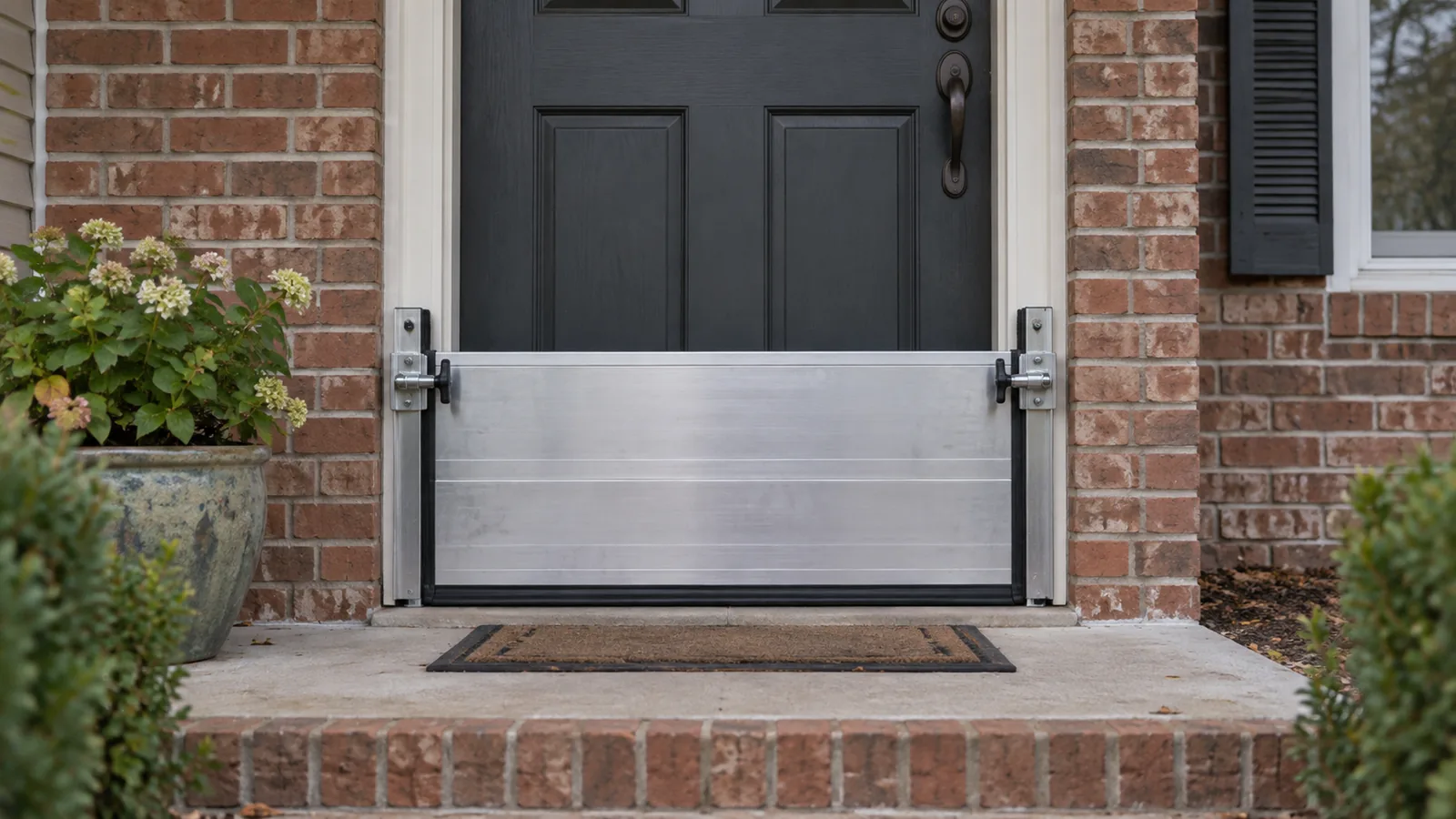

A flood barrier buys you inches, and inches are usually what the argument is about. The honest framing is that barriers are worth it for shallow, short-duration water and useless against the deep, fast kind.
Knowing which of those your house faces is the decision. Everything else is product comparison.
How We Chose
We haven't tested barrier products and we don't rank brands here. This page works from published flood mitigation guidance and from the physics that decides whether any of it helps: depth, duration, and where the water actually enters.
Where a figure would be manufacturer-dependent — how many inches a particular product holds — we say to check the rating rather than inventing a number, because those genuinely vary.
What a Flood Barrier Can and Can't Do
Every product in this category does the same job: hold shallow water away from an opening for a few hours.
Door and airbrick barriers are panels or covers that clamp or slot into a frame with a seal. They're quick to fit if the fixings are already installed and they're rated to a stated depth. For a house that gets four inches through the front door twice a decade, they're the right answer.
Water-filled barriers are long tubes filled from a hose, using the weight of water to hold water back. A water filled flood barrier is unbeatable on cost per metre for protecting a driveway or a long frontage, and it needs space, time and a hose to deploy.
Sandbags are slow, heavy, leak steadily and need dozens of bags for one doorway. They are also available everywhere, work on uneven ground, and are frequently distributed free by councils when water is forecast. Worst option that works, and sometimes the only one.
Now the limits, which matter more than the comparison.
Depth. Beyond roughly knee height the pressure becomes a structural problem rather than a sealing one, and a successfully sealed house can be damaged by the imbalance. This is the point where flood protection for homeowners stops being about keeping water out.
Duration. Barriers are rated for hours. Water standing for days finds its way through walls and under slabs regardless.
Route. This is the one that catches people. Water rises through floor slabs, comes up drains and toilets, and enters through air bricks and cable ducts. A perfectly sealed front door with an open drain behind it achieves nothing.
The Measures That Usually Matter More
Flood protection products for homes get the attention, and the unglamorous work does more.
A sump pump with battery backup. For any house with a basement or below-grade space, this does more than any door product. A mains-only pump fails exactly when the power does, which is exactly when it's needed — the backup is the part people skip and then regret.
Non-return valves on drains. Cheap, invisible, and they stop the sewer backing up into the house, which is a common and revolting failure mode.
Raise what can be raised. Boiler, electrical panel, sockets, washing machine, water heater. Moving plant above the expected flood level converts a rebuild into a clean-up.
Regrade and clear. Ground sloping toward the house, blocked gullies, downpipes discharging at the wall. These cause more domestic water ingress than rivers do.
Choose materials for the ground floor if you're renovating anyway — tiles over carpet, closed-cell insulation, solid rather than chipboard.
Getting It Installed
Flood barrier installation, sump pump installation and sump pump repair are trades where the quality varies enormously and the consequences are invisible until it matters.
Ask the same short questions each time. What depth and duration is this rated for, in writing? A barrier without a stated rating is a piece of plastic. Where else does water enter? A contractor who quotes for a door without mentioning air bricks and drains is selling a product, not solving a problem — a proper flood survey looks at the whole envelope. What happens when the power fails? For any pump, the only acceptable answer involves a battery.
Then the ordinary checks: insurance, references you actually call, and whether your insurer recognises the measure — some reduce premiums for documented resistance work, and that's worth asking before rather than after.
Whether your property needs any of this is a different question, answered by Flood Maps & Zones. And the free measures — moving the irreplaceable upstairs, photographing everything, checking cover — are in Flood Preparedness, which is where to start.
Test your sump pump this weekend. If it doesn't have a battery backup, that's the next purchase.
FAQ: Flood Barriers & Home Protection
Do flood barriers actually work?
For shallow water over a few hours, yes. Beyond roughly knee height, and for water standing for days, they stop being effective and can create structural problems.
What is a flood barrier?
A panel, cover or water-filled tube that seals an opening against shallow water. Door barriers clamp into a frame; water-filled types use the weight of water to hold water back.
Are sandbags any good?
They're slow, heavy and leaky — the worst option that works. They're also available everywhere, cope with uneven ground and are often distributed free when water is forecast.
Why does water still get in?
Because doors aren't the only route. Water rises through floor slabs, backs up through drains and toilets, and enters through air bricks and cable ducts. Sealing one opening achieves little on its own.
Do I need a battery backup for my sump pump?
Yes, if you're relying on it. Flooding and power cuts arrive together, and a mains-only pump stops exactly when it's needed.
Should I stay to manage the barriers?
No. Property protection is not life safety. If an evacuation order covers you, go — a house can be repaired.
Sources
- FEMA — homeowner's guide to retrofitting and flood mitigation measures
- FEMA — property protection, dry floodproofing limits and structural pressure
- National Weather Service — flood safety
- Manufacturer published depth and duration ratings, which vary by product
This page is general information, not engineering or insurance advice. Verify requirements with a qualified professional and your insurer. When a warning is active, follow local authorities and emergency services before any general guidance. See our Editorial Policy and Sources & Fact-Checking.