
Flood preparedness is unusual among hazards because the most valuable thing you can do costs nothing and takes an afternoon: find out whether your home floods, and move what matters above the line.
Flooding is also the most common disaster in the United States, and the one most households assume doesn't apply to them. A large share of flood claims come from outside the high-risk zones.
Before Anything Happens
This is where the flood preparedness plan earns its keep, because almost none of it can be done quickly.
Check whether you're covered. Standard homeowner and renter policies exclude flood damage. Flood cover is bought separately, and new policies do not take effect immediately — there's a waiting period, which is exactly why this cannot be arranged when rain is forecast. Renters can insure contents even when the building isn't theirs.
Look up your flood zone. Not to decide whether to bother — plenty of flooding happens outside mapped high-risk areas — but because it tells you what your lender and insurer will require. How to read the map is in Flood Maps & Zones.
Move what can't be replaced. Documents, photographs, hard drives, anything with sentimental value. Off the basement floor and ideally upstairs. This costs nothing and is the single most effective thing on the page.
Photograph the house and contents. Room by room, with serial numbers, stored somewhere that isn't the house. Insurers ask for pre-loss evidence and almost nobody has it.
Find the shut-offs. Water, gas and the electrical panel — and make sure more than one person in the household knows where they are.
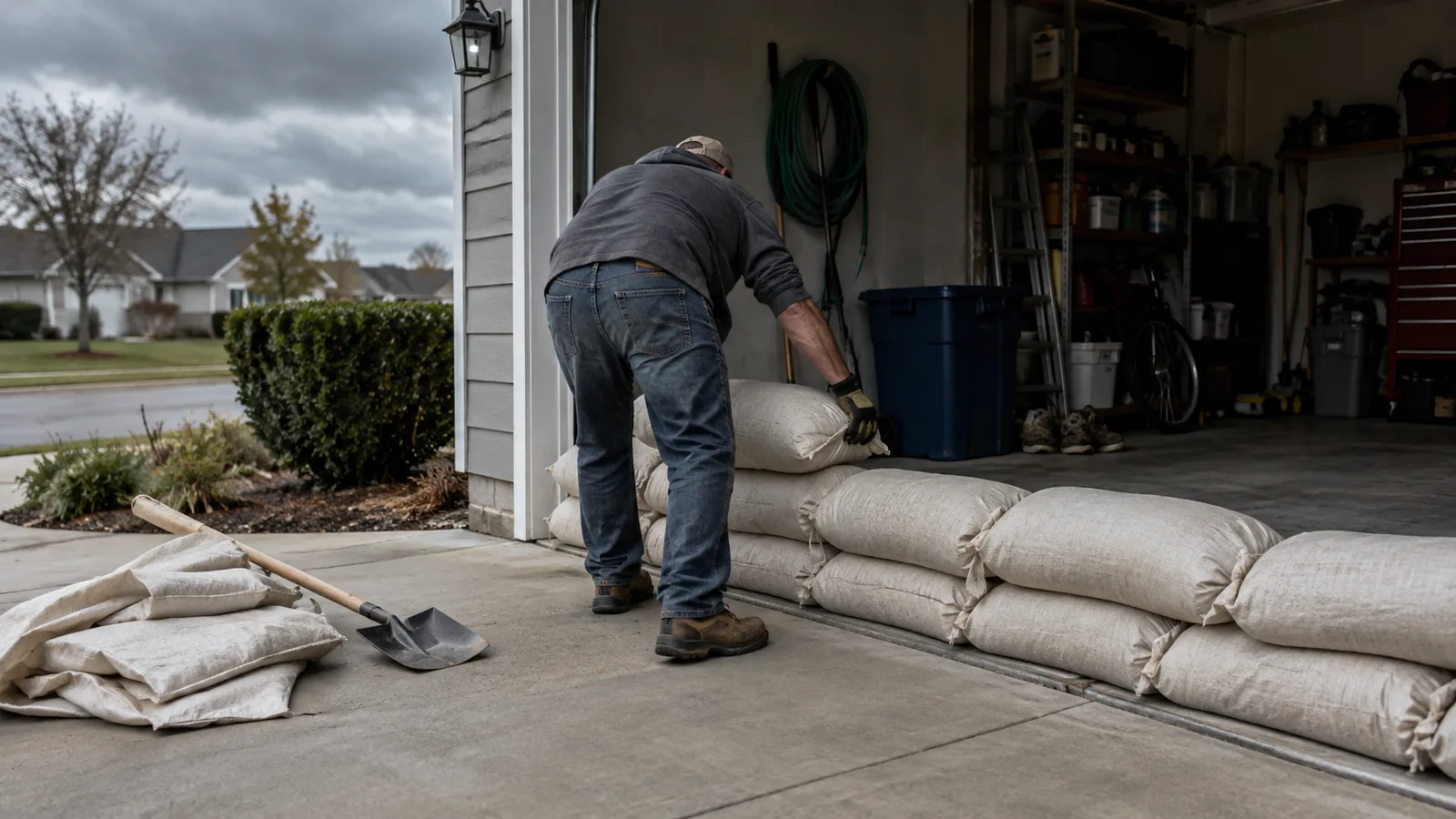
Physical protection for the building itself — barriers, seals, sump pumps, raising equipment — is a separate and more involved decision, covered in Flood Barriers & Home Protection.
When Water Is Forecast
The flood preparedness tips that matter in the last hours are short, because there isn't time for a long list.
Move vehicles to higher ground early — a car on a slope is a car you still own. Bring in or tie down anything outside that floats. Raise furniture onto blocks and lift rugs if the ground floor is at risk. Charge everything. Put the documents in the bag rather than the drawer.
If you have a sump pump, test it now rather than discovering it's seized. If it's the only thing between your basement and a foot of water, it deserves a battery backup.
And clear the drains you're responsible for — gutters, gullies, the grate at the bottom of the drive. Localised flooding is frequently a blocked-drain problem rather than a river problem.
What to do when the alert itself arrives, and what the wording means, is in Flash Flood Warnings.
Afterwards
The clean-up is where the second wave of harm happens, and where the money decisions are made badly under pressure.
Don't enter until it's safe. Structural damage, live electricity and contamination are all invisible from the doorway. If the power was on when the water arrived, have it confirmed off before going in.
Photograph before you move anything. Wide shots and close-ups, including standing water levels against walls. Then keep every receipt.
Ventilate and dry fast. Mould establishes within a couple of days in warm conditions, and the difference between a dry-out and a rebuild is usually how quickly the water came out.
Choosing help. Water damage restoration and basement flood cleanup are trades where the good firms are booked and the bad ones knock on doors. Ask for proof of insurance rather than a verbal assurance, get the scope in writing — extraction, drying, and any reconstruction are separately priced — and be cautious with anyone demanding cash up front or asking you to sign over an insurance claim before you've spoken to your insurer.
Call your insurer before committing to anything beyond making the property safe. Emergency flood cleanup to prevent further damage is usually covered; a full reconstruction agreed on the doorstep may not be.
Move the photographs upstairs this weekend. It costs nothing and it's the part nobody regrets.
FAQ: Flood Preparedness
Does my home insurance cover flooding?
Almost certainly not. Flood cover is a separate policy, and new policies carry a waiting period before they take effect — so it can't be bought as water is forecast.
I'm not in a flood zone. Do I need to worry?
Yes. A substantial share of flood claims come from outside mapped high-risk areas. The maps describe insurance and building requirements, not a guarantee.
How deep does water have to be to be dangerous?
Six inches of moving water can knock an adult over. Twelve inches carries away most cars, and two feet carries away SUVs and pickups.
What should I do first?
Move irreplaceable things off the lowest floor, photograph the house, and check whether you have flood cover. All three are free or cheap and none can be done quickly later.
Is floodwater dangerous to touch?
Treat it as contaminated — sewage, fuel and chemicals are routinely present, and submerged electrics may still be live. Protective clothing for clean-up, and wash afterwards.
How do I choose a flood cleanup company?
Proof of insurance in writing, a written scope separating extraction, drying and reconstruction, and a call to your insurer before signing anything. Be wary of unsolicited callers wanting cash up front.
Sources
- National Weather Service — "Turn Around Don't Drown" and flood safety
- FEMA and the National Flood Insurance Program — coverage, waiting periods and flood risk
- Ready.gov — floods
- CDC and EPA — floodwater contamination and mould after flooding
This page is general information and not insurance advice. When a warning is active or an emergency is underway, follow local authorities, National Weather Service alerts and emergency services before any general guidance. See our Editorial Policy and Sources & Fact-Checking.