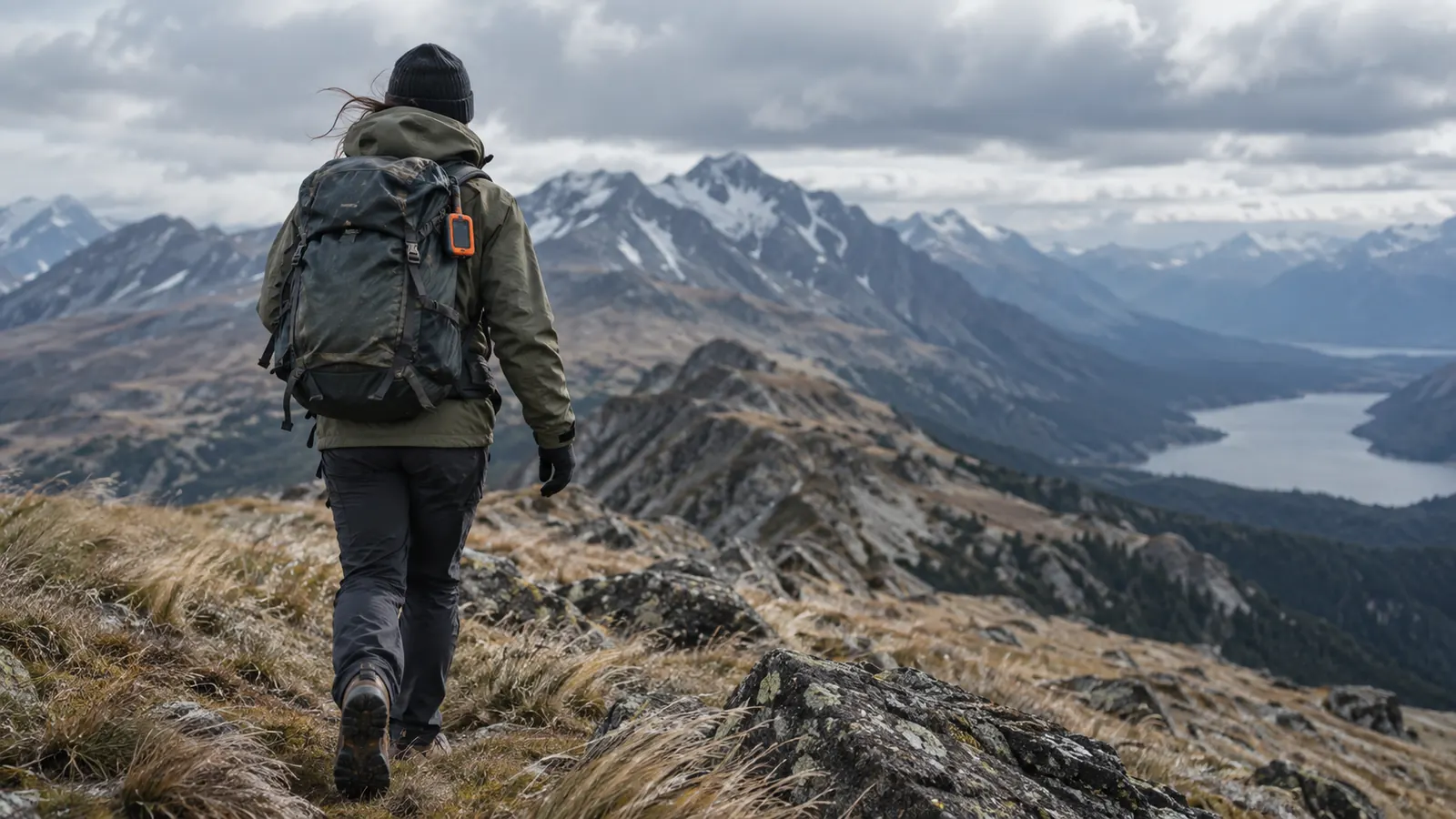

A satellite messenger is the only device on this site whose entire purpose is to work where nothing else does. No towers, no signal bars, no network — just a view of the sky.
It's also the only one with a running cost, and the subscription is where most of the decision actually lives.
How We Chose
We haven't taken these into the backcountry ourselves. GearJunkie and Backpacker both publish comparative testing of satellite messengers with hands-on use in the field, and their 2026 roundups are the basis for what's described here, alongside manufacturer specifications for coverage and subscription terms.
Coverage claims and plan structures change frequently in this category. Check the current terms before buying — anything quoted here about pricing structure is a shape, not a price.
What You're Actually Buying
A satellite messenger does three things. It sends short text messages when there's no cell coverage, it tracks your position for people watching at home, and it has an SOS button that reaches a professional coordination centre.
The SOS is the reason to own one. Pressing it contacts a monitoring service that talks to local search and rescue on your behalf, with your coordinates — which is a fundamentally different situation from being lost and unreachable.
The distinction that matters most across satellite messenger devices is one-way versus two-way. A one-way beacon sends a distress signal and you have no idea whether anyone heard it. A two-way device lets the coordination centre reply — confirm they're coming, ask what's wrong, tell you to stay put. In a real incident that changes everything about the hours that follow.
The second distinction is the constellation. Iridium's network covers the entire planet including the poles. Others have regional gaps, which don't matter on a Colorado trail and matter enormously at high latitude or offshore. If you're going somewhere remote, check the coverage map for that specific place rather than trusting the word "global".
The Subscription Is the Real Decision
Dedicated messengers — the inReach family, Zoleo, SPOT — all require an active plan to send messages, track or use SOS. A device sitting in a drawer with a lapsed plan is inert, and people do get caught by this.
Plans generally scale by how many custom messages you get and how often tracking pings. The useful thing to know is that most providers allow you to suspend or downgrade in the off-season, which makes the annual cost of occasional use much lower than the monthly headline suggests. If you hike four weekends a year, look for that option specifically.
Then there's the phone question. Recent iPhones and some Android handsets include emergency SOS via satellite at no extra cost for an introductory period, and for a lot of people that's genuinely enough. It is emergency-only or close to it — not a tracking and messaging service — but if your worry is a car breakdown on a road with no bars, it may cover you without buying anything.
A satellite messenger comparison that ignores this is out of date. Check what your phone already does first, then decide whether you need the extra.
Who Actually Needs One
The honest answer is: fewer people than the marketing suggests, and absolutely some.
Worth it if you hike, hunt, ski, paddle or ride beyond coverage; if you work alone in remote places; if you drive long empty roads in winter; or if you sail. In those situations it's one of the highest-value items you can carry.
Probably not for household preparedness. In a hurricane or a grid failure the cell network usually returns before anything else, and the money buys more resilience spent on water, power and light. That trade-off is covered in Emergency Kits, Gear & Shelter.
For staying in touch with people nearby rather than reaching the outside world, the cheaper answer is Two-Way Radios & Walkie-Talkies. And whichever you choose, it only works if someone at home knows the plan — Emergency Communication Plans covers that half.
Check what your phone already does, then decide. That one step saves a lot of people a purchase they didn't need.
FAQ: Satellite Messengers
Do satellite messengers need a subscription?
Yes. Dedicated devices require an active plan to message, track or use SOS. Most providers let you suspend it out of season, which matters if you only go out a few times a year.
Is my phone's satellite SOS enough?
For emergency contact on a road with no coverage, often yes. It isn't a tracking and messaging service, so it doesn't replace a dedicated device for regular backcountry use.
What's the difference between one-way and two-way?
A one-way device sends a distress signal and leaves you guessing. A two-way device lets the coordination centre reply — confirm help is coming, ask what happened, tell you to stay put.
Do they work everywhere?
That depends on the constellation. Iridium covers the whole planet including the poles; others have regional gaps. Check the coverage map for where you're actually going.
What happens when I press SOS?
A monitoring centre receives your position and coordinates with local search and rescue. Stay where you are unless you're in immediate danger — moving afterwards makes you harder to find.
Do you test these devices?
No. This page uses GearJunkie's and Backpacker's 2026 field testing plus manufacturer coverage and plan documentation, and flags where terms change often.
Sources
- GearJunkie — satellite messenger testing, 2026
- Backpacker — satellite communicator testing, 2026
- Manufacturer documentation for coverage, constellations and subscription terms, checked September 2026
- Apple and Android published documentation on emergency SOS via satellite
Coverage, plans and pricing change frequently; verify current terms with the provider before buying. This page is general information. When an emergency is underway, follow emergency services and local authorities before any general guidance. See our Editorial Policy and Sources & Fact-Checking.