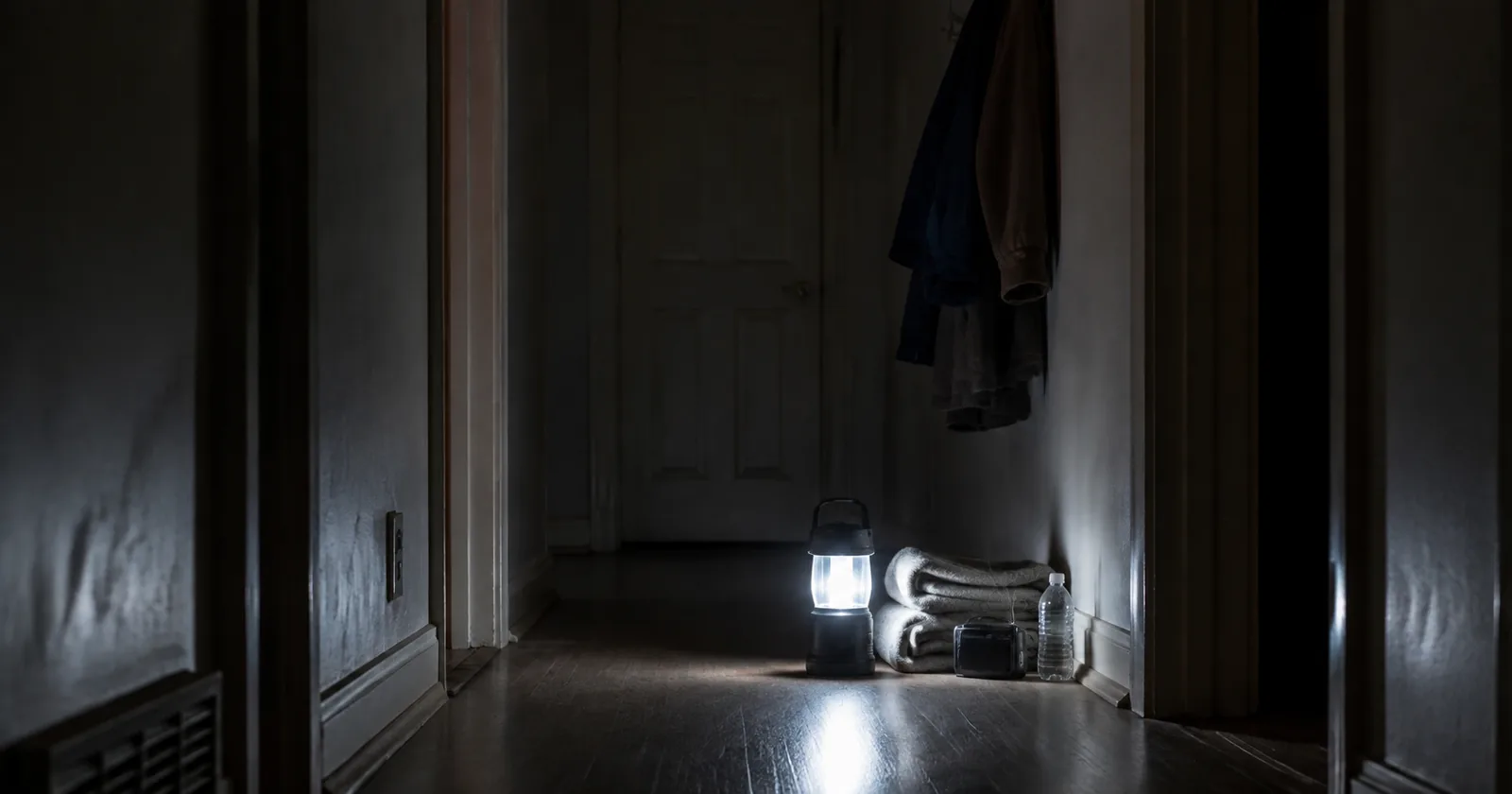

To shelter in place is to stay where you are and make that place safer, instead of travelling through the danger to get somewhere else. It's the right call more often than people expect, and it's given as an instruction by authorities for a reason.
The part that trips people up is the room. There is no single safe room in a house. The best place for a tornado is close to the worst place for a chemical release, and knowing which is which is much of the job.
When Staying Beats Leaving
Evacuating puts you outside, in a vehicle, in traffic, in whatever the hazard is. That's worth it when the danger is where you are and there's time to go. It stops being worth it when the danger is between you and everywhere else, or when there's no time.
Authorities generally tell you to shelter in place when a hazard is passing through quickly, when it's airborne, or when moving people would put more of them in harm's way than leaving them indoors. Chemical spills, some fires, severe wind and radiological events often fall into that group.
Your job before any of that happens is to know which room you'd use for each type, and to have a way of hearing the next instruction.
Which Room, by Hazard
This is the section worth reading before you need it, because two of these are opposites.
| Hazard | Where to go | Why |
|---|---|---|
| Tornado, high wind | Basement, or lowest floor in a small interior room — bathroom, closet, hallway. No windows. | You want as many walls as possible between you and flying debris |
| Chemical release outdoors | An upper-floor interior room with the fewest windows and vents | Many hazardous vapours are heavier than air and settle low |
| Radiological or fallout | Basement, or the centre of the building, as far from exterior walls and the roof as you can get | Distance and dense material between you and the source is what provides protection |
| Wildfire smoke, poor air | Any interior room you can keep closed, with filtration if you have it | The goal is fewer air changes, not depth in the building |
The tornado room and the chemical room are the pair to remember. Going to the basement during a chemical release puts you where the vapour collects. Going upstairs during a tornado puts you where the roof is.
Neither is a judgement call in the moment. Decide both now, write them on the plan, and make sure the household knows which is which.
Sealing a Room, and When Not To
Sealing is for airborne chemical hazards. It's not something you do for a tornado, and it isn't a general-purpose improvement — a sealed room has a limited amount of air in it, which is why it's a short-term measure you end when you're told to.
The method is simple. Close all windows, doors, fireplace dampers and vents. Turn off anything that moves air between inside and outside: air conditioning, forced-air heating, extractor fans. Then close the interior door and use plastic sheeting and duct tape over that door, any vents, and any window in the room.
Keep the pre-cut plastic and the tape with the rest of your supplies rather than in a garage, because cutting sheeting to size during an alert is not a plan. And keep a radio in the room with you — sealing works precisely because it's temporary, so you need to hear when it's over.
What to Have in the Room
Whatever room you end up in, the same short list applies. It's a subset of your 72-hour kit rather than a separate stash.
- Water, and food that needs no cooking.
- A battery or hand-crank radio, and a phone with a charged power bank.
- Battery lanterns — no candles, particularly in a sealed room.
- Medication, and anything a household member depends on.
- Plastic sheeting and duct tape, pre-cut, if a chemical release is realistic where you live.
- N95 masks for smoke and particulates. They don't protect against gases or vapours.
- A bucket with a lid, if the room has no bathroom.
Pick your two rooms tonight — the low one and the high one — and make sure the household knows which is which. That takes five minutes and it's the part that has to be decided before the instruction arrives, not after.
FAQ: Shelter in Place
What does shelter in place mean?
Staying where you are and making that space safer, rather than travelling through a hazard to reach somewhere else. It is typically issued by authorities as a short-term instruction.
Where should I shelter in place at home?
It depends on the hazard. Low and interior for wind, high and interior for a chemical release, and as deep inside the building as possible for anything radiological.
How long does sheltering in place last?
Often hours for a chemical release. For fallout events, official guidance may direct people to remain inside for at least 24 hours. Either way, follow the instructions issued for that event and wait for the official all-clear rather than guessing from what you can see outside.
What items do I need to shelter in place?
Water, no-cook food, a radio, a charged power bank, lighting, medication, and — if chemical hazards are realistic near you — pre-cut plastic sheeting and duct tape.
Should I seal the room in every situation?
No. Sealing is specific to airborne chemical hazards. For wind you want walls and depth, and for smoke you want a closed room with filtration if you have it.
Is shelter in place safer than evacuating?
Sometimes. It's safer when the hazard is passing, airborne, or between you and the exit routes. When the danger is where you are and there's time to leave, evacuating is better — that's covered in Evacuation Plans.
Sources
- Ready.gov — Shelter, Chemical Emergencies, Nuclear Explosion
- CDC — shelter in place guidance
- NWS — tornado safety
- EPA / AirNow — indoor air during wildfire smoke
- State and county emergency management offices
When a warning is active, follow local authorities and official emergency instructions before any general guidance. See our Editorial Policy and Sources & Fact-Checking.