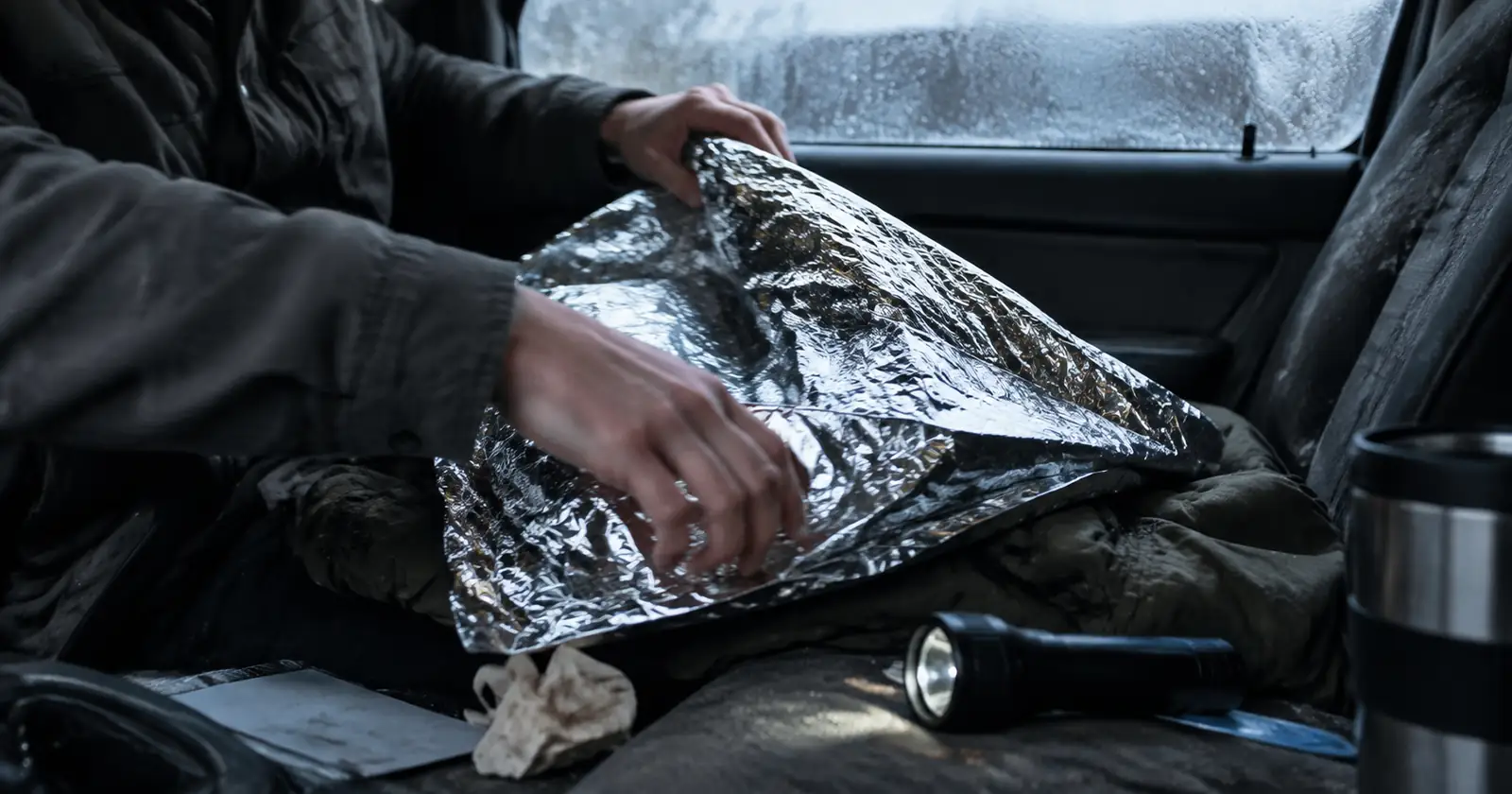
A foil emergency blanket weighs an ounce, costs almost nothing, and does one thing: it reflects radiated body heat back at you and blocks wind. That's genuinely useful. It is not a sleeping bag, and the gap between those two things is where people get caught out.
Three products share this shelf — the flat mylar sheet, the bivvy sack, and the emergency sleeping bag. They're priced within a few dollars of each other and they behave very differently once you're in one for more than an hour.
How We Chose
We haven't tested these. This page uses manufacturer specifications, OutdoorGearLab's measured weights and scored testing, and — more usefully — published owner reviews on Trailspace from people who took these into the cold and reported what happened.
Several sites ranking for this query are affiliate roundups with no traceable test behind the numbers. Where a heat-retention figure comes from a manufacturer rather than a measurement, it's labelled as such below.
The Three Products, Honestly
The flat mylar blanket. An ounce, a few dollars, packs to nothing. It blocks wind and reflects radiated heat. It does nothing about conduction — lie on cold ground with one and you'll still lose heat downward — and it's noisy, fragile and awkward to keep wrapped around you. Buy several anyway. At this price, having one in every bag is the correct answer.
The bivvy. A sealed bag of the same material. Much better than a sheet because it stays on you and traps a layer of warm air. This is where the condensation problem starts.
The emergency sleeping bag. Marketing name for a larger, sometimes reusable bivvy. Same physics, same trade-offs.
That's a real report from people who paid for the product, and it's more useful than any spec sheet. It also explains the whole breathable-versus-not trade-off in one paragraph.
Breathable or Not
Non-breathable reflects more heat — SOL rates its Emergency Bivvy at up to 90 %. Breathable reflects less, around 70 % for the Escape, but lets vapour out.
My rule of thumb: if the bivvy is going into a kit you hope never to open, take the non-breathable one and the extra reflection. A few hours in it is tolerable and the higher figure matters. If there's any realistic chance of spending a whole night in it — a car kit in a cold region, a hiking pack, a bag that goes to a shelter — take the breathable version and accept the lower number, because damp insulation is worse than slightly less reflection.
| Product | Weight | Heat reflection | Notes |
|---|---|---|---|
| Flat mylar blanket | ~1 oz | Manufacturer claims vary widely | Cheapest useful item here. Buy several. No conduction protection |
| SOL Emergency Bivvy | Light, packs very small | Up to 90 %, manufacturer rating | Non-breathable. Best for sealed kits and short durations |
| SOL Escape Bivvy | ~8.5 oz | ~70 %, manufacturer rating | Breathable, reusable, works as a bag liner. Trailspace owners still report condensation well below freezing |
| SOL Escape Lite | 5.5 oz, 82 × 32 in | ~70 %, manufacturer rating | Lighter version of the same idea |
| Outdoor Research Helium Bivy | 17.1 oz, measured by OutdoorGearLab | Not a reflective bivvy | Waterproof-breathable Pertex Shield+, screened opening. OutdoorGearLab Editors' Choice 2026. A shelter you plan to sleep in, not an emergency sack |
Travel and Hiking Use
Same product, two different reasons to carry it.
Travel. A mylar blanket in a carry-on weighs nothing and covers the delayed-in-a-cold-airport case, the unheated rental, and the roadside stop. It's the single lightest useful thing you can pack.
Hiking. Here the bivvy earns its place over the sheet, because an unplanned night out is the exact scenario. Bright colours are a genuine advantage — a high-visibility bivvy doubles as a signal panel, which a silver sheet does not.
Worth keeping in proportion: the CDC's analysis of national vital statistics found an average of roughly 1,300 deaths a year in the US from exposure to excessive natural cold. Hypothermia doesn't require arctic conditions — wind, wet clothing and time will do it.
What I'd Skip
Heat-retention percentages from brands you've never heard of. The 90 % figures on secondary-brand bivvies are manufacturer claims, not measurements, and the real number depends on wind, wet clothing and your own body heat.
Anything sold as a "thermal survival blanket" at ten times the price of a mylar sheet. The physics is the same.
And don't rely on any of this as your cold-weather plan. Ground insulation and a real sleeping bag do the heavy lifting — shelter and clothing matter more than the reflective layer.
- Emergency Tents & Tarps — what goes over you.
- Winter Car Kits — where a blanket per seat earns its place.
- Extreme Cold Weather Clothing — the layer that works while you're moving.
Buy a handful of mylar blankets this week and put one in every bag. It's the cheapest meaningful upgrade on this whole site.
FAQ: Emergency Blankets
Do emergency blankets actually work?
Yes, within limits. They reflect radiated body heat and block wind, which is real and useful. They do nothing about heat lost into cold ground, and they're not a substitute for insulation.
What's the difference between a mylar blanket and a bivvy?
A bivvy is the same material made into a sealed bag. It stays on you and traps warm air, which works better — and traps moisture, which works worse over a long night.
Breathable or non-breathable?
Non-breathable reflects more heat and suits sealed kits and short durations. Breathable reflects less but avoids the condensation that soaks your insulation overnight.
Can I sleep in an emergency bivvy?
For a night, yes, and reviewers do. Owner reports on Trailspace describe significant condensation well below freezing in the breathable SOL Escape, so don't expect a comfortable night in real cold.
How many should I keep?
Flat blankets: one per person in each bag and vehicle. Bivvies: one per person in the kits most likely to be used overnight.
Do you test these?
No. We use manufacturer specifications, OutdoorGearLab's measured testing, and published owner reviews on Trailspace — all named. Check current pricing before buying.
Sources
- OutdoorGearLab — bivy sack testing and measured weights, 2026
- Trailspace — published owner reviews of the SOL Escape Bivvy
- SOL (Survive Outdoors Longer) and Outdoor Research — manufacturer specifications
- CDC — National Vital Statistics analysis of deaths from excessive natural cold
When a warning is active, follow local authorities and official emergency instructions before any general guidance. See our Editorial Policy and Sources & Fact-Checking.