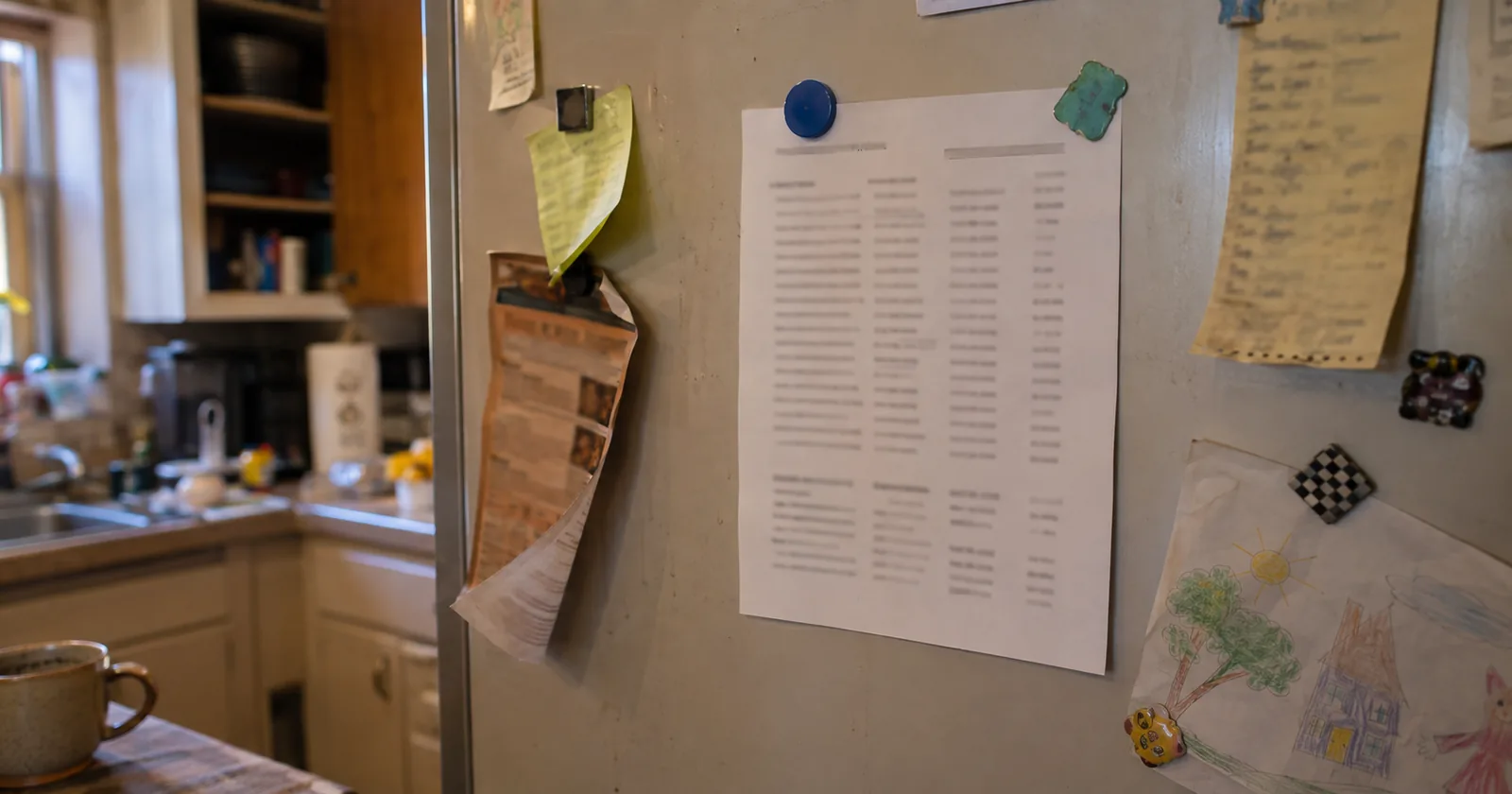

Almost nobody can recite a phone number any more. That's fine on an ordinary day and it's a real problem the moment a phone is dead, lost, or in a coat somewhere else.
The template below fixes that in ten minutes. It prints two ways — a sheet for the fridge and a card for a wallet — and it's about the shortest useful thing you can put on paper.
Who to List, and in What Order
Order matters more than length. A sheet with twenty numbers on it is a directory; a sheet with eight in the right order is usable by someone under stress, including someone who isn't you.
- Out-of-area contact. One person, another region. Everyone contacts them rather than each other. This is the line most templates leave out entirely, and it's the one that does the work.
- Household members. Name, mobile, and where they usually are during the day.
- Two local backups. A neighbour and a nearby relative or friend — the people who can physically arrive.
- School or childcare. Main office, plus the release policy in a few words.
- Workplaces. A direct line rather than a switchboard, where one exists.
- Medical. Doctor and pharmacy phone numbers. Names and numbers only.
- Utilities. Gas emergency line, electricity outage line, water.
- Insurance. Company name and claims line.
Stop there. If a number doesn't belong to one of those categories, it belongs in a phone, not on the sheet.
Keep it to phone numbers and names. The fridge copy is deliberately visible — to a babysitter, a neighbour, anyone in the kitchen — so policy numbers, account numbers, diagnoses and medication details don't go on it. Those live with your emergency documents, not on a wall.
Two of those lines carry more weight than the rest. The out-of-area contact, because it's the only one that works when the local network is saturated. And the local backups, because they're the only ones who can physically knock on a door. Everything in between is administration — necessary, but not what the first hour depends on.
Make It Fit Your Household
Cards for children
A child's card should be shorter and readable by an adult who has never met you: the child's name, a parent or guardian name and number, the out-of-area contact, and any allergy or medication that a stranger needs to know within the first minute. Nothing else. Laminate it or use a sandwich bag and put it in the school bag rather than a pocket.
If someone needs care
Add the caregiver and the backup caregiver by name, and the supplier line for any medical device that plugs in. Those numbers are useless in a phone if the phone is the thing that died — see Senior Emergency Preparedness for what else changes.
Workplace and school variants
Employers and schools usually hold their own emergency contact form, and it's usually years out of date. Updating theirs takes one email and is worth doing on the same afternoon — a correct sheet on your fridge doesn't help if the school is calling a number you gave up in 2019.
Where to Put It
Copies are the entire point. One sheet in a drawer is a document; five copies in five places is a plan.
| Copy | Location | Covers |
|---|---|---|
| Fridge sheet | Kitchen, visible | Anyone in the house, including a babysitter or paramedic |
| Wallet card | One per adult | Dead phone, lost phone, away from home |
| School bag card | One per child | Separation during school hours |
| Glove box | Each vehicle | Evacuation, breakdown, accident |
| Photo on each phone | Camera roll, favourited | The everyday case, when the phone still works |
The photo copy is the one people skip because it feels redundant. It isn't — it's the version you'll reach for on an ordinary day, and it costs one tap.
One thing the fridge sheet does that no phone can: it works for someone who isn't in the household. A babysitter, a neighbour who has a key, a paramedic standing in the kitchen. That's a specific job, and it's why the kitchen copy stays visible rather than tidy in a drawer.
When to Update It
Once a year, and immediately when any number, school, workplace or vehicle changes. Tie the annual pass to your smoke-alarm test so it isn't a separate thing to remember.
Once a year, also dial two numbers at random from the sheet. A disconnected line looks exactly like a working one on paper, and that's the failure that hides longest.
When you reprint the sheet, take the old one off the fridge the same day. Two versions in a house is worse than one, because whoever grabs a card in a hurry has no way of telling which is current.
Print it now and fill in the first line. Ten minutes, no purchases, and it covers one of the obvious failure modes.
FAQ: Emergency Contact List Template
Is this emergency contacts template free?
Yes, with no form to fill in. Both layouts — fridge sheet and wallet cards — are in the same PDF.
Who should be my out-of-area contact?
Someone far enough away that they won't be affected by the same event, reachable, and willing. Ask them first. It's usually a relative or an old friend in another state or region.
How many contacts should be on the list?
Short enough to scan in a few seconds — typically the essential household, local, school, medical and utility contacts. Long lists don't get used under stress, and anything beyond the essentials belongs in a phone rather than on a card.
Should children carry a contact card?
Yes, a short one: their name, a guardian's name and number, the out-of-area contact, and any critical medical note. Written for a stranger to act on.
Do I still need paper if everything is in my phone?
Yes. A dead or lost phone takes the whole contact list with it, and that's precisely the scenario the card is for.
Sources
- Ready.gov — Family Emergency Communication Plan
- FEMA — household preparedness guidance
- American Red Cross — emergency contact planning
- Local school district reunification policies
When a warning is active, follow local authorities and official emergency instructions before any general guidance. See our Editorial Policy and Sources & Fact-Checking.