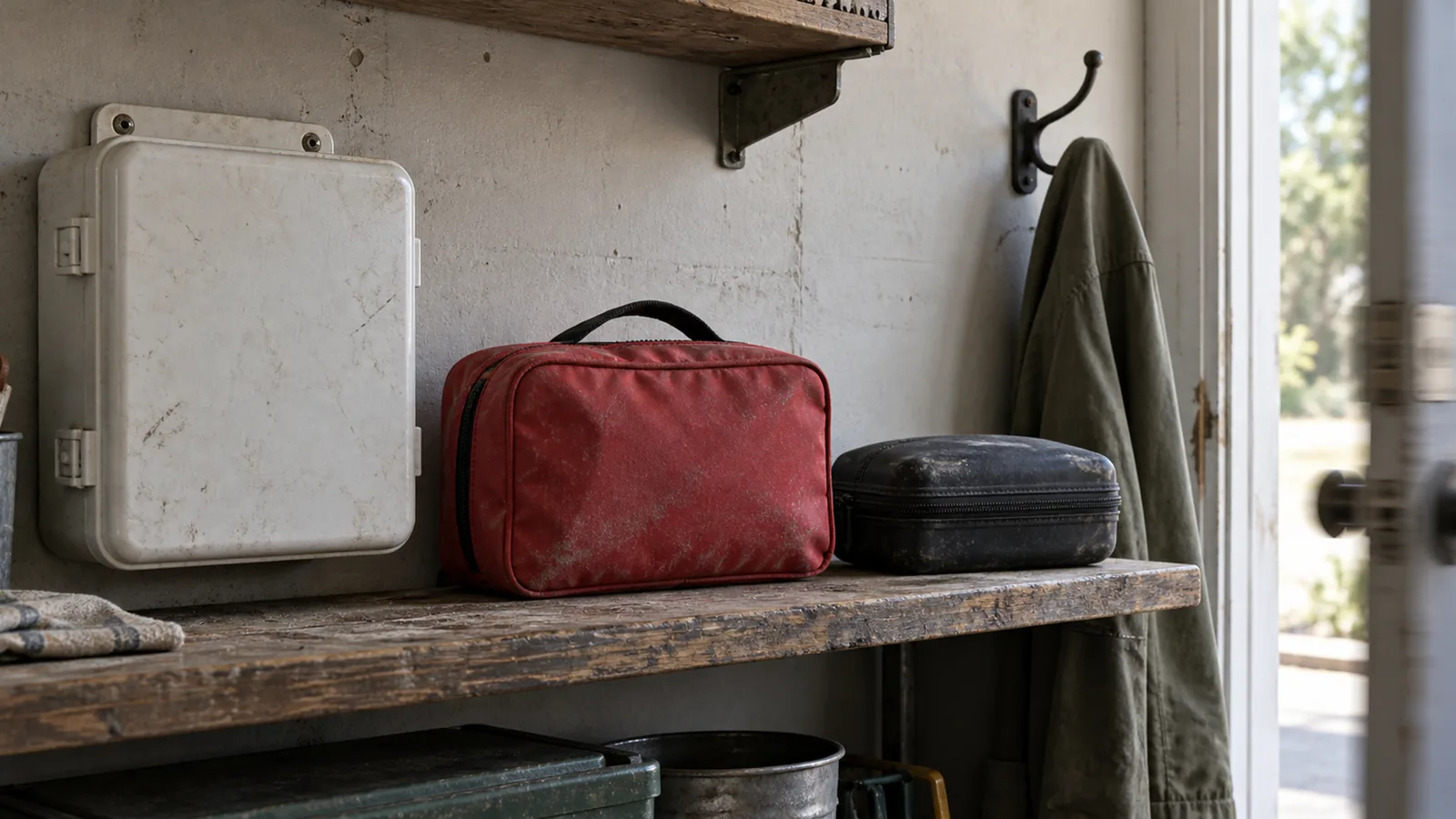
A first aid kit is judged on two things people rarely check: whether the scissors cut, and whether you can find anything in it while your hands are shaking. Piece counts tell you neither.
The other question that decides everything is where it lives. A kit in a backpack, a kit in a glove box and a kit in a kitchen cupboard are three different purchases, and buying one to do all three is how households end up with a bag of plasters and no gloves.
How We Chose
We haven't tested these. OutdoorGearLab has — they bought 15 kits rather than accepting samples, weighed each one on their own scale, and put them in the hands of ski patrollers, EMTs and Wilderness First Responder candidates during trauma simulations. Their scoring weights quality and assortment at 25% each.
Where they found a flaw, it's here. That is the part most pages in this category leave out, and it's the part worth reading.
Which Kit for Which Place
Start here, because it eliminates most of the market before you compare a single product.
Home. Weight is irrelevant, quantity matters, and you will raid it for everyday cuts. It wants depth in adhesive bandages and a place to keep medication. Covered in Home First Aid Kits.
Vehicle and travel. Heat, vibration and forgetting. The case matters more than the contents, and the contents expire faster than you expect. Covered in Car & Travel First Aid Kits.
Backpack. Weight is the constraint, and you are treating yourself or one other person a long way from help.
Serious bleeding. A different object with a different purpose — tourniquets, pressure dressings, chest seals. See Trauma Kits, and First Aid Kit vs Trauma Kit if you're unsure which you need.
| Kit | Weighed | List price | Award and documented weakness |
|---|---|---|---|
| Surviveware Small | 16 oz | $75 | Best overall, score 80. Hospital-grade trauma shears, forceps, CPR mask, watertight zippers. Ships with no over-the-counter medication, and heavy for its size |
| Johnson & Johnson All-Purpose | 22 oz | $25 | Best value for home. Deep on bandage sizes, includes acetaminophen. Case and insert tray are flimsy — testers expected the plastic latches to fail |
| Adventure Medical Kits Mountain Series Hiker | 10 oz | $35 | Best value outdoors. Full-size trauma shears, tick tweezers, four medications. No CPR mask and one pair of gloves — thin for helping a stranger |
| Homestock+ Professional | 21 oz | $35 | Best for the car. Every slot labelled with the item's purpose, removable CPR mini-kit. No medications, and tight compartments for larger hands |
| Adventure Medical Kits Ultralight/Watertight .7 | 8 oz | — | Best compact. Watertight case survived full immersion in testing. Limited contents — a second kit, not a primary one |
| MyMedic MyFAK | 31 oz | $180 | Best for trauma. Pressure bandages, irrigation syringes, tear-away pocket kit. Bulky, and the manual is an eBook only |
What Separates a Real Kit From a Box of Plasters
Three first aid kit items decide the rest, and none of them appear in a piece count.
The shears. OutdoorGearLab's testers found kits with proper hospital-grade trauma shears and kits with plastic scissors that bent the first time they were used. Scissors are among the most-used tools in first aid; if they don't cut, the kit doesn't work.
The organisation. Labelled compartments are not a luxury. Testers reported that poorly organised kits forced them to empty the whole case to find one item, and became "hopelessly cluttered" after a few uses.
The restock path. Consumables run out. Kits that publish an inventory list, or sell refills, stay alive. Kits that don't become landfill the first time someone takes the last bandage.
Buy or Build
Building your own is defensible and slower than people assume. OutdoorGearLab's own conclusion after testing 15 kits is that assembling from scratch costs more than a pre-built kit and takes real time — you end up over-buying consumables to fill one case.
The middle path is the one their testers actually used: buy a good base kit, then supplement it. Gloves, tape and painkillers are the three things most often missing, and all three cost very little.
Whichever way you go, print the inventory. First Aid Kit Checklists & Contents has it by kit size, and a kit with a list taped inside the lid is a kit that gets restocked.
Pick the location first, then the kit. That one decision does more work than any comparison table.
FAQ: First Aid Kits
What should a first aid kit contain?
Gloves, shears that cut, adhesive bandages in several sizes, gauze and tape, antiseptic wipes, a pressure dressing, a CPR face shield, and any personal medication. Quantities depend on where the kit lives and how many people it serves.
How many kits does a household need?
Usually two — a deep one at home and a compact one in the vehicle. A third in a bag if anyone hikes, runs or commutes far.
Are premade kits worth it?
Yes, above roughly $25. Testers who tried building from scratch found it slower and more expensive than buying a good base kit and supplementing it.
Why do so many kits ship without painkillers?
Liability and shelf life. Medication dates faster than dressings, so several of the best-rated kits leave it out deliberately. Add your own and write the expiry on the lid.
Do you test these kits?
No, and we say so. This page uses OutdoorGearLab's field testing of 15 purchased kits, including their measured weights and the flaws they documented.
Sources
- OutdoorGearLab — first aid kit testing, 15 kits purchased and field tested, updated April 2025
- American Red Cross — recommended contents for a home kit
- Manufacturer specifications and list prices, checked September 2026
This page is general information, not medical advice. When an emergency is underway, follow 911 dispatchers and emergency services before any general guidance. See our Editorial Policy and Sources & Fact-Checking.