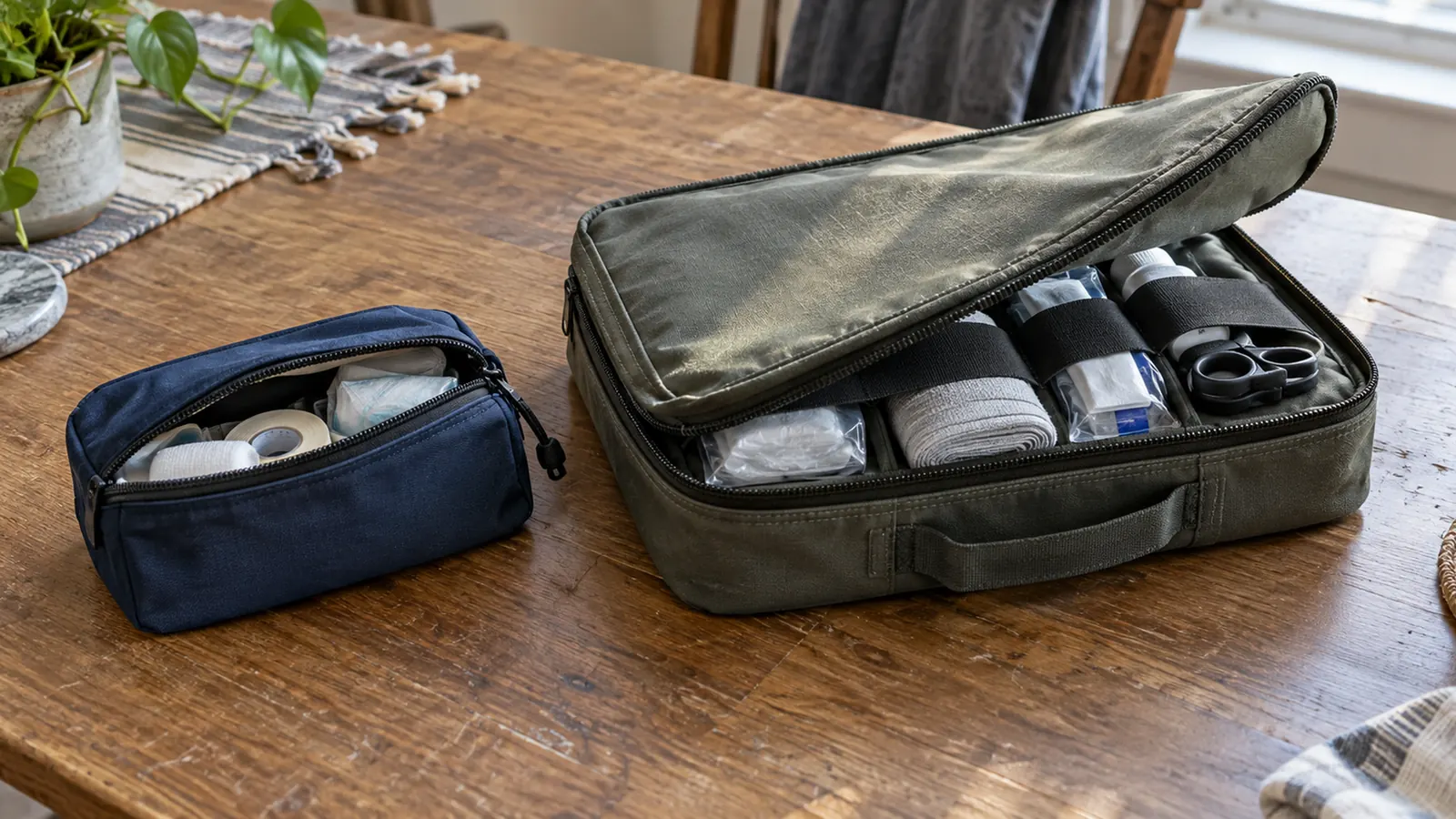

The first aid kit vs trauma kit question comes down to time. One is for injuries where you have hours and a car. The other is for the ten minutes before an ambulance arrives, when someone is bleeding faster than their body can replace it.
They look similar on a shelf and they are not interchangeable. Most households need the first one and have never needed the second.
Two Different Problems
An ordinary kit handles injuries that are unpleasant but not time-critical. You clean, cover, and decide whether to see a doctor. The design constraints are variety and quantity — enough bandage sizes, enough of everything, easy to find.
A trauma kit handles catastrophic haemorrhage: a wound where pressure alone may not be enough and the clock is measured in minutes. The design constraint is speed of access to four specific items, and everything else is secondary.
That difference explains why the trauma kit is smaller, costs more, and contains almost nothing you'd use in a normal year. It isn't a better kit. It's a different tool.
Side by Side
| First aid kit | Trauma kit | |
|---|---|---|
| Problem | Cuts, burns, sprains, blisters | Life-threatening bleeding |
| Time frame | Hours. You can drive somewhere | Minutes. Nobody is driving anywhere |
| Defining contents | Bandages, gauze, tape, antiseptic, medication | Tourniquet, pressure dressing, haemostatic gauze, gloves |
| Training | Helpful. A short course covers it | Required. The equipment is unusable without it |
| How often it's opened | Several times a year | Ideally never |
| What the tested kits cost | $25 for the value pick, $75 for the winner | $180 for the one purpose-built kit, plus a course |
| Who it suits | Every household | Tools, machinery, remoteness, or trained responders |
OutdoorGearLab's testing of 15 kits found exactly one built for trauma response, which tells you how far apart the two categories sit even within the same shopping aisle.
Which to Build First
The first aid kit, without hesitation. It covers what actually happens, it costs less, and it gets used often enough that you'll notice when it's empty — which is the property that keeps any kit alive.
Then, if your situation genuinely calls for it, add trauma capability rather than replacing anything. A recognised windlass tourniquet, a pressure dressing and haemostatic gauze added to a good general kit gets you most of the way, and costs less than a purpose-built case.
What does not work is the hybrid bought instead of both: a mid-priced box with one unbranded tourniquet and a thin selection of everything else. It's too shallow for daily life and not trustworthy for the one moment it exists for.
Where to Go Next
- First Aid Kits — which tested kit for which place.
- Trauma Kits — the four items, and the training that makes them work.
- First Aid Training — what certification covers and what it costs.
If you only do one thing: open the kit you already own and check whether the scissors cut. The answer decides more than this comparison does.
FAQ: First Aid Kit vs Trauma Kit
What is the difference between a first aid kit and a trauma kit?
A first aid kit treats everyday injuries over hours. A trauma kit treats life-threatening bleeding over minutes, using a tourniquet, pressure dressing and haemostatic gauze — equipment that requires training.
Do I need both?
Every household needs the first. The second is for specific situations: power tools, machinery, job sites, remoteness, or people who have done bleeding-control training.
When is a first aid kit not enough?
When bleeding soaks through dressings faster than you can apply them, or when a wound is somewhere a tourniquet cannot go. That is the threshold the trauma kit exists for.
Do I need a trauma kit at home?
Most households don't. If you have a workshop, keep livestock, or live far from an ambulance, the case is stronger — and the training matters more than the purchase.
Can one kit do both jobs?
Badly. Combined boxes tend to be thin on everyday supplies and fitted with a cheap tourniquet. Buy a good general kit and add trauma items to it.
Sources
- OutdoorGearLab — first aid kit testing, 15 kits purchased and field tested, updated April 2025
- Stop the Bleed / American College of Surgeons — bleeding control guidance
- American Red Cross — first aid and severe bleeding response
This page is general information, not medical advice, and does not teach clinical technique. When an emergency is underway, follow 911 dispatchers and emergency services before any general guidance. See our Editorial Policy and Sources & Fact-Checking.