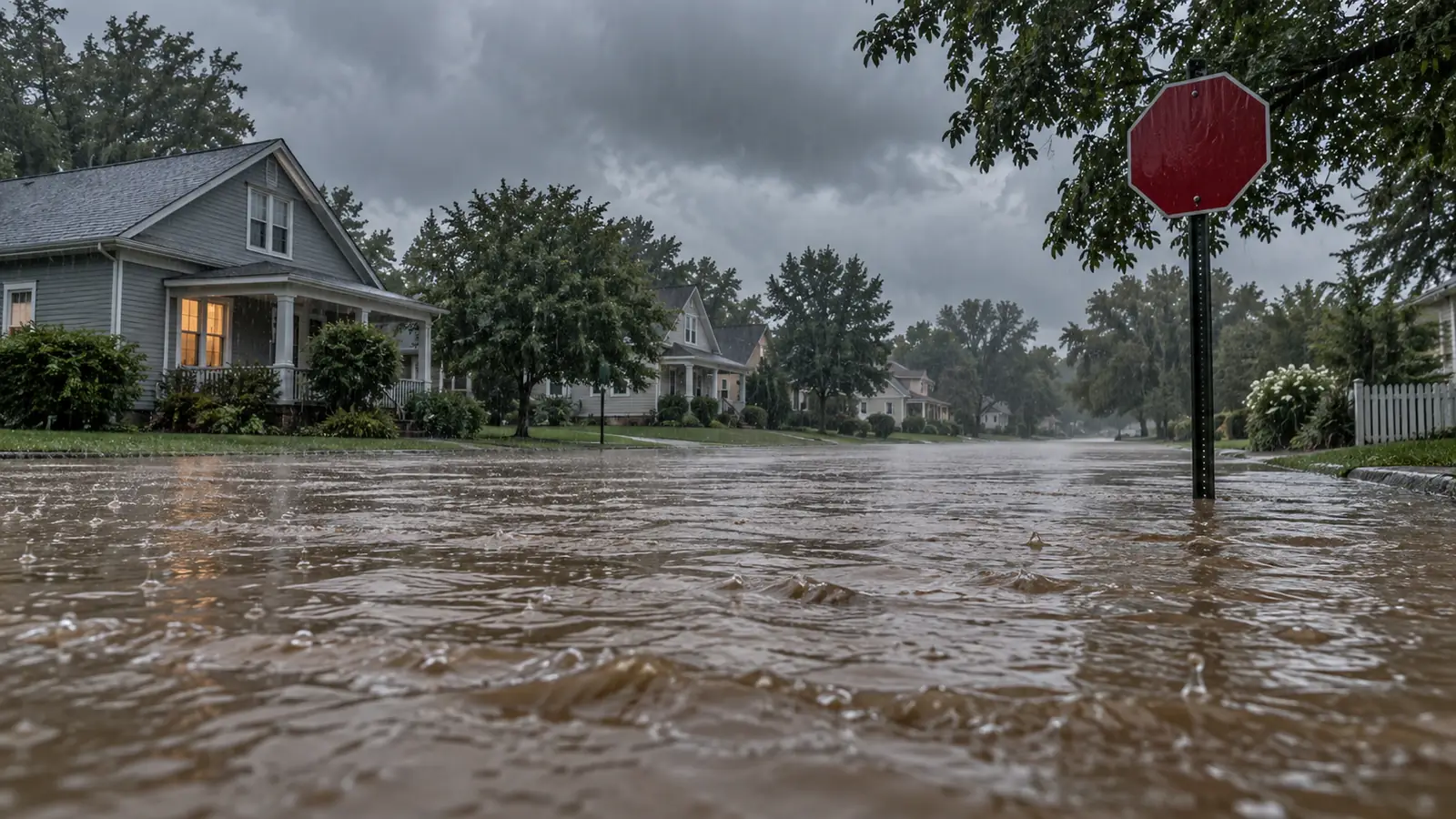

A flash flood warning is one of the few alerts that means move right now, and it is routinely treated as though it means watch the rain. The difference between it and a watch is the difference between hours and minutes.
Flash flooding is also the deadliest kind, for an unglamorous reason: it happens fast, at night, and it kills people in cars.
Watch, Warning, Emergency
Three words, three very different instructions, and the flash flood warning meaning is the one worth committing to memory.
A flash flood watch covers a wide area for several hours and means the ingredients are in place — heavy rain over ground that can't absorb it, whether because it's saturated, baked hard, paved, or burned by a recent wildfire. Nothing is happening yet. Don't start a journey through the area and know where the higher ground is.
A flash flood warning means flooding is occurring or about to. It's issued for a small area and a short window, on radar estimates or on a report from someone who has seen it. The response is immediate: get to higher ground, and do not drive.
A flash flood emergency is the rare top tier, reserved for a severe threat to human life with catastrophic damage occurring. If you see that wording, it is not a heightened version of the same advice — it means people are already in danger nearby.
Unlike many alerts, a flash flood warning today does trigger a wireless emergency alert on phones in the area, which is why it wakes people at 3am. The system behind that is in Wireless Emergency Alerts.
Why It Kills People in Cars
The statistics are consistent year after year, and so is the mechanism.
Water on a road is almost impossible to judge from a driving seat. It looks shallow because the surface is flat, and there is no way to see whether the road beneath is intact — flash flooding frequently removes it entirely, leaving a hole the same colour as everything else.
Then there's buoyancy. A vehicle starts to float in far less water than people assume, and once it floats it has no steering and no brakes. The National Weather Service puts the figures plainly: twelve inches of rushing water carries away most cars, and two feet carries away SUVs and pickups.
Add darkness and familiarity and you have the typical case: a road someone drives daily, at night, with a few inches of water that turns out to be a few feet. It is not a failure of courage or intelligence. It is a failure of visual information, which is why the rule is absolute rather than conditional.
What to Do in the First Two Minutes
If you're at home: go up. Upper floor, not the basement, and not the attic unless there's a way out of it. Take the phone, a torch and shoes. If water is entering and the power is still on, do not wade to the panel — leave it and get out or get up.
If you're driving: stop before the water, not in it. Turn around and take another route, even a long one. If the vehicle stalls in rising water, get out immediately and move to higher ground on foot — a stalled car is not shelter, it's a container that is about to move.
If you're outdoors: leave low ground, creeks, culverts and dry washes. In hilly or burned terrain, water arrives from rainfall that fell miles away under a sky that may be clear above you.
If you're in a basement: leave it. Basements fill quickly, doors become impossible to open against water pressure, and this is a recurring way people are trapped.
Then stay where you are until officials say the area is clear. Receding water leaves damaged roads, live lines and contamination — the aftermath is covered in Flood Preparedness.
Whether your home is likely to see this at all, and how to read the maps that describe long-term risk rather than tonight, is in Flood Maps & Zones.
Decide now that you will never drive into water. Deciding it in advance is what makes it possible at 3am.
FAQ: Flash Flood Warnings
What does a flash flood warning mean?
Flooding is happening or about to happen in a small, specific area. Move to higher ground immediately and do not drive. It is not a heads-up — that's the watch.
How is it different from a flash flood watch?
A watch means conditions are favourable across a wide area for several hours. A warning means it is occurring now, locally. Watch means be ready; warning means act.
What is a flash flood emergency?
The highest tier, used rarely, for a severe threat to life with catastrophic flooding under way. If you see that wording, people nearby are already in danger.
How much water is too much to drive through?
Any. Twelve inches of moving water carries away most cars and two feet carries away SUVs and pickups — and you cannot tell from the driving seat whether the road beneath still exists.
Will my phone alert me?
Flash flood warnings do trigger wireless emergency alerts in the affected area, which is why they wake people overnight. They still require a working cell network.
What if my car stalls in the water?
Get out and move to higher ground on foot straight away. A stalled vehicle in rising water is about to float, and the doors become harder to open every second.
Sources
- National Weather Service — flash flood watch, warning and emergency definitions
- National Weather Service — "Turn Around Don't Drown" vehicle and pedestrian thresholds
- NOAA — flood-related fatality statistics by location
- Ready.gov — floods
This page is general information. When a warning is active or an emergency is underway, follow local authorities, National Weather Service alerts and emergency services before any general guidance. See our Editorial Policy and Sources & Fact-Checking.