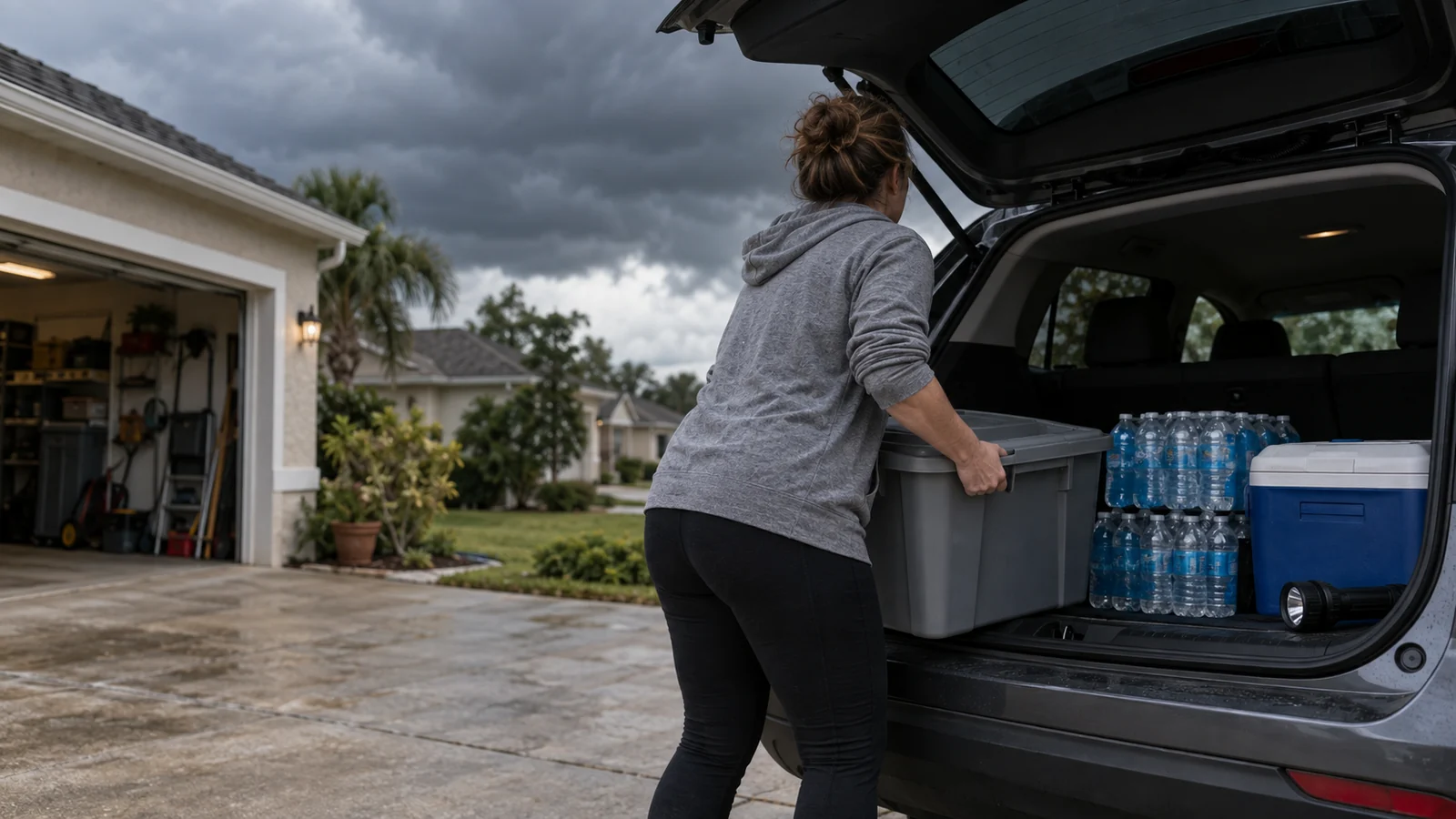

Hurricane supplies are the one preparedness category where the list is long and the reason is boring: you are not preparing for a storm, you are preparing for the week after it, without power.
That reframing changes what goes in the box. Most of what matters is about heat, water and cooking, not about wind.
How We Chose
We haven't tested pre-built hurricane kits as products, and we don't rank them. This page works from federal supply guidance and from the failure pattern that recurs after every long outage: households have food and no way to cook it, water and no way to keep anything cold, phones and no way to charge them.
Where a quantity is given it comes from published guidance rather than from us. Where something is a judgement, it's flagged as one.
The Base, and What Hurricanes Add
A hurricane supplies checklist is the general household kit plus a specific layer. Building a separate hurricane kit duplicates cost and storage for no benefit, so start with Emergency & Survival Kits and add.
More water, and containers to fill. The standard guidance is one gallon per person per day. For a week, for four people, that's twenty-eight gallons — which is why the practical answer is bottled water plus containers you fill from the tap before landfall, plus the bath for flushing.
A way to cook without power. A camping stove with spare fuel, used outdoors. This is the gap most households discover on day two, staring at tins.
A cool box and frozen bottles. Freeze water bottles now; they keep the fridge cold through the first day and become drinking water afterwards.
Cooling for people. Battery fans, damp cloths, electrolyte sachets. A hurricane outage happens in the hottest part of the year with no air conditioning, and heat illness is a genuine post-storm hazard.
Battery CO alarm. Cheap, and it covers the mistake that kills people every season.
Cash in small notes. When the network is down, nothing takes cards and nobody has change.
Tarpaulins, rope and duct tape. For the roof or the window that fails, until someone can properly fix it.
Food That Survives a Week Without a Fridge
The hurricane supplies food list is where good intentions meet reality. The test isn't nutrition, it's whether it can be eaten with no power, no cooking and a tired household.
| Type | Examples | Why it works |
|---|---|---|
| Eat straight from the tin | Beans, tuna, fruit, soup | No cooking, no water, no washing up. Keep a manual opener |
| Dry and calorie-dense | Nut butter, crackers, dried fruit, nuts | Survives heat, needs nothing, keeps people going |
| Shelf-stable dairy | UHT milk, powdered milk | Coffee and cereal without a fridge |
| Needs only hot water | Instant noodles, oats, dehydrated meals | One outdoor stove turns these into real meals |
| Comfort | Coffee, tea, chocolate, the snacks people like | Day four of no power is a morale problem as much as a logistics one |
| Special requirements | Baby formula, pet food, allergy-safe items | Least substitutable, first to run out locally |
Storing It So It's Still There
A hurricane kit checklist is only useful if the kit survives the eleven months nobody thinks about it.
Keep it in a sealed plastic tote, off the floor, somewhere that won't flood — not the basement in a flood-prone house, and not the garage if that's where water enters. Label the outside with the earliest expiry date inside.
Check it in May, before the season, and rotate rather than discard: eat the tins and replace them. A box nobody opens becomes a box of things nobody would eat.
And keep the documents separate and portable. If the decision becomes evacuation rather than sheltering, the box stays and the documents go — Emergency Documents and Hurricane Evacuation Zones & Routes cover that half.
Buy the stove and freeze some water bottles this week. Those two are the cheapest upgrades on the page.
FAQ: Hurricane Supplies & Kits
How much water do I need?
One gallon per person per day is the standard guidance. Plan for a week rather than three days, and make up the difference with containers you fill before landfall.
How long should the supplies last?
A week is the realistic planning figure. Hurricane outages regularly run longer than the three days most general kits are built around.
Do I need a separate hurricane kit?
No. Start from your general emergency kit and add the hurricane layer: more water, outdoor cooking, cooling, a CO alarm, cash and tarpaulins.
What food actually works?
Things you can eat straight from the tin, dry calorie-dense items, shelf-stable dairy, and anything that only needs hot water if you have an outdoor stove. Keep a manual tin opener with the box.
Can I cook indoors if I'm careful?
No. Camping stoves, grills and generators produce carbon monoxide and must stay outdoors, away from windows and doors. A battery CO alarm belongs in the kit.
Where should I store it?
A sealed tote, off the floor, somewhere that won't flood — which rules out the basement or garage in many coastal houses. Write the earliest expiry date on the outside.
Sources
- Ready.gov and FEMA — emergency supply guidance and water quantities
- NOAA National Hurricane Center — hurricane preparedness guidance
- CDC — carbon monoxide safety and food safety during power outages
- CDC — heat illness prevention
This page is general information. When a warning is active or an order is issued, follow local authorities, the National Hurricane Center and emergency services before any general guidance. See our Editorial Policy and Sources & Fact-Checking.