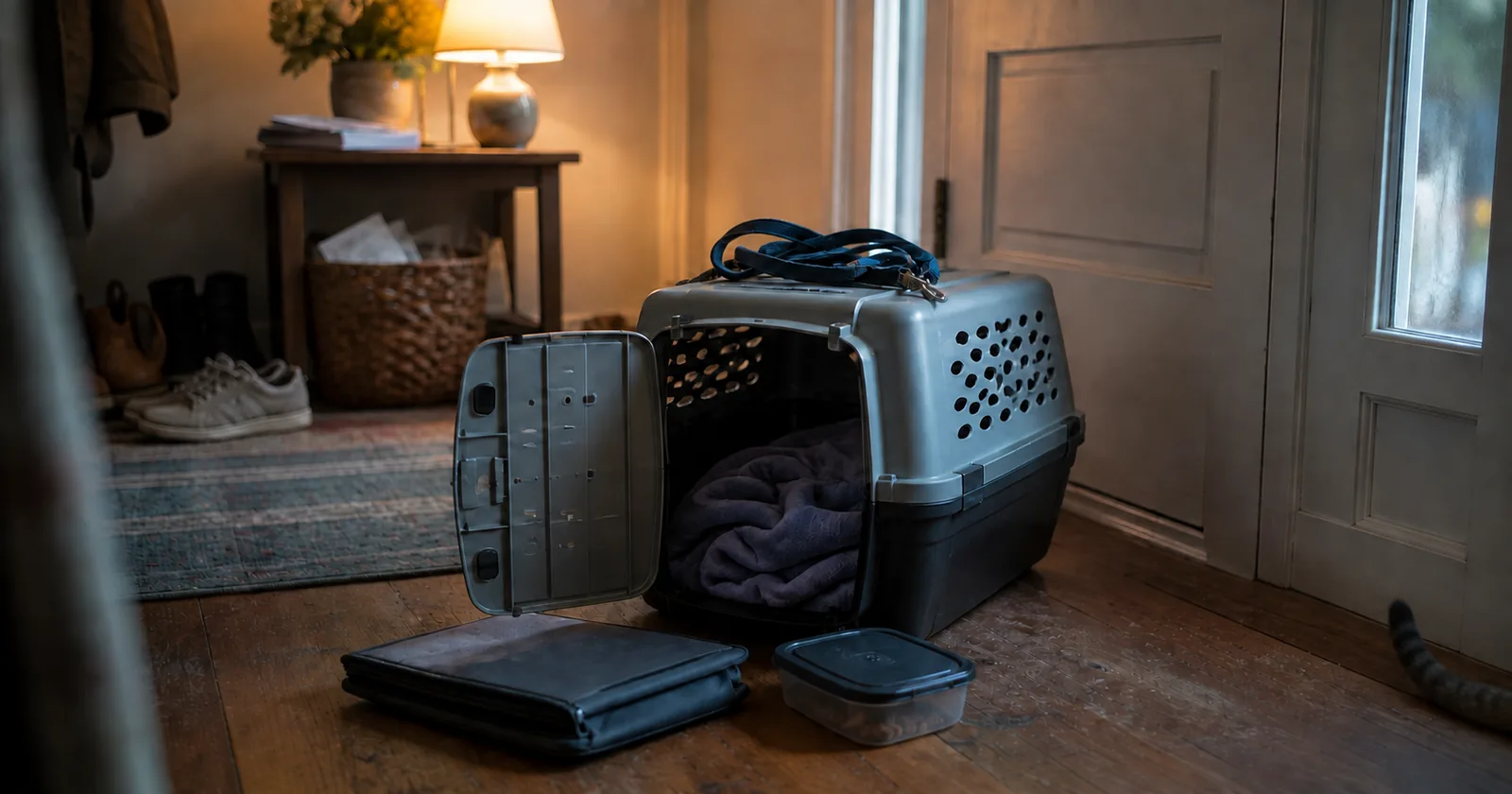

Search for a pet emergency kit and you'll be sold a first aid pouch. Gauze, tweezers, a foil blanket, forty pieces. It's a fine thing to own and it isn't the kit.
The things that decide whether an evacuation with an animal goes well are duller: a carrier that fits them, proof of rabies vaccination, two weeks of medication, and a list of places that will take a dog at 11pm. Emergency shelters can refuse animals, and that single fact reshapes the whole plan.
How We Chose
We haven't tested pet kits. The contents list on this page follows the ASPCA's published disaster preparedness guidance, which is a detailed, species-aware primary source. Where the market and the guidance disagree — and they do — we've gone with the guidance.
What Goes In, by Category
Identification, first
A collar and tag with your current phone number, and a registered microchip with current contact details. The ASPCA also recommends writing your pet's name and your contact details on the carrier itself, which sounds redundant right up until you and the carrier are separated.
Keep a printed photo of you with each animal. It's how you prove ownership at a shelter, and phones die.
Documents
Photocopies or a USB stick of medical records, and rabies certification in particular. Pet-friendly hotels and many emergency shelters ask for it, and "it's at the vet's" isn't an answer at a check-in desk. Paper, in a waterproof pouch, alongside your own emergency documents.
Medication and water
The ASPCA's figure is a two-week supply of any medication your pet needs, in a waterproof container, rotated so it doesn't expire in the bag. For water, at least seven days' worth for each person and each animal.
Talk to your vet about the medication buffer rather than arranging it yourself — the answer varies by drug and by prescription rules.
Food and bowls
Several days of the food they already eat, in an airtight container, plus a manual can opener if it's wet food. Collapsible bowls take very little space. Familiar food matters more than people expect when an animal is stressed and off its routine.
The species-specific part
| Animal | Add |
|---|---|
| Dogs | Long leash, yard stake, blanket, toys, treats, seven days of cage liner such as newspaper |
| Cats | Pillowcase or evacsack, harness and leash, blanket, toys, small litter pan and clumping litter |
| Birds | Catch net, heavy towel, cuttlebone, cage cover, cage liner |
| Small mammals | Salt lick, spare water bottle, hide box or tube, seven days of bedding |
| Reptiles | Pillowcase or evacsack, and a warming device |
What to Buy
The carrier is the purchase that matters. One per animal, big enough to stand and turn in, and rigid enough to be stacked in a car with everything else. A carrier that lives in a loft is a carrier you'll be assembling in the dark.
A pet first aid kit is worth owning — the better ones include gauze in two widths, bandage scissors, tweezers and a syringe for administering liquids. Buy it as one component of the kit rather than as the kit, and don't add any medication to it that your vet hasn't specifically approved for your animal.
Everything else is assembly. There's no product to buy for "seven days of newspaper", and a kit that charges you for it isn't doing you a favour. I'd rather see the money go into a second carrier.
The Plan Around the Kit
Two things cost nothing and matter more than any purchase.
Ask someone now — a neighbour, a friend — whether they'd evacuate your animals if you couldn't get home, and show them where the kit and the carriers are. The ASPCA is explicit about this, and it's an easy gap to leave open.
Build a list of boarding facilities, pet-friendly hotels and relatives who'd take you and the animal, along your likely evacuation routes. Do it on a calm afternoon, because shelters may not accept pets and that's not the moment to start phoning.
- Evacuation Plans — where the animals fit in the household plan.
- Go Bags & Evacuation Bags — the human version of the same bag.
- Emergency Documents — where the vaccination records live.
Order the pet alert sticker and check the microchip registration this week. Both are free, both take ten minutes, and both work whether or not you're home.
FAQ: Pet Emergency Kits
What should be in a pet emergency kit?
A carrier per animal, collar and tag, registered microchip, vaccination records on paper, two weeks of medication, several days of familiar food, water, bowls, leash or harness, sanitation supplies, and a comfort item.
How much water do I need for a pet?
The ASPCA recommends at least seven days' worth for each person and each animal, stored somewhere cool and rotated regularly.
Will emergency shelters take my pet?
Not always. Build a list of boarding facilities, pet-friendly hotels and friends along your evacuation routes in advance — this is the part that catches households out.
Are premade pet emergency kits worth buying?
Most of what's sold is a first aid pouch. Useful, but not a kit. Buy the carrier and a good first aid kit, then assemble the rest — records, medication, food — yourself.
What if I'm not home when we have to evacuate?
Arrange it now. Ask a neighbour or friend who's comfortable handling your animals, show them the kit and the carriers, and agree a meeting point.
What's the ASPCA poison control number?
888-426-4435. Keep it written in the kit, and call before giving your animal anything.
Sources
- ASPCA — Disaster Preparedness and pet disaster kit checklist
- ASPCA Animal Poison Control Center
- American Red Cross — pet first aid guidance
- FEMA and Ready.gov — Pets and Animals
This page is general information, not veterinary advice. Decisions about medication and treatment belong to your veterinarian. When a warning is active, follow local authorities and official emergency instructions first. See our Editorial Policy and Sources & Fact-Checking.