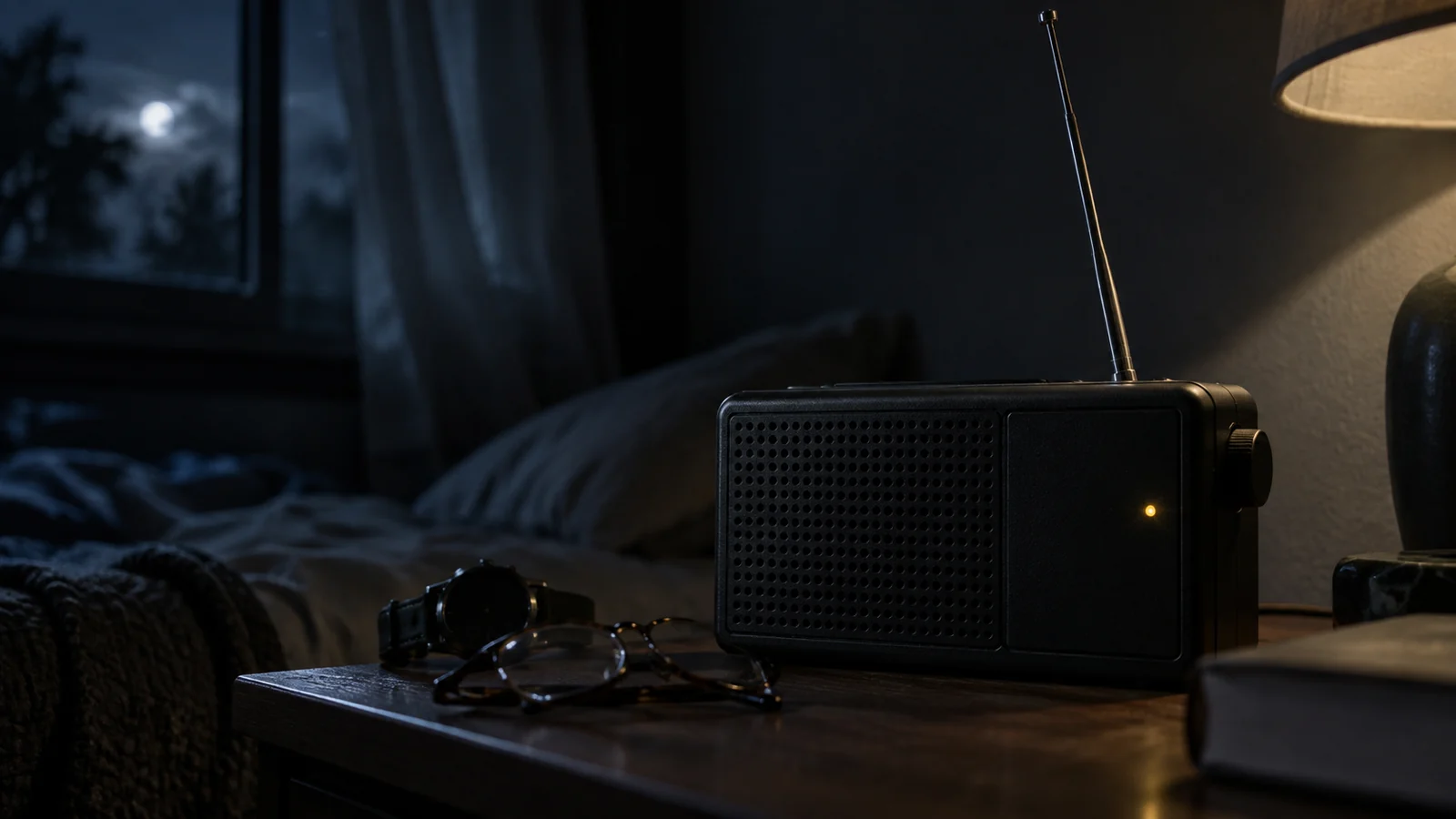

A noaa weather radio is the only warning device in most houses that doesn't need the cell network, the internet or anyone to be awake. It sits silent for months, then makes a noise at 3am because a tornado warning was issued for your county.
That's the whole product. It isn't entertainment, it isn't a radio you listen to, and it's the piece most households skip because a phone feels like it already does the job.
How We Chose
We haven't bench-tested receivers, and we don't publish a ranked list of models here. What this page uses is the National Weather Service's own documentation of how the broadcast works, the published Public Alert certification requirements, and the failure modes that follow from both.
That's deliberate. In this category the specification decides almost everything, and a feature checklist is more useful than an opinion about build quality.
What It Actually Is
The National Weather Service runs a network of transmitters broadcasting continuously on seven VHF frequencies between 162.400 and 162.550 MHz. It's not on the FM dial and an ordinary radio cannot receive it.
Most of the time it carries a synthesised voice reading the forecast on a loop, which nobody listens to. The point is what happens when a warning is issued: the transmitter sends a digital header, and every receiver in range that's programmed for that county switches itself on and sounds an alarm.
Coverage is good but not universal — a transmitter reaches roughly forty miles depending on terrain, and mountains create genuine gaps. It's worth checking coverage for your address on the NWS site before buying, because a receiver in a shadow is a decoration.
A noaa weather radio for home should live where you sleep. That is the scenario it's for: the warning nobody is awake to see.
SAME, and Why It Decides Everything
Specific Area Message Encoding is the difference between a device you keep and a device you unplug after three weeks.
Without it, the radio alarms for every warning the transmitter carries — which covers many counties. You'll be woken for a flash flood forty miles away, repeatedly, and eventually you'll switch it off. That is the single most common way these radios fail: not technically, but by being too annoying to live with.
With SAME, you enter a six-digit code for each county you care about, and the radio ignores everything else. The codes are published by the NWS, searchable by state and county, and the process is a few minutes of button-pressing with the manual open.
Two pieces of advice on programming. Add your own county, and add the one your weather typically arrives from — a warning that's about to become yours is worth twenty minutes of notice. And if you commute across a county line every day, add that one too.
The other thing to look for on the box is the Public Alert logo. It certifies that the receiver meets the industry standard for alert decoding and behaviour, including battery backup and an audible alarm. Cheap units without it vary in ways you won't discover until the night it matters.
Setting It Up So It Works at 3am
Put fresh batteries in even if it's mains powered. The alerting behaviour during a power cut is the entire reason the certification requires a backup, and alkaline cells in a device that never draws current still need replacing on a schedule.
Set the volume where it will wake you, not where it's comfortable in daylight. Then actually test it — most receivers have a test button, and the NWS runs a weekly required test, usually on Wednesdays, which is the real-world check that your programming took.
If nobody in the house heard the weekly test, the radio is not doing its job, and the reason is almost always volume, batteries or a county code that didn't save.
People who want the live stream rather than the alarm often search for noaa weather radio live and find online audio feeds of the same broadcasts. Those are useful for checking what's being said right now, and they are not a substitute: they need power and internet, which is the pairing that fails first.
Which frequency your local transmitter uses, and what else is worth having on a chart next to it, is in NOAA & Emergency Radio Frequencies. For the phone side of the same problem, see Wireless Emergency Alerts.
Buy one with SAME and the Public Alert logo, program two counties, and put it in the bedroom. It's a twenty-minute job you do once.
FAQ: NOAA Weather Radios
What is a NOAA weather radio?
A receiver for the National Weather Service's own VHF broadcast network. It carries forecasts continuously and switches itself on with an alarm when a warning is issued for a programmed county.
Do I still need one if I get alerts on my phone?
They fail differently, which is the argument for both. Phone alerts need a working cell site; a weather radio needs batteries and a transmitter in range, and nothing else.
What does SAME mean?
Specific Area Message Encoding — county codes you program in so the radio only alarms for the areas you choose. Without it, it alarms for every county the transmitter covers.
How do I find my county code?
The National Weather Service publishes them by state and county. Enter your own, and add the county your weather usually arrives from for extra warning time.
Will it work during a power cut?
Only with working batteries in it. That's why the Public Alert certification requires a battery backup, and why the batteries need changing on a schedule rather than when the radio goes quiet.
How do I know it's still working?
Listen for the weekly required test, usually on a Wednesday. If nobody in the house hears it, check the volume, the batteries and whether the county code saved.
Sources
- NOAA / National Weather Service — NOAA Weather Radio All Hazards, frequencies, coverage and SAME county codes
- National Weather Service — required weekly test schedule
- Public Alert certification — receiver requirements including battery backup and alarm behaviour
This page is general information. When a warning is active or an emergency is underway, follow local authorities, National Weather Service alerts and emergency services before any general guidance. See our Editorial Policy and Sources & Fact-Checking.