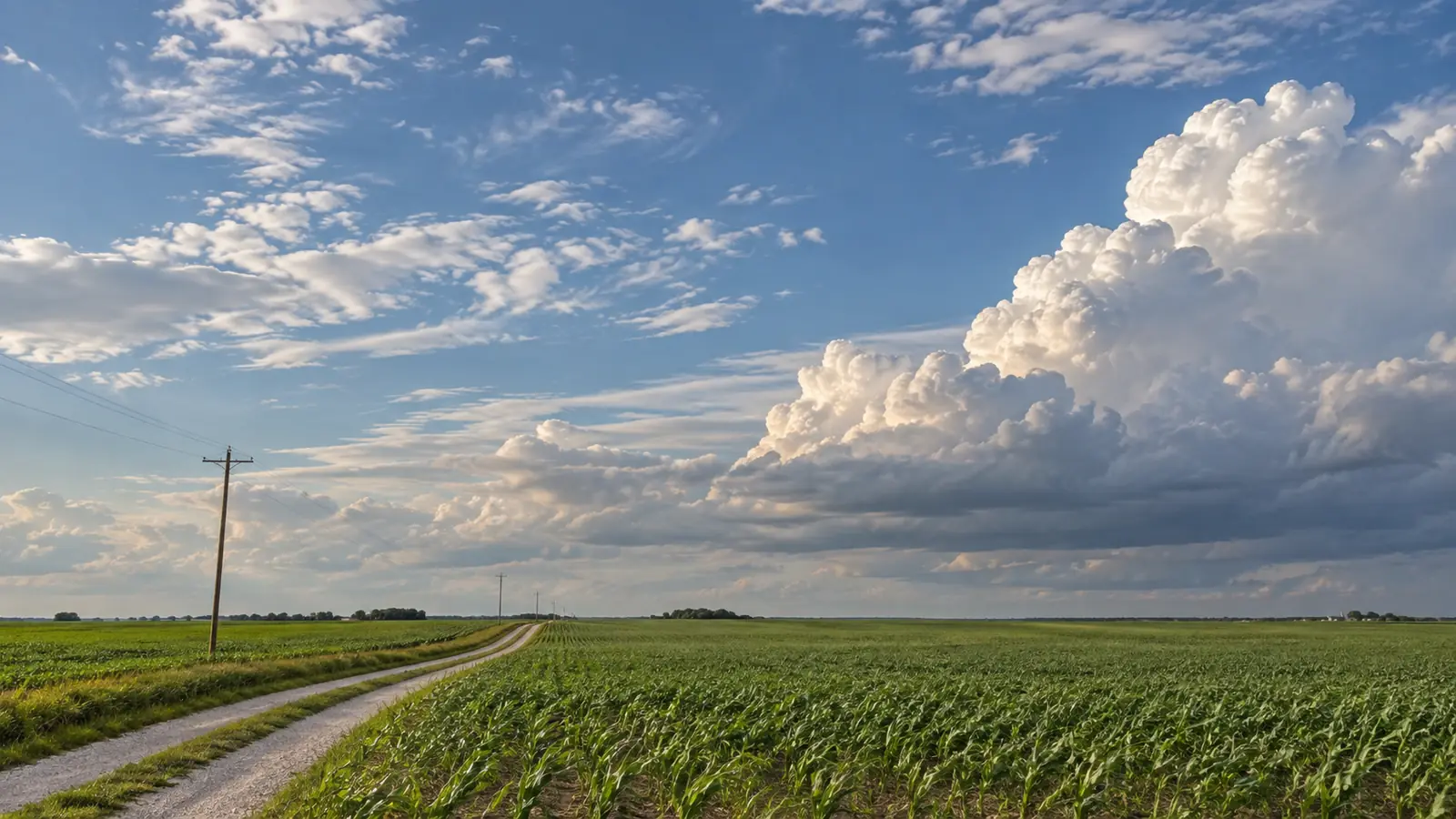

Tornado season is a useful phrase and a slightly misleading one. There is a period each year when the odds rise sharply — and there is no month in which the odds are zero.
Where you live changes the answer more than the calendar does, which is why national advice about "spring" is wrong for a large part of the country.
Why the Season Moves North
Tornadoes need warm moist air underneath, cool dry air above, and wind that changes speed and direction with height. Through late winter and spring, the warm moist air pushes north from the Gulf while strong upper winds are still in place. The overlap zone tracks north as the year goes on.
That's why the answer to tornado season when depends on latitude. The Gulf states see the overlap first; the northern Plains see it last. The peak doesn't so much begin and end as migrate.
The Southeast has a second act. In late autumn the jet stream strengthens again while the Gulf is still warm, producing a secondary peak that catches people who have mentally filed tornadoes under spring.
None of this is a schedule. It's a tendency drawn from decades of records, and any given year departs from it — which is exactly why a household plan should not be seasonal.
The Regional Version
| Region | Usual peak | Worth knowing |
|---|---|---|
| Gulf Coast and Deep South | Late winter into spring | Second peak in late autumn. More night-time events |
| Southern Plains | April into May | The classic image, and not the deadliest region |
| Central Plains and Midwest | May into June | Often the busiest stretch nationally |
| Northern Plains and Upper Midwest | June into July | Latest peak, shortest window |
| Atlantic and Gulf coasts | Hurricane season, roughly June to November | Landfalling systems spawn tornadoes far inland |
These are tendencies, not guarantees, and they describe decades rather than any single year. Where your own county sits in the historical record is in Tornado History & Risk Maps.
What to Do With This
Two practical uses, and they're both about timing rather than existence.
The first is maintenance. Pick the month before your regional peak as the annual check: batteries in the weather radio, shoes still fitting the children, water in date. Tie it to something you already do so it actually happens — the same logic as the rest of the kit, in Emergency Checklists & Templates.
The second is attention. During your peak weeks, glance at the day-ahead outlook in the morning the way you'd glance at a forecast. That habit is what converts a hours-long warning into actual preparation, and it's covered in Tornado Tracker & Live Map.
What you do the rest of the year is nothing, which is the point: the plan should already be standing. Tornado Preparedness is the version that doesn't need a calendar.
Find your region's peak, set the annual check one month before it, and otherwise leave the plan alone.
FAQ: Tornado Season
When is tornado season?
Nationally it peaks in spring and early summer, broadly April through June. Regionally it shifts: earlier in the Gulf states, later in the northern Plains.
Why does it start earlier in the South?
Because the warm moist Gulf air arrives there first while strong upper-level winds are still in place. The overlap zone migrates north as the year progresses.
Can tornadoes happen outside the season?
Yes, in any month. Off-season events are disproportionately dangerous because they arrive when nobody is expecting them.
Is there a second season?
In the Southeast, yes — a secondary autumn peak when the jet stream strengthens while the Gulf is still warm.
Do hurricanes cause tornadoes?
Landfalling tropical systems regularly spawn tornadoes, often well inland and typically on the right-hand side of the track. They tend to be weaker but arrive with little warning.
Should I pack the kit away after the season?
No. Leave whatever lives in the shelter room where it is. The households that get caught are the ones who tidied it away.
Sources
- NOAA Storm Prediction Center — tornado climatology and monthly distribution
- NOAA NCEI — Storm Events Database
- National Weather Service — tropical cyclone tornado guidance
- Ready.gov — tornado preparedness
Peaks described here are long-term tendencies, not a forecast for any particular year. When a warning is active, follow local authorities, National Weather Service alerts and emergency services before any general guidance. See our Editorial Policy and Sources & Fact-Checking.