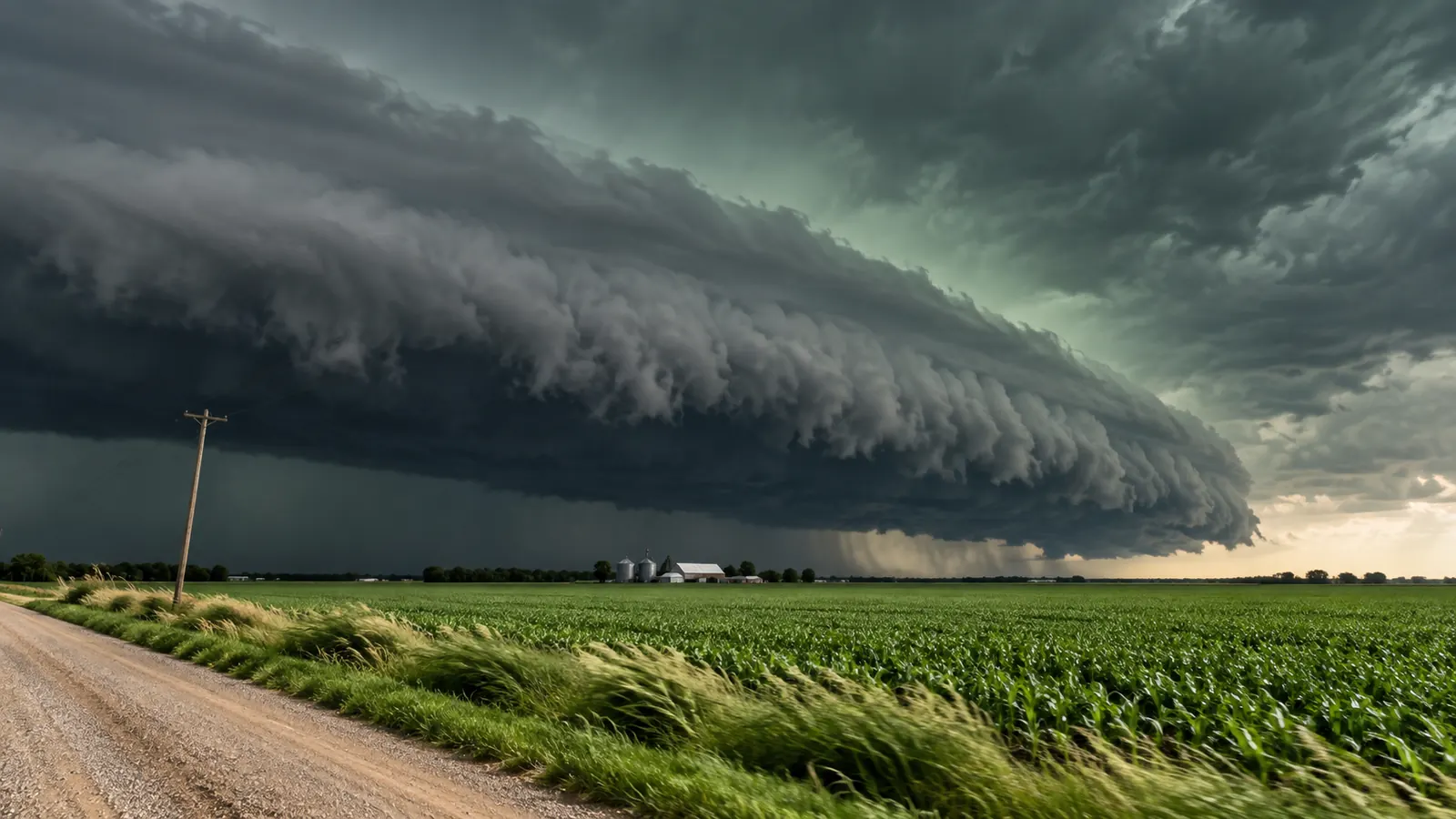

Ten guides live here, covering the two hazards that arrive together: tornadoes, and the severe thunderstorms that produce most of them.
The through-line is that almost all of it is decided before the day. Which room you go to, how you'll be told, and whether the alert you're reading means prepare or move.
Know What the Alert Is Telling You
Four words do most of the work in severe weather, and two of them are routinely mixed up. A watch means the ingredients are there across a wide area for hours. A warning means it's happening, in a small polygon, now.
The severe thunderstorm version is taken less seriously than it should be — straight-line winds regularly match a weak tornado across a much wider area, and most of those warnings never reach your phone at all.
See the Risk Before It Arrives
Two very different maps get confused constantly. The day-ahead outlook tells you whether today is dangerous where you live. A history map tells you whether your county has a past — useful before a house purchase or a shelter, useless this afternoon.
And the season itself moves: earlier in the Gulf states, later in the northern Plains, with a second peak in the Southeast that catches people who filed tornadoes under spring.
TODAY'S RISK
The Storm Prediction Center outlook. Probabilities for the next 24 hours, refined through the day.
LONG-TERM RISK
Historical paths and FEMA's risk index. For deciding where to live, or whether to build.
Decide Where You Go
The free version of sheltering is a decision, not a purchase: lowest floor, most interior room, no windows, shoes and a helmet kept in there. That covers most households and costs nothing.
A purpose-built shelter is the next step, and the thing to get right is the standard rather than the price. Without documented FEMA P-320 or ICC-500 compliance you have a strong box, not a safe room.
The Three Days Afterwards
Most guides stop when the wind does. What households actually experience is the outage, the tree across the drive, and a week of decisions about contractors and insurers.
That's the part worth reading before it happens, because the post-storm hazards — live lines, generators indoors, trees under tension — injure more people than the storm did.
If you only do one thing after reading this page: name the room, and tell everyone in the house where it is.
Sources
- NOAA Storm Prediction Center — convective outlooks, watches and the national tornado database
- National Weather Service — warning criteria, damage threat categories and sheltering guidance
- FEMA — P-320, P-361 and the National Risk Index
- Ready.gov — tornado and thunderstorm preparedness
This page publishes no forecast of its own. When a warning is active or an emergency is underway, follow local authorities, National Weather Service alerts and emergency services before any general guidance. See our Editorial Policy and Sources & Fact-Checking.