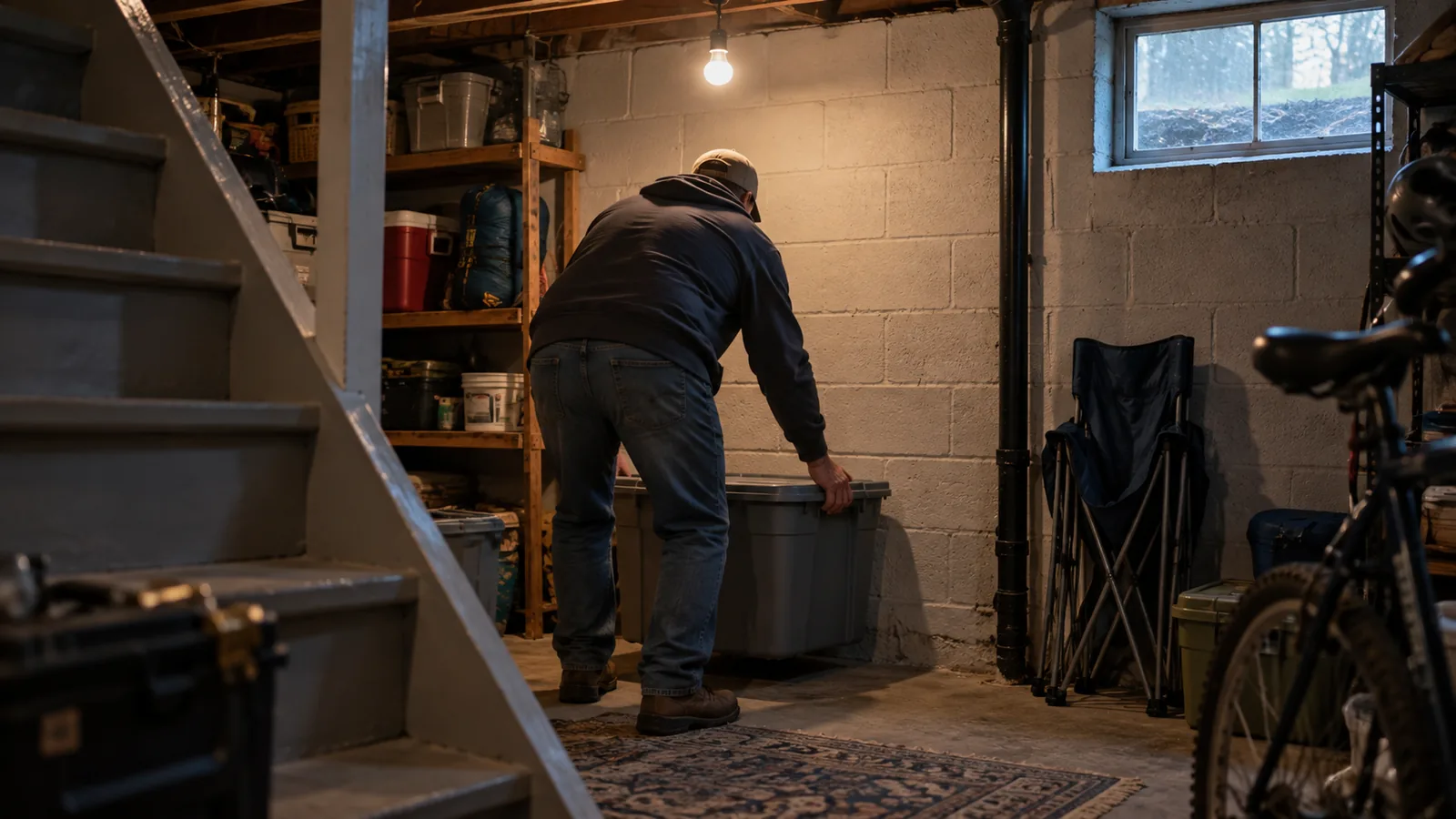

Tornado preparedness comes down to one decision made on a calm evening: where in this building does everyone go, and how do they find out they need to go there?
Everything else is refinement. Households that have answered those two questions do well; households that haven't spend the warning arguing about the basement.
Choose the Room Before You Need It
The rule is simple and worth saying in full: put as many walls as possible between you and the outside, and get as low as the building allows.
A basement is best, and within a basement the corner away from the side the storm is coming from, under something sturdy. If the house has no basement, the target is an interior bathroom, a closet, or a hallway with no exterior walls — on the lowest floor, with the door closed.
A bathroom is often the best non-basement option for an unglamorous structural reason: it's a small room with plumbing in the walls, which makes it stiffer than a closet framed out of nothing. The bathtub is a useful place to be, with a mattress or cushions pulled over you.
Walk the route once, with everyone. A tornado preparedness plan that lives in one person's head is not a plan — it's a preference.
Apartment dwellers have a different version of the same problem, and it's covered in Apartment Preparedness: interior corridors, stairwells, and never the lift.
Make Sure You're Actually Told
Tornado warnings arrive on phones automatically, with no app and no signup — see Wireless Emergency Alerts. That covers most people most of the time, and it has two failure modes that matter here.
It needs a working cell site, and towers congest and lose power exactly when a severe storm is overhead. And it usually doesn't carry the watch, which is the part that gives you hours instead of minutes.
The fix is a second channel that doesn't touch the network. A NOAA weather radio with county programming sits silent for months and then wakes the house at 3am, which is the scenario worth buying for — NOAA Weather Radios covers how to set one up.
If you sleep through phone alerts, say so out loud and solve it now. A warning that arrives while everyone is asleep is the most common way this goes wrong.
The Tornado Preparedness Checklist
Short, because a long list doesn't get done. These are the tornado preparedness tips that survive contact with a real afternoon.
- Name the room and tell everyone, including visitors and anyone who stays over.
- Shoes, torch, helmets stored in that room, not fetched on the way.
- A weather radio with your county programmed, batteries fresh.
- Phone alerts on, volume up overnight, and charged when a watch is issued.
- Bring in the projectiles — garden furniture, bins, trampolines — during the watch.
- Know the neighbour's basement if you don't have one, and ask before the day.
- Documents and medication where you can grab them, per Emergency Documents.
Supplies that live in the shelter itself — water, blankets, a way to signal — are a separate short list, in Tornado Shelter Supplies. The broader severe-storm kit is in Storm Preparedness & Kits.
And if the difference between the two alert words isn't second nature yet, Tornado Watch vs Warning takes two minutes and is the highest-value page in this section.
Pick the room tonight, put shoes in it, and tell everyone where it is. That's most of the job.
FAQ: Tornado Preparedness
Where is the safest place in a house?
The basement, in a corner away from the storm's approach, under something sturdy. Without a basement: an interior bathroom, closet or hallway on the lowest floor, door closed, away from every exterior wall.
What if I don't have a basement?
An interior bathroom is usually the best option — small, and stiffened by plumbing in the walls. Get in the tub with cushions or a mattress over you, and cover your head.
Should I open the windows?
No. It does nothing useful for pressure and it wastes the seconds you need to reach shelter. This one is a persistent myth.
What should I keep in the shelter room?
Shoes, a torch, helmets, water and a way to be heard. Keep them there permanently rather than planning to carry them in.
How will I know a tornado is coming at night?
Phone alerts work if the network holds and the volume is up. A NOAA weather radio with your county programmed is the layer that still works when towers are down, and it's specifically built to wake people.
Is a mobile home ever safe?
No, at any intensity. Identify a permanent building nearby and move there when the watch is issued, not when the warning arrives.
Sources
- National Weather Service — tornado safety and sheltering guidance
- NOAA Storm Prediction Center — watches, warnings and outlooks
- FEMA — safe rooms and sheltering criteria
- Ready.gov — tornado preparedness
This page is general information. When a warning is active or an emergency is underway, follow local authorities, National Weather Service alerts and emergency services before any general guidance. See our Editorial Policy and Sources & Fact-Checking.