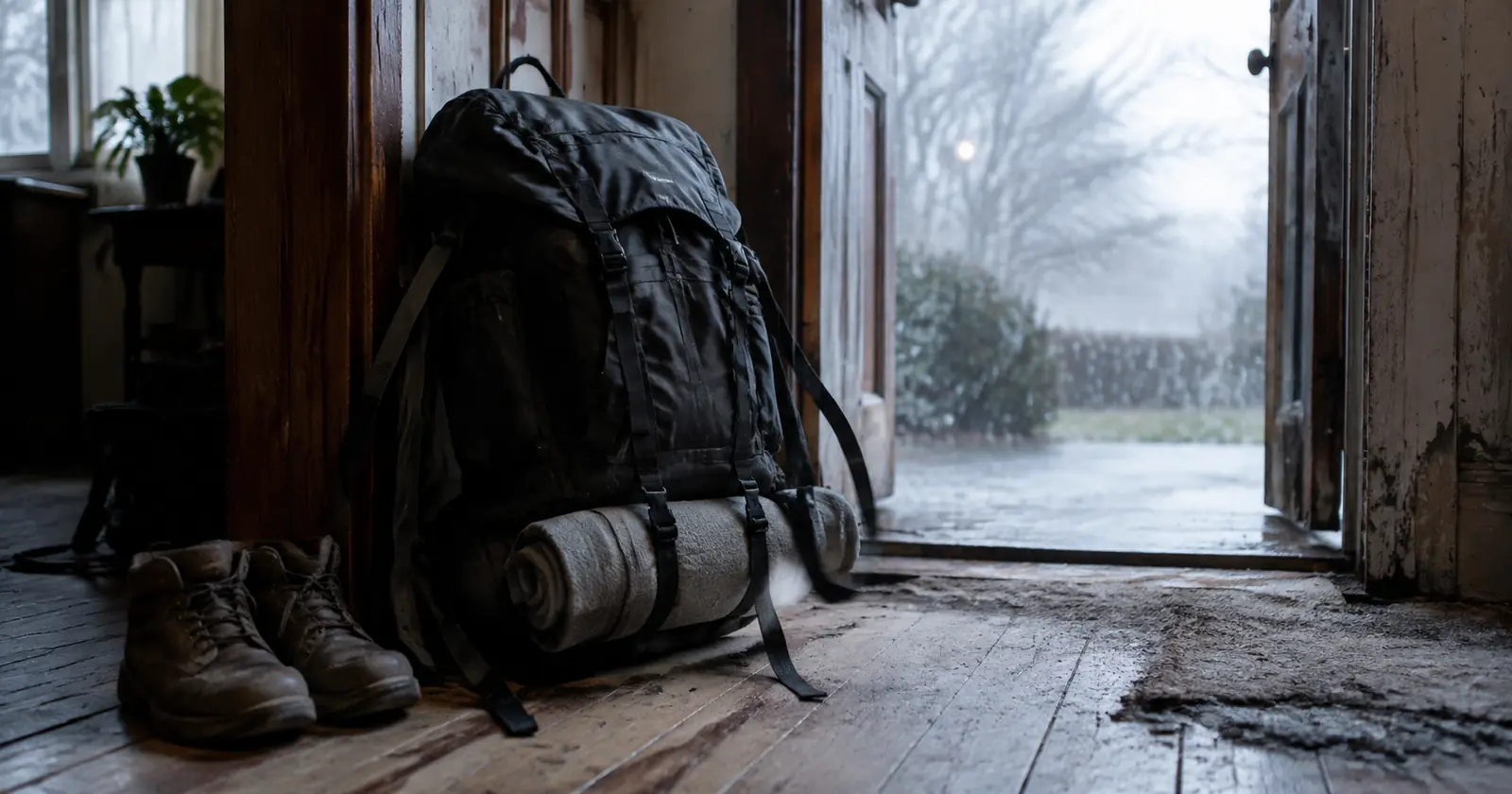

A bug-out bag assumes no one is providing shelter, water or heat. That's the entire difference from a go bag, and it's why these cost two to four times as much.
It's also why the category attracts so much junk. Once you're selling self-sufficiency, you can put anything in the bag and call it survival gear — and a lot of manufacturers do. I've stopped counting piece totals and started counting litres and calories, which sorts the market out quickly.
How We Chose
We haven't tested these bags. CNN Underscored has, recently, and TruePrepper has been buying and testing kits in this category for several years. This page uses their findings alongside manufacturer specifications and prices checked in September 2026.
Where a tester found a flaw, it's in the table. That's the part many pages in this category leave out, and it's the part worth reading.
Three Specs, Then Everything Else
Water plus treatment. Echo-Sigma ships 2.5 litres in packets plus purification tablets rated for roughly six more gallons. That's a real answer. Uncharted's kit, per CNN Underscored, ships with no drinkable water at all — which doesn't make it a bad kit, but it does mean you're buying water separately on day one.
Calories. Echo-Sigma's 2,400 calories is, as CNN put it, not three days' worth, but it's a genuine foundation. Compare that against kits that list "emergency food" and nothing else.
The harness. The spec that gets least attention, and the one that decides whether the bag gets carried. CNN found Echo-Sigma's shoulder straps thin and the bag narrow, which made it the least comfortable in their test. That's a serious mark against an otherwise strong kit, and it's exactly the sort of thing you can't see on a product page.
The Picks
| Kit | Covers | Strength | Documented weakness |
|---|---|---|---|
| Echo-Sigma Bug Out Bag | 1 person, 5–7 days | 619.99 $. 2.5 L water packets, 2,400 cal, purification tablets, Midland ER40 radio, tube tent and sleeping bag. CNN's pick for needing fewest additions | Thin shoulder straps and a narrow body — least comfortable bag in CNN's test |
| Uncharted SEVENTY2 Pro | 2 people | First aid kit CNN called a standout: eye-wash vial, gloves, full-size shears, pressure wrap, space for your own meds. Multitool, 4in fixed blade, collapsible shovel. 36 L waterproof roll-top | No drinking water included |
| Sustain Supply Comfort4 | 4 people | 399.99 $, 32 lb. Eight emergency meal kits and two 2,400 cal bars, six 1 L AquaLiterz, four filter straws, Mora carbon knife, plus a wood stove and cookware most kits leave out | 32 lb packed. That is a lot to carry any distance, and one person ends up carrying it |
| Ready America / Everlit / Guardian | 1–4 people | Budget tier, tested by TruePrepper | Generic components; TruePrepper's process was partly about eliminating cheaply made kits |
What I'd Skip
Fish hooks, snare wire, and the survival-manual paperback. If your three-day plan involves fishing, the plan is the problem.
Piece counts above about eighty. Padding.
Cardboard inside a dry bag. Reviewed.com found the contents of the Judy kit packed in cardboard boxes inside its waterproof shell, next to a radio with no manual tuning. Waterproofing the outside and then filling it with something that fails when damp is the kind of detail that decides whether a kit still works on day three.
Camouflage and MOLLE panels, unless you genuinely intend to attach pouches — and check the webbing first. Reviewed found the PALS-style webbing on one popular kit too narrow to accept a standard MOLLE pouch, which is the kind of detail that turns a feature into decoration.
Or Don't Buy One
Plenty of households don't need a bug-out bag. For a typical evacuation-focused household, a lighter go bag fits better, because the realistic scenario ends at a shelter or a relative's house. That case is made properly in Go Bag vs Bug-Out Bag.
If you're still here, you're buying self-sufficiency. Check water treatment, calories and the harness, in that order, and ignore everything else on the product page.
- Go Bags & Evacuation Bags — the lighter alternative.
- 72-Hour Kits — the three-day standard.
- Emergency Backpacks — if you're building rather than buying.
FAQ: Bug-Out Bags
What should a bug-out bag contain?
Three days of water treatment and calories, shelter you carry, warmth, light, first aid, tools and documents. If the kit assumes a roof at the other end, it's a go bag rather than a bug-out bag.
Are premade bug-out bags worth it?
Above roughly 300 $, yes, for the time saved and because it exists today. Below that, you'll do better assembling it. The recurring weakness in premade kits is the pack itself.
How heavy should it be?
Light enough that the person carrying it can walk with it and manage stairs. There's no universal number — test it rather than weighing it.
Which premade bag needs the fewest additions?
CNN Underscored's testing put Echo-Sigma ahead on completeness, with water packets, calories, purification tablets and a Midland ER40 radio. They also found its shoulder straps the least comfortable of the group. At 619.99 $ for one person, it is also the most expensive kit on this page.
Do you test these bags?
No. We use manufacturer specifications, current prices and the published findings of testers who bought and used them, and we name them.
Sources
- CNN Underscored — bug-out bag testing, August 2026
- TruePrepper — multi-year premade kit testing
- Reviewed.com — emergency kit testing
- Echo-Sigma, Uncharted Supply Co, Sustain Supply — specifications and pricing, checked September 2026
When a warning is active, follow local authorities and official emergency instructions before any general guidance. See our Editorial Policy and Sources & Fact-Checking.