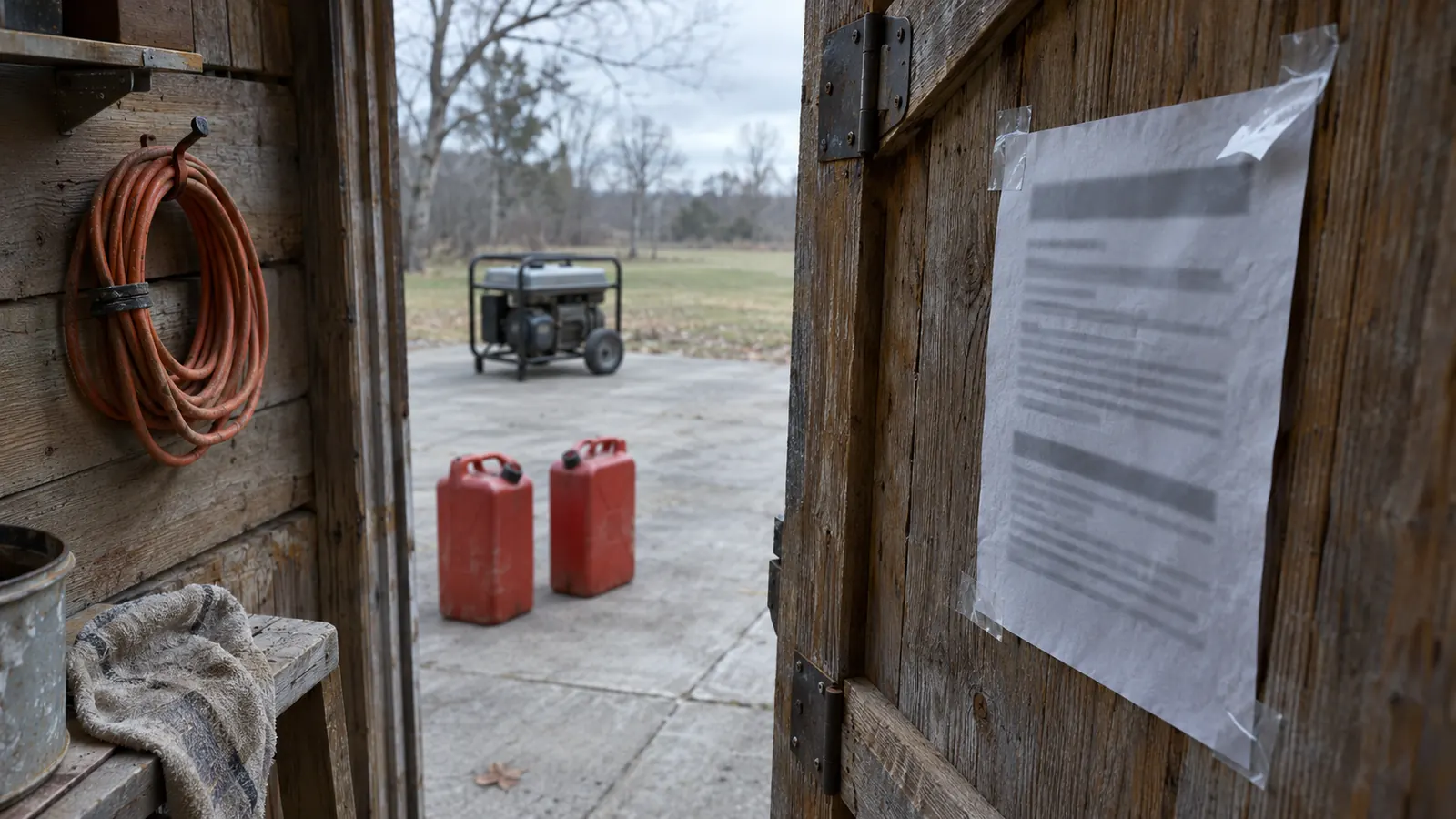

Most generator safety tips come as twenty items in no particular order. The useful version is shorter and ranked: two rules account for nearly all the deaths, and the rest is housekeeping.
Below is that ranked list, plus a one-page generator safety checklist to print and tape up where the machine lives. The printed copy is the point of this page — a rule nobody can see at two in the morning is not a rule.
The Two Rules That Matter Most
1. Outside only. Never in a garage, shed, porch, carport or basement — including with the door open. Carbon monoxide is colourless, odourless and kills quickly; it is the reason people die after storms, not the storm. Keep the machine well clear of the building, exhaust pointed away from windows, doors and vents, and a working CO alarm on every level.
2. Never plug a generator into a wall socket. It energises the utility's lines through your meter, can kill someone working to restore your power, and bypasses every protective device in the house. Use outdoor-rated cords to appliances, or have a licensed electrician fit transfer equipment under permit. There is no acceptable brief exception.
The Rest of the Rules
The generator safety rules worth posting, in the order they tend to bite:
- Let it cool before refuelling. Petrol on a hot exhaust ignites.
- Store fuel properly. Approved containers, outside living space, within your local fire code's quantity, and rotated — petrol degrades in months.
- Keep it dry without smothering it. A running cover made for the machine; never a tarpaulin or a crate, which restrict airflow and cause both overheating and carbon monoxide.
- Use the right cords. Outdoor-rated, heavy enough for the load and distance, undamaged, not pinched in doorways.
- Do not overload it. Size on running watts and leave headroom.
- Keep children and pets clear. Exhaust and housing get hot enough to burn.
- Test it before the season, not during the outage. Run it under load, check oil and fuel age.
- Keep an extinguisher nearby rated for flammable liquids.
Those are the generator safety precautions that fit on a page. What does not fit is anything involving your electrical panel.
What This Page Deliberately Does Not Cover
Interlock kits, transfer switches, inlet boxes, bonding and grounding are hardware and wiring decisions, not posted rules. They belong with the installation — a licensed electrician, under permit, to your local code. Mixing a wall chart with a wiring guide is how people end up improvising at a panel in the dark.
For the hardware: portable generators for how a portable unit connects and where it can run, standby generator installation cost for the permanently installed case, and power outage preparedness for the wider outage.
Posting It Where It Will Be Read
Searches for generator safety signs, generator safety signage and a generator safety infographic all want the same thing: something visible at the machine rather than a page to remember. That is what the sheet is for, and why it stays legible in black and white at arm's length.
Posting it outside a private home — a workplace, a site, a shared building — changes things: the generator safety requirements that apply there come from the workplace regulator and from your employer, and they take precedence. Treat these generator safety tips and best practices as a reminder alongside those rules, never instead of them.
FAQ: Generator Safety
What are the most important generator safety tips?
Of all the generator safety tips in circulation, two carry the weight: outdoors only, well clear of the building with the exhaust directed away from openings, and never into a wall socket. The rest — cooling before refuelling, fuel storage, cords, load — matters but comes after.
Can I run a generator in my garage with the door open?
No. Carbon monoxide accumulates in attached and partly enclosed spaces, and an open door does not make a garage safe. The same applies to sheds, porches and carports.
How far from the house does it need to be?
Follow the clearance in the manufacturer's manual, keep the exhaust pointed away from windows, doors and vents, and err on the side of further. Local code may set its own minimum for a permanently installed unit.
Is it safe to refuel while it is running?
No. Shut it down and let it cool first — spilled petrol on a hot exhaust is a common and avoidable cause of fire.
Do I need a CO alarm if the generator is outside?
Yes. Exhaust still reaches the house through windows, vents and gaps, and a working alarm on every level is the only thing that will tell you. Check it before the season.
Can I follow these guidelines to connect it to my panel myself?
No. These generator safety guidelines stop where the wiring starts. Transfer equipment is work for a licensed electrician under permit, and the requirements come from your local code.
Sources
- U.S. Consumer Product Safety Commission — portable generator carbon monoxide hazard, placement and labelling requirements
- Centers for Disease Control and Prevention — carbon monoxide poisoning after storms and power outages
- Occupational Safety and Health Administration — generator grounding, backfeed and workplace use
- National Fire Protection Association — National Electrical Code and fuel storage provisions
- Federal Emergency Management Agency — power outage safety guidance for households
Clearance distances, fuel storage limits and permit requirements are set by the manufacturer's manual and by local code, and workplace use is governed by rules that take precedence over any general sheet; verify both. This page is general information and nothing here is a wiring procedure. See our Editorial Policy, Sources & Fact-Checking and Affiliate Disclosure.