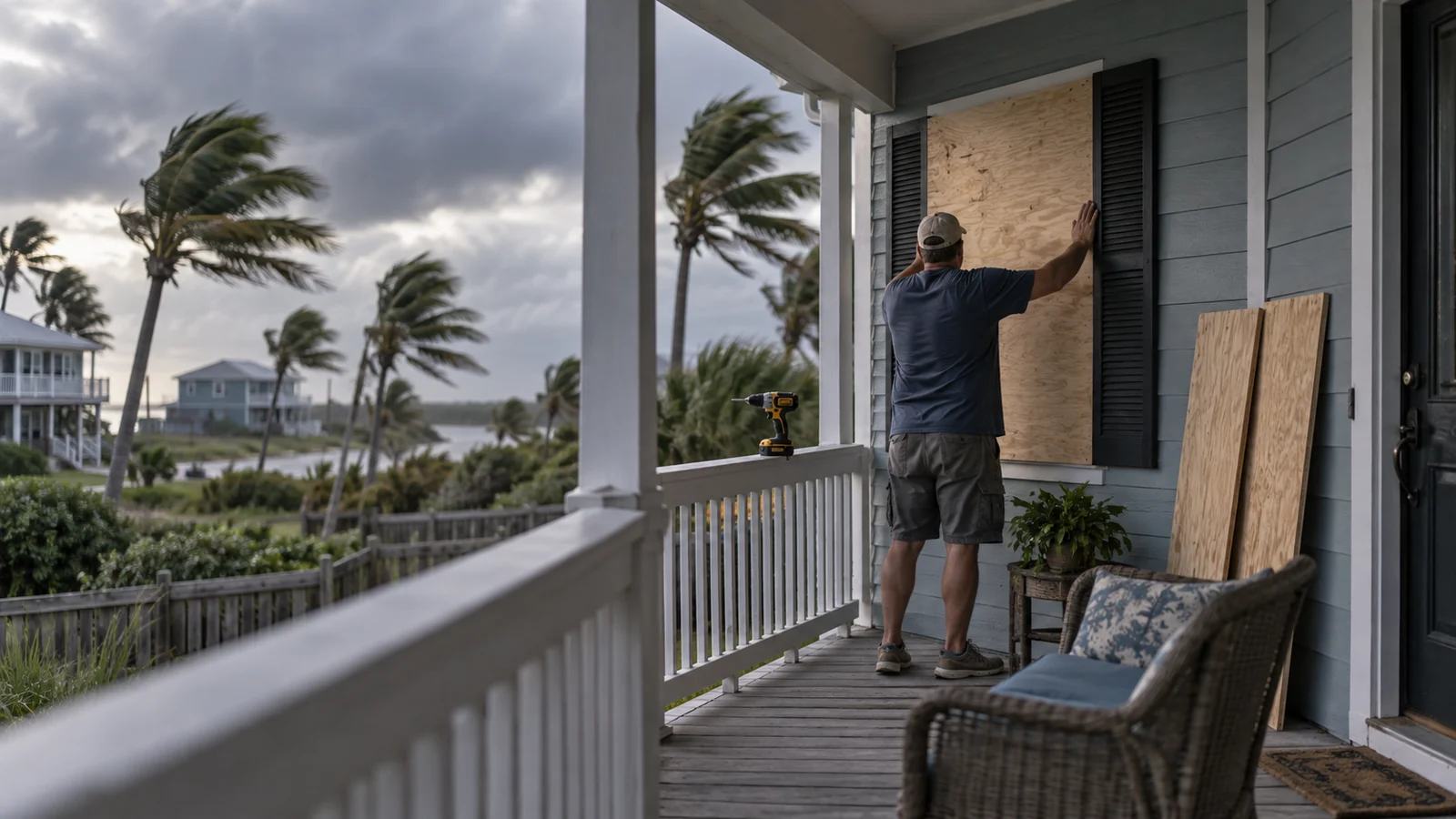

Hurricane preparedness has an advantage almost no other hazard gives you: days of warning. The failure mode isn't surprise, it's leaving everything until the shops are empty and the queue for plywood is round the block.
So the useful version is a calendar, not a list. Some of this is done in May. Some of it is done when a storm has a name. Very little of it should be done on the last day.
What to Do Before the Season
This is the part that can't be done later, and it's most of the value.
Find your evacuation zone. Zones are assigned by your county and based on how far surge is expected to reach. They are not the same as flood insurance zones, and people conflate the two constantly — Hurricane Evacuation Zones & Routes covers how to look yours up.
Sort the insurance. Standard homeowner policies do not cover flood damage. A separate flood policy is a different product, and new policies do not take effect immediately — there is a waiting period, which is precisely why it cannot be arranged once a storm is forecast. Check your current cover in spring, not in August.
Deal with the trees. Limbs over the roof or the service line are the single most common way an ordinary storm becomes an expensive one. That work is seasonal and booked out when everyone wants it.
Decide about shutters. Permanent shutters or pre-cut panels are a once-only job. Cutting plywood in a rush, in the rain, with everyone else at the same shop, is the version nobody enjoys.
Photograph the house. Room by room, including serial numbers on anything expensive. Store it somewhere that isn't the house — this is the evidence an insurer asks for and almost nobody has.
What to Do When a Storm Is Named
Now the clock starts, and the hurricane preparedness checklist gets short and specific.
Fuel and cash early. Both run out, and card terminals fail with the network. Fill the car when the storm is still offshore.
Refill prescriptions. Pharmacies close and supply chains stop. This is the item people most regret leaving.
Charge everything, then charge the spares. Power banks, laptops, the car. A charged vehicle is a phone charger.
Clear the garden. Furniture, bins, the barbecue, plant pots, anything loose. In a hurricane these are projectiles, and it takes twenty minutes.
Freeze water bottles. They keep the freezer cold through an outage and become drinking water afterwards.
Fill the bath for flushing, and fill containers for drinking. Municipal water can fail or be placed under a boil notice.
What actually belongs in the supply box, and what's usually missing from it, is in Hurricane Supplies & Kits.
The Part That Outlasts the Storm
The wind is usually over in hours. The outage is measured in days, sometimes weeks, and that's the part households are least ready for.
Plan for no power, no air conditioning, no refrigeration, possibly no water and no card payments, for longer than feels reasonable. The general household kit covers most of it — 72-Hour Kits and Emergency & Survival Kits — with cooling and cooking the two hurricane-specific additions.
Generators deserve a blunt sentence of their own: they kill people every season, and always the same way. Outdoors only, well away from windows and doors, never in a garage even with the door open.
Afterwards, the hazards change rather than end. Standing water hides road damage and carries current from downed lines. Roofs and trees fail hours after the wind drops. Water may need boiling.
And a hurricane preparedness plan that only one person knows isn't a plan — Family Emergency Plans covers who decides, who calls whom, and where you meet if the phones are down.
Look up your evacuation zone tonight. It takes five minutes and it's the one thing you cannot do later.
FAQ: Hurricane Preparedness
What should I do first?
Find your county evacuation zone and check whether you have flood cover. Both take minutes, both are impossible to arrange once a storm is forecast.
Does the category tell me how dangerous it is?
Only for wind. It says nothing about storm surge, rainfall or how long the storm will linger — and surge is what causes most hurricane deaths.
Should I tape my windows?
No. Tape does not stop glass breaking and it makes the shards larger. Shutters or properly fitted panels are the only measures that help.
When is it too late to buy flood insurance?
Once a storm is forecast. New policies carry a waiting period before they take effect, which is why this belongs on the spring list rather than the storm list.
How long should I plan to be without power?
Longer than feels reasonable. Wind damage is repaired in hours; distribution networks take days or weeks, and refrigeration, water and card payments all depend on them.
Is it safe to run a generator in the garage?
No, not even with the door open. Generators run outdoors, well away from windows and doors. Carbon monoxide poisoning is the most common post-hurricane killer after drowning.
Sources
- NOAA National Hurricane Center — hurricane preparedness guidance and Saffir-Simpson scale
- National Weather Service — storm surge warnings and "Turn Around Don't Drown"
- FEMA and Ready.gov — hurricane preparedness and flood insurance
- CDC — carbon monoxide and generator safety
This page is general information and not insurance advice. When a warning is active or an evacuation order is issued, follow local authorities, the National Hurricane Center and emergency services before any general guidance. See our Editorial Policy and Sources & Fact-Checking.