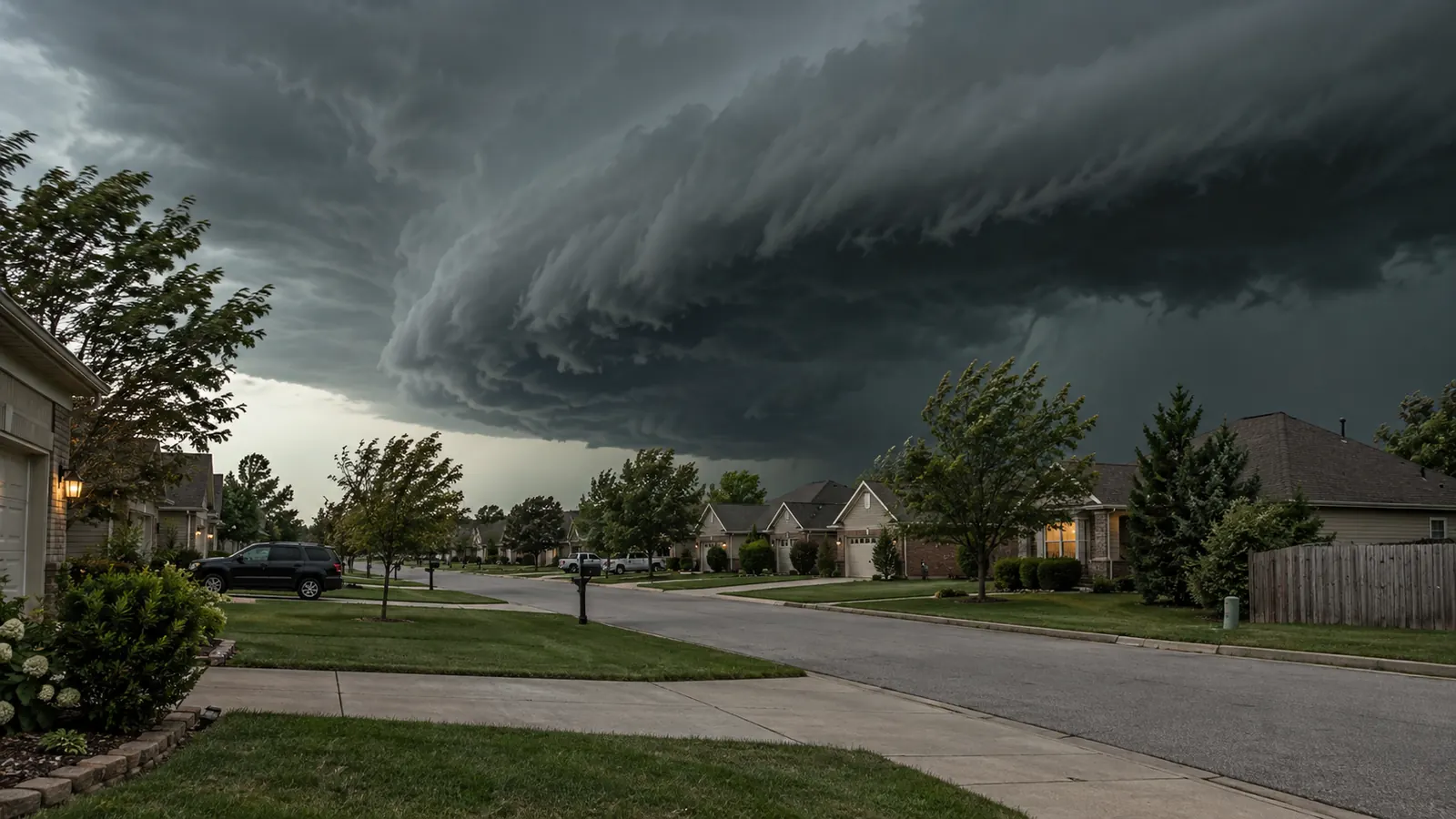

The tornado watch vs warning distinction is the single most useful thing to know about severe weather, and the words are unhelpfully similar. One means conditions are right. The other means one is happening.
Get them the wrong way round and you either spend the afternoon in a basement for nothing, or you're still watching the sky when you should already be under the stairs.
What Each One Actually Means
A tornado watch is issued by the Storm Prediction Center, usually covering a large area and several hours. It says the ingredients are in place — instability, wind shear, a trigger. Most watches end with no tornado at all, which is exactly why people learn to ignore them and why that's the wrong lesson.
The correct response to a watch is preparation, not disruption. Know where your shelter is. Put shoes and a torch there. Charge the phone. Bring in anything that becomes a projectile. Then carry on with your day, paying attention.
A tornado warning is issued by your local National Weather Service office, for a much smaller area and a much shorter time. It means a tornado has been seen by a trained spotter or indicated by radar signature. There is no ambiguity about the response: you go to shelter immediately.
The tornado watch vs warning meaning that people actually retain is the mnemonic: you watch the ingredients gather, you act on the warning.
Side by Side
| Tornado watch | Tornado warning | |
|---|---|---|
| Means | Conditions could produce tornadoes | One is occurring or imminent |
| Issued by | Storm Prediction Center | Your local NWS forecast office |
| Area | Large — multiple counties or states | Small — a polygon, often part of a county |
| Lead time | Hours | Minutes |
| Your response | Prepare. Locate shelter, charge phone, stay alert | Shelter now. Lowest floor, most interior room |
| Phone alert | Usually not | Yes — wireless emergency alert |
That last row matters. Watches generally don't push an alert to your phone, so a household relying entirely on phone notifications gets no advance notice at all — only the minutes-level one. That's the argument for a receiver that carries both, covered in NOAA Weather Radios.
What to Do in the Ten Minutes You Get
A tornado warning today gives most people somewhere between a few minutes and about a quarter of an hour. That is not enough time to decide anything, which is why the decision is made in advance.
Go to the lowest floor. Get to the most interior room — a bathroom, a closet, under a staircase. Put as many walls between you and the outside as the building allows. Cover your head and neck; most tornado injuries come from flying debris rather than from the structure itself.
Wear shoes. It sounds trivial and it is the thing people most regret, because what's on the floor afterwards is broken glass and nails.
If you have a helmet of any kind — bike, sports — put it on. It is the cheapest head protection in the house and it is the one recommendation that costs nothing to follow.
Where to go if the building has no basement, and how to decide before the day arrives, is in Tornado Preparedness. If you're weighing a purpose-built shelter, the types and what they cost are in Tornado Shelters.
Learn the two words tonight and tell the household. It takes a minute, and it's the highest-value minute in severe weather.
FAQ: Tornado Watch vs Warning
What is the difference between a tornado watch and a warning?
A watch means conditions could produce tornadoes across a wide area over several hours. A warning means one has been spotted or detected on radar in a small area, right now. Watch means prepare; warning means shelter.
Which one is more serious?
The warning, without question. A watch is a heads-up. A warning is an instruction to move immediately.
Will my phone alert me for both?
Warnings trigger a wireless emergency alert. Watches usually don't, which is why a weather radio or an app that carries watches is worth having.
Where should I go during a warning?
Lowest floor, most interior room, away from windows, with something over your head and neck. Put on shoes. A bike helmet is genuinely worth wearing.
Is my county automatically under the warning?
No. Warnings are drawn as polygons around the threat and often cover only part of a county. Check whether your location is inside the shape rather than relying on the county name.
What if I'm in a car or a mobile home?
Get to a permanent building before the warning if you can. Don't shelter under an overpass, and don't try to outrun it. A mobile home is not a shelter at any intensity.
Sources
- NOAA Storm Prediction Center — watch issuance and convective outlooks
- National Weather Service — tornado warning criteria and storm-based polygon warnings
- Ready.gov — tornado safety guidance
- FEMA — safe room and sheltering guidance
This page is general information. When a warning is active or an emergency is underway, follow local authorities, National Weather Service alerts and emergency services before any general guidance. See our Editorial Policy and Sources & Fact-Checking.