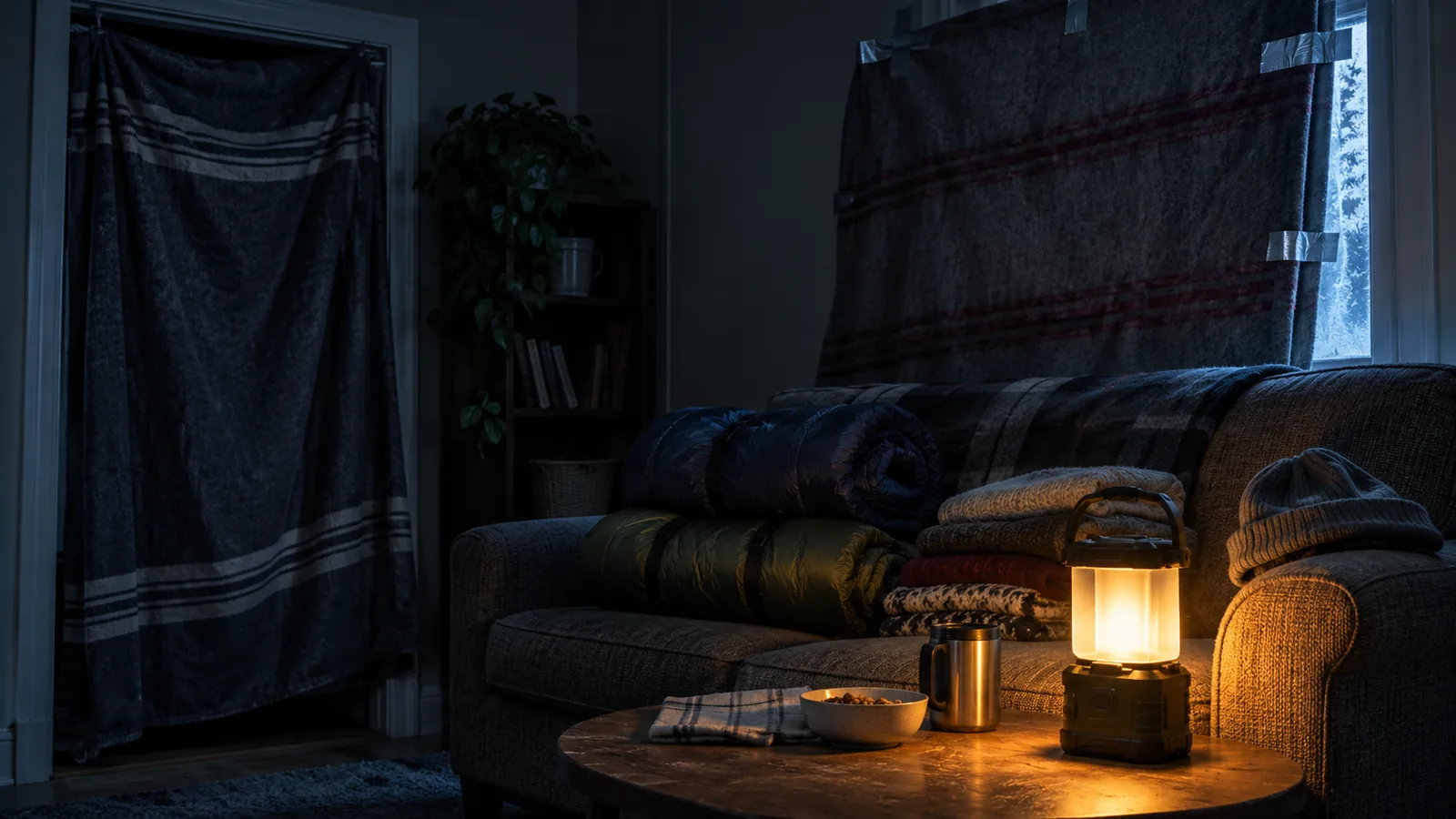

Snow is the part people prepare for and the part that rarely hurts anyone. The dangerous winter storm takes the power out for three days in a house that needs electricity to stay warm, then drops the temperature below freezing while the roads are shut.
Framed that way, winter storm preparedness stops being about shovels. It becomes three questions: how do we stay warm, how do we eat and drink, and how do we avoid poisoning ourselves doing the first two.
A Blizzard Is a Wind Event, Not a Snow Event
The word gets used for any heavy snowfall, and the official definition is narrower and more useful. The National Weather Service issues a Blizzard Warning only when three things hold at once: wind from 35 mph, enough snow in the air to cut visibility to a quarter of a mile, and three hours of both.
Notice what is missing: any snowfall total. A storm can bury a city under a foot of snow and never meet blizzard criteria, and a ground blizzard can shut a highway with no new snow at all. That is why blizzard preparedness is partly about not travelling — what makes it lethal is that you cannot see, which turns a plough into something you hit at speed.
A Winter Storm Warning is the broader product, issued when snow, sleet or ice will make travel difficult, with thresholds set locally rather than nationally. The full set of alerts, and which ones should change your plans, is at Winter Storm Watch vs Warning.
The Real Scenario: No Heat for Three Days
Almost every modern heating system needs mains electricity, gas furnaces included, which use it for the blower and controls. So the first question in any blizzard preparedness guide worth reading — and in winter storm preparedness generally — is what happens to your house when the power goes and it is below freezing outside.
Choose and prepare one room. Interior, lowest occupied floor, fewest windows. Close the doors elsewhere and hang blankets over windows and doorways. A whole house is unheatable on a backup; one room is not.
Know your safe heat sources. A wood stove or a properly vented fireplace, if the chimney has been swept. A kerosene or propane heater labelled for indoor use, with the ventilation its manual specifies, never while asleep. Beyond that the answer is clothing and bedding rather than combustion — thin layers, a hat indoors, dry socks, sleeping bags rather than thermostats. Infants, older adults and anyone with a circulatory condition lose heat faster (Senior Emergency Preparedness).
Plumbing. Keep a trickle running at the tap furthest from the main, open the cabinets under sinks on exterior walls, and know where the main shutoff is. If the house will sit unheated for days, draining the system is a conversation for a plumber before the forecast.
Food, Water and the Things That Freeze
A winter storm preparedness list differs from a summer one in small but real ways.
Food that needs no cooking. With the power out and an electric stove, hot meals are a bonus, not a plan. Keep a few days of cold food and a manual can opener.
Water, and the freezing problem. Store the usual gallon per person per day, but keep it inside the heated part of the house — bottles left in an unheated garage freeze solid and some split. Fill the bathtub before the storm. On a well, the pump stops with the power, which makes stored water the whole supply.
The fridge, the light and the car. Keep both appliance doors shut; snow banked in a cooler holds no reliable temperature. Timings and discard rules are at Power Outage Preparedness. Then battery or crank light in every occupied room, a radio that needs neither mains nor signal (NOAA Weather Radios), everything charged beforehand, a full tank, and a boot kit built for sitting still in the cold: Winter Car Kits.
What the Agencies Actually Publish, and What to Print
People search for a FEMA winter storm checklist specifically, so it is worth being precise. FEMA and Ready.gov publish winter weather guidance and short printable sheets, and the Red Cross publishes its own checklist. What does not exist is the single canonical federal one-pager everyone is picturing.
So here is ours, organised by when you do it, because that is the order the decisions arrive in.
FAQ: Winter Storm & Blizzard Preparedness
How do I prepare for a winter storm?
Winter storm preparedness comes down to losing heat: one room you can keep warm, food that needs no cooking, water stored where it will not freeze, light and a radio that work without mains power, a full tank, and a working CO alarm before any backup heat.
What is the difference between a blizzard and a heavy snowstorm?
Wind and visibility. A Blizzard Warning requires wind from 35 mph, snow in the air thick enough to reduce visibility to a quarter of a mile, and three hours of both. Snowfall total is not part of the definition.
Is there a winter storm preparedness checklist pdf from FEMA?
FEMA and Ready.gov publish winter weather pages and short printable sheets, and the weather service and Red Cross publish their own. There is no single official federal one-pager. Ours is linked above.
Is a blizzard preparedness checklist different from a storm one?
Only in emphasis. A blizzard preparedness checklist leans harder on not travelling and on visibility, because the hazard is whiteout rather than accumulation. Everything about heat, water and food is identical.
Can I heat the house with the gas oven or a grill?
No. Both produce carbon monoxide, which has no smell and kills in enclosed spaces — as do charcoal, camp stoves, patio heaters and generators. Use only heat designed and vented for indoor use, never overnight.
Sources
- NOAA National Weather Service — blizzard and winter storm warning criteria, and winter safety
- Ready.gov and FEMA — winter weather preparedness
- FoodSafety.gov and USDA Food Safety and Inspection Service — food safety during a power outage
- CPSC and CDC — carbon monoxide, portable generators and space heaters
- American Red Cross — winter storm safety
Warning thresholds for snow and ice are set by each local National Weather Service office and differ between regions. For current conditions see the Live Emergency Map. When a warning is active, follow local authorities and road closures before any general guidance. See our Editorial Policy and Sources & Fact-Checking.