
Eight guides live here, covering three hazards that have almost nothing in common except the thing that matters most: they all end with a household on its own, in a building that has stopped working, for longer than a day.
An earthquake gives no warning at all. A winter storm gives two days and then takes the heat. A blackout can be either, and arrives with both of the others. What they share is that the useful decisions were made weeks earlier, with a drill, a few straps and a shopping trip nobody remembers.
The Hazard That Skips the Warning
Every other page on this site has a forecast behind it. An earthquake has none, and that single fact reorganises the subject: there is no activation step, no clock, no moment at which you start preparing. Whatever was already done is what you have.
So the work splits cleanly. Securing what falls is a weekend with a drill, and it prevents more injuries than any amount of stockpiling. Knowing what to do in the first ten seconds is a rehearsal, not a decision. And strengthening the building itself is a contractor's job with a price attached — the only one of the three you cannot do yourself.
Then the two that cost money. One is a shopping list you can finish this month; the other is a permit, a contractor and a quote you will need help reading.
Winter, and the Word That Tells You What to Do
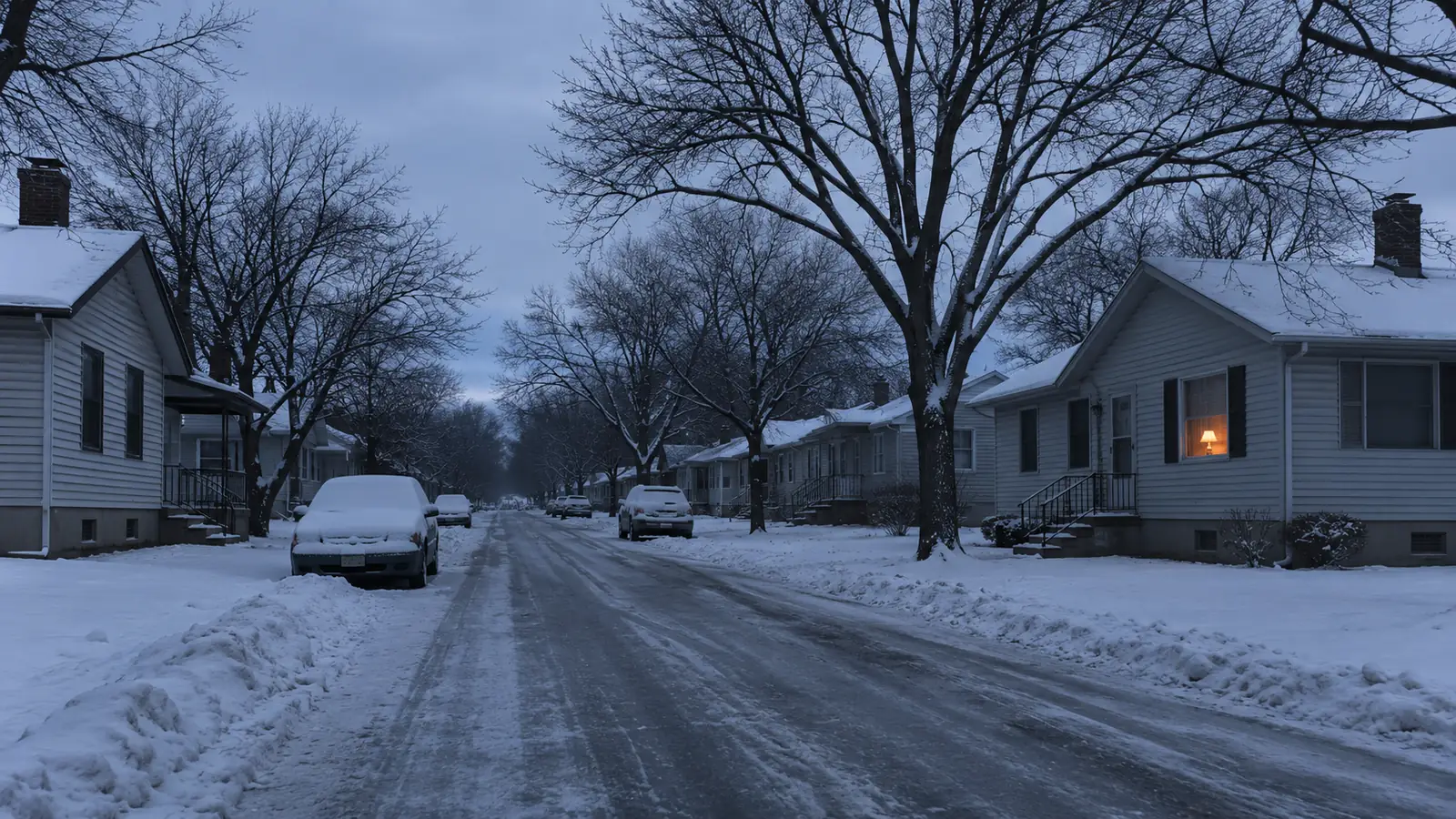
Snow is the part people prepare for and the part that rarely hurts anyone. The dangerous storm is the one that takes the power out for three days in a house that needs electricity to stay warm, then holds the temperature below freezing while the roads are shut.
Before that, there is a vocabulary problem. Nine different winter products can reach your phone, and the part that tells you what to do is not the weather in the name — it is the last word. A watch, a warning and an advisory ask three different things, and the thresholds behind them are set county by county rather than nationally.
WATCH
Possible, one to three days out, moderate confidence. Do the things that stop being possible later.
WARNING
Expected or already happening. Act on the plan, and cancel the travel.
When the Grid Is the Problem
A blackout is the common ending of both hazards above, and a hazard in its own right in a heat wave or an ice storm. The preparation is unglamorous: food safety by thermometer rather than by clock, water that keeps running when the pump does not, medication that has a published tolerance, and a generator that lives outside and never anywhere else.
It is also worth knowing why some cuts are announced and others simply happen, and why the power that merely sags can be harder on a refrigerator than the power that stops.
If you only do two things after reading this page: strap the tall furniture to the studs, and decide now which single room you could keep warm with no electricity. Both are cheap, both take an afternoon, and neither can be done once it has started.
Sources
- USGS and FEMA — earthquake hazards, protective actions and seismic rehabilitation of existing buildings
- NOAA National Weather Service — winter weather products, blizzard criteria and local warning thresholds
- FoodSafety.gov, USDA and CDC — food safety during a power outage, and carbon monoxide
- Ready.gov and the American Red Cross — earthquakes, winter storms and power outages
This page publishes no forecast, no alert and no price of its own. Warning thresholds, retrofit ordinances and utility procedures are set locally and change. When a warning is active, follow local authorities, National Weather Service alerts and emergency services before any general guidance. For current conditions see the Live Emergency Map. See our Editorial Policy and Sources & Fact-Checking.