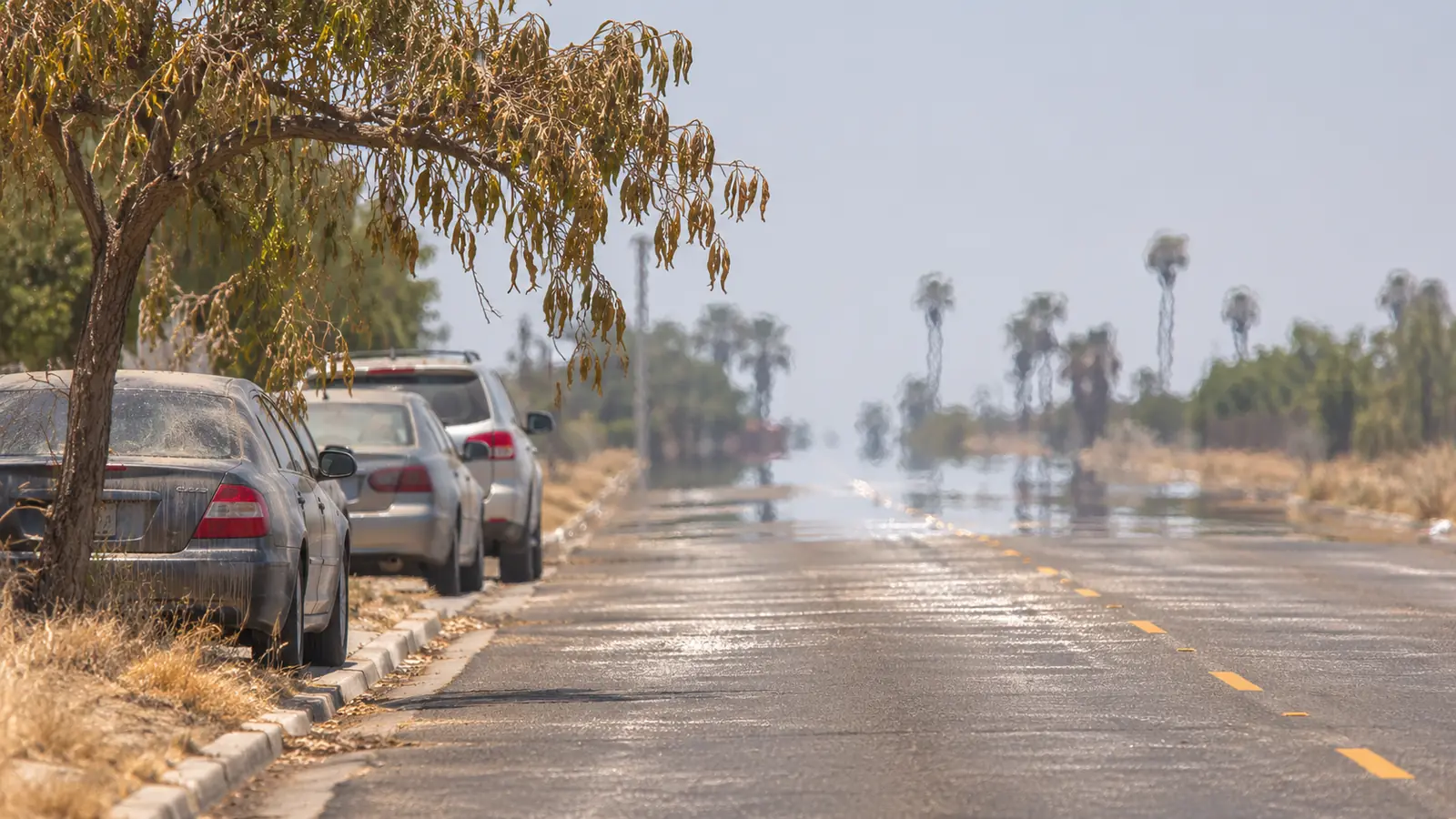

Three products cover dangerous heat in the United States, they sound almost identical, and the one you are under determines whether this is a hot week or a week in which people die.
An extreme heat warning is the serious one. A heat advisory is the step below it. A watch is the same severity as a warning with less certainty about when. The names are confusing by accident, and the National Weather Service changed two of them recently, which has not helped.
Advisory, Warning, Watch: The Three Levels
All three are issued by your local NWS Weather Forecast Office, and all three are built on forecast heat index rather than air temperature alone.
| Heat Advisory | Extreme Heat Watch | Extreme Heat Warning | |
|---|---|---|---|
| Severity | Dangerous | Potentially life-threatening | Life-threatening |
| Certainty | Expected | Possible, timing unclear | Expected or occurring |
| Lead time | Within about 36 hours | Roughly 12 to 48 hours | Within about 36 hours, or now |
| Your move | Precautions, check on people | Make the plan while it's cool | Cancel things; find cooling |
Asked as extreme heat warning vs watch, the difference is confidence and nothing else. A watch is not a milder warning; it is a warning the forecaster is not yet ready to commit to. Treat the watch as the moment to arrange where you and anyone vulnerable will actually be, because once the warning is issued the cooling centres fill and the air conditioning may be struggling.
What Actually Triggers an Extreme Heat Warning
The extreme heat warning criteria are set locally, and they are usually expressed as a heat index value sustained for a given number of hours or days.
The heat index is the key, because humidity is what stops the body cooling itself. Sweat that cannot evaporate does nothing, which is why ninety-five degrees in humid air is worse than a hotter, drier day. The index is also calculated for shade — direct sun adds a great deal to the effective figure, as the NWS notes on its own chart.
Two other inputs matter more than people expect. Overnight minimum temperature is part of several offices' criteria, because a night that does not cool down removes the recovery period and is the mechanism behind most heat mortality in multi-day events. And duration counts: a single hot afternoon is a different hazard from four consecutive days.
So the extreme heat warning meaning is not "it will be very hot". It is "the combination of temperature, humidity, duration and overnight recovery in this specific place has reached the level at which the local office expects heat illness and excess deaths".
Why the Threshold Isn't the Same in Phoenix and Chicago
There is no national number, and anyone offering you one is guessing.
Local offices set criteria against local climatology and local adaptation. A desert city where almost every building is air-conditioned and the humidity is low has a high threshold. A northern city with older housing, less air conditioning and a population unaccustomed to heat has a much lower one — and its heat events kill, which is the whole justification for the difference.
The NWS has also moved toward a HeatRisk framework developed with the CDC, which grades risk on a short scale rather than one index value and accounts for how unusual the heat is for that place and time of year. It is the better mental model: not how hot it is, but how far outside normal, for how long, somewhere people are or are not equipped for it.
What Each Level Should Change in Your Day
At an advisory: move outdoor work and exercise to early morning, drink before you are thirsty, and make the two or three phone calls to people who live alone. That last one is the highest-value action on the list.
At a watch: decide now where the cool place is. Your own home with working air conditioning, a relative's, a library, a mall, an official cooling centre. Charge what needs charging in case the grid struggles, and confirm anyone on medication or using powered medical equipment has a plan.
At a warning: cancel the outdoor plans rather than moving them. Stay out of the sun in the afternoon, keep checking on anyone elderly, isolated or unwell — see Senior Emergency Preparedness — and never leave a child or an animal in a parked vehicle, which heats far faster than people assume even with windows open.
This page covers the vocabulary. The practical work — cooling a house, water, and the scenario where the heat arrives with a power cut — is in Heat Wave Preparedness. To receive the alerts, see Wireless Emergency Alerts and NOAA Weather Radios.
FAQ: Extreme Heat Warning
What does an extreme heat warning mean?
That your local NWS office expects, or is already seeing, heat at a level it considers life-threatening for your area — based on heat index, duration and overnight temperatures rather than daytime temperature alone.
Extreme heat warning vs heat advisory — what's the difference?
Severity. An advisory means dangerous heat you can manage with precautions. A warning means heat expected to cause illness and deaths. Both are forecast with similar confidence; the warning sits at a higher threshold.
What are the criteria for one?
Locally defined, usually a heat index value sustained over a set period, often with an overnight minimum temperature condition. There is no national threshold, by design.
Is a watch worse than an advisory?
In severity, yes. A watch anticipates warning-level heat with uncertain timing, which puts it above an advisory. It is the stage at which to make arrangements rather than take precautions.
What happened to "excessive heat warning"?
The NWS renamed it on 4 March 2025, as part of simplifying hazard names: Excessive Heat Warning became Extreme Heat Warning, and Excessive Heat Watch became Extreme Heat Watch. Heat Advisory kept its name.
Who issues them?
Your local National Weather Service Weather Forecast Office, which also sets the thresholds for its own area.
Sources
- NOAA National Weather Service — heat watch, warning and advisory definitions; hazard simplification
- NOAA National Weather Service — heat index chart and HeatRisk
- CDC — heat stress, heat exhaustion and heat stroke signs and first aid
- Ready.gov — extreme heat
This page is general information and not medical advice. Thresholds and product wording are set by each NWS office and differ by region. For current conditions see the Live Emergency Map. When a warning is active, follow local authorities and public health instructions before any general guidance. See our Editorial Policy, Sources & Fact-Checking and Emergency Medical Disclaimer.