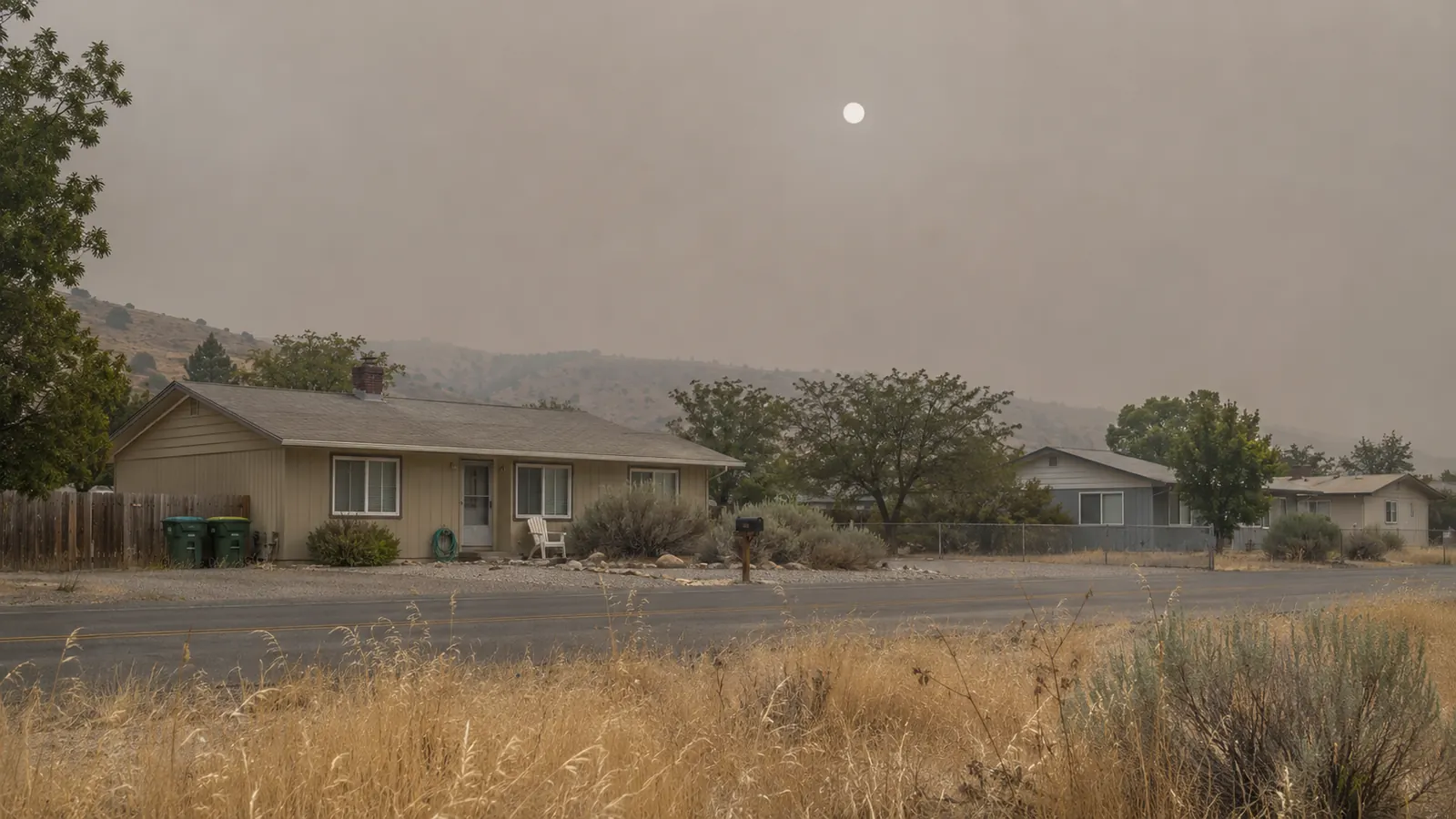

Eight guides live here, covering three hazards that arrive in sequence and are prepared for very differently. A wildfire is decided by what you cleared months earlier. Smoke reaches people a thousand miles from any fire. Heat kills more Americans than either, and does it indoors.
What they share is that almost every useful decision is made before there is anything to look at.
Before Anything Is Burning
The work that saves houses happens on quiet weekends: fuel cleared in bands out from the walls, vents screened, the woodpile moved. Embers land on a building for an hour before any flame is visible, and they find the same handful of weaknesses every time.
The weather side runs in parallel. A fire weather forecast is published every day whether anything is wrong or not; a red flag warning is what happens when that forecast crosses the thresholds your local office has set. Neither means a fire exists — they mean a spark would not stay small.
When You're Told to Go
Two different things get called the same thing. Your zone is a fixed area your county drew in advance; your level is the instruction attached to it this afternoon. Zones do not change during a fire. Levels change three times a day.
The packing follows from the time available, which is the real question and almost never how checklists are organised. Fifteen minutes is people, animals, medication, documents, phone, keys. Everything else belongs to an hour you may not get.
EVACUATION ZONE
A fixed area with a code, drawn by your county. It never changes. Look it up once.
EVACUATION LEVEL
Ready, Set or Go, attached to that zone right now. Only the county can tell you.
The Air, and the Heat That Follows
Smoke is the part of a wildfire that reaches people who are nowhere near it. The orange sky is not the measurement — fine particles are, and they are invisible. Check a number rather than a window, and the thing to drop first is exertion outdoors, not going outdoors at all.
Heat belongs on the same shelf because it arrives in the same season and compounds the same problem: the advice for smoke is to seal the house, and the advice for heat is to open it at night. When both hit during a power cut, that conflict is the emergency.
And the heat vocabulary is worth learning in advance. Advisory, watch and warning sound alike, there is no national threshold behind any of them, and the one you are under decides how serious the week is.
If you only do two things after reading this page: clear the first five feet around the house, and write down your evacuation zone. Neither takes long and neither can be done later.
Sources
- NOAA National Weather Service — fire weather products, heat watches, warnings and advisories
- CAL FIRE and NFPA Firewise USA — defensible space, home hardening and Ready, Set, Go!
- EPA AirNow and CDC — the Air Quality Index, wildfire smoke and heat illness
- Ready.gov — wildfires and extreme heat
This page publishes no forecast, air quality reading or evacuation level of its own. When a warning is active or an order is issued, follow local authorities, National Weather Service alerts and emergency services before any general guidance. See our Editorial Policy and Sources & Fact-Checking.