
Heat wave preparedness gets taken less seriously than storm preparedness, and the ranking is backwards. Heat is consistently among the deadliest weather hazards in the United States, and it kills quietly, indoors, over several days, mostly among people nobody checked on.
It is also the hazard with the least dramatic preparation. There is nothing to board up. The work is a cool room, enough water, and two or three phone calls.
Why Heat Waves Kill More Than Storms Do
A tornado makes the news in an hour. A heat wave does its damage over four or five days, and the deaths are recorded as cardiac and respiratory events. The scale of it stays invisible.
The mechanism is cumulative. The body manages one hot day, recovers overnight, and manages the next. When the overnight temperature stays high, that recovery does not happen, and by the third or fourth day people with existing heart or lung conditions are in real trouble. This is why the National Weather Service builds overnight minima into its criteria, and why a four-day event at ninety-eight degrees is worse than one afternoon at a hundred and five.
The risk is also concentrated: adults over sixty-five, young children, pregnant people, anyone with a chronic illness or on medication affecting fluid regulation, outdoor workers, and people without working air conditioning. Overlapping all of those, people who live alone.
Which is why heat wave preparedness is as much a social task as a household one. What the alerts themselves mean is in Extreme Heat Warnings.
The Scenario That Matters: Heat Plus a Blackout
Every household plan should be built around this and most are not. Demand peaks on hot afternoons, exactly when the grid is least able to absorb a fault, so the outage and the heat arrive together. Air conditioning stops. So does the fridge holding the medication.
Three preparations cover most of it, and they are the core of any heat wave preparedness plan. Know whether anyone depends on powered medical equipment — the utility may keep a medical priority list, and registering costs nothing. Have light that does not need the grid: Emergency Lighting & Lanterns. And keep a cool-place list written down — a relative, a library, a mall, an official cooling centre. Dialling 211 will usually locate one.
Cooling a House You Can't Air-Condition
Stop thinking about the house and start thinking about one room. Choose the one on the lowest floor, on the shaded side, smallest window.
Block the sun before it arrives. Close blinds, curtains or shutters on the sun-facing side in the morning, not once the room is already hot. A reflective panel or even cardboard in that one window makes a measurable difference, and it is the cheapest intervention available.
Open at night only if it is actually cooler outside. Check first. Dragging warm night air through the house is a common mistake, and in a bad event the night air is barely cooler.
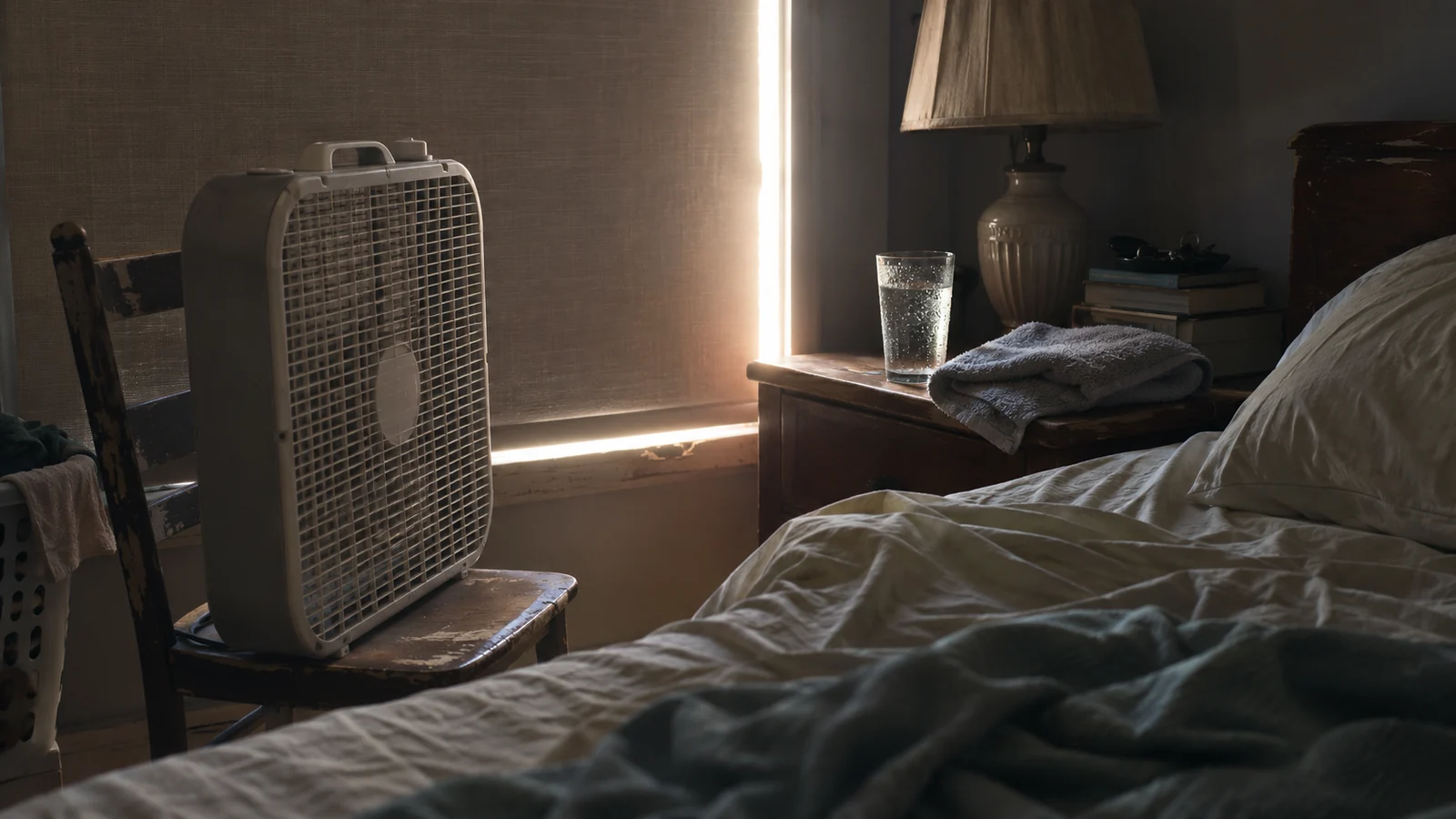
Use water on the body, not just the air. A cool shower, a damp towel on the neck and wrists, feet in cool water. The CDC's line on fans is specific and counter-intuitive: use one while the indoor temperature is below 90°F, but above that a fan can actually raise body temperature rather than lower it. Past that point the things that work are water on skin and getting to a cooler building.
Stop generating heat. No oven, minimal cooking, lights off, electronics off. It adds up in a sealed room.
If wildfire smoke arrives at the same time the advice conflicts, because you cannot open the windows at night — Wildfire Smoke covers filtering a closed room. Renters have a narrower set of options, and Apartment Preparedness works through them.
Water, and the People You Should Be Calling
One gallon per person per day is the standard figure, and it is a floor rather than a target. Heat, children, nursing mothers and anyone unwell push it up. Drink on a schedule rather than waiting for thirst, which arrives late.
The mistake worth naming: if you are sweating heavily for hours, plain water alone is not the whole answer. Eat normal meals, which replace salt, and do not start on salt tablets of your own accord — that is a question for a doctor, particularly on fluid restriction or blood pressure medication. Skip alcohol and go easy on sugary drinks.
Then the part that does the most good for the least effort. Write down two or three people who live alone or are unwell, and call them each day of the event — not text, call. Ask whether the air conditioning is running, whether they are drinking, and whether they have been outside in the afternoon. Heat deaths concentrate among people nobody checked on, which makes this the highest-value item in the plan. Senior Emergency Preparedness goes further on what to ask.
FAQ: Heat Wave Preparedness
How do I prepare for a heat wave?
Choose and pre-cool one room, store more water than the daily minimum, plan for the heat arriving with a power cut, and arrange daily check-ins with anyone vulnerable. Shading windows before the sun hits them does more than anything else free.
How do I keep a house cool without air conditioning?
Shade the sun-facing windows early, concentrate on one low, shaded room, open up at night only if the outside air is genuinely cooler, cool your skin with water, and stop using the oven and other heat sources. Run a fan below 90°F indoors; above that it stops helping.
How much water per person per day in extreme heat?
One gallon per person per day is the baseline recommendation; heat, exertion, children and illness all increase it. Store at least several days' worth, and remember animals.
Who is most at risk?
Older adults, young children, pregnant people, anyone with heart or lung disease, people on medications affecting fluid regulation, outdoor workers, and anyone without working air conditioning — especially if they live alone.
Is there a printable heat wave checklist?
Ready.gov and the CDC both publish free extreme heat one-pagers, which is what most people searching for a heat wave preparedness pdf are after. Many county public health departments publish a local version with cooling centre details.
Sources
- CDC — extreme heat, heat illness prevention, and guidance on electric fans
- NOAA National Weather Service — heat safety and heat-related mortality
- Ready.gov — extreme heat and water storage
- CPSC and CDC — carbon monoxide and portable generator safety
This page is general information and not medical advice, and anyone on fluid restriction or medication affecting hydration should follow their clinician's guidance instead. For current conditions see the Live Emergency Map. When a warning is active, follow local authorities and public health instructions before any general guidance. See our Editorial Policy, Sources & Fact-Checking and Emergency Medical Disclaimer.