
The severe thunderstorm watch vs warning pair works exactly like the tornado one, and it gets taken far less seriously — which is the problem, because the thing most likely to damage your house in a given year is wind, not a tornado.
A watch says the ingredients are there. A warning says a storm has already met the criteria and is heading somewhere specific.
What "Severe" Actually Means
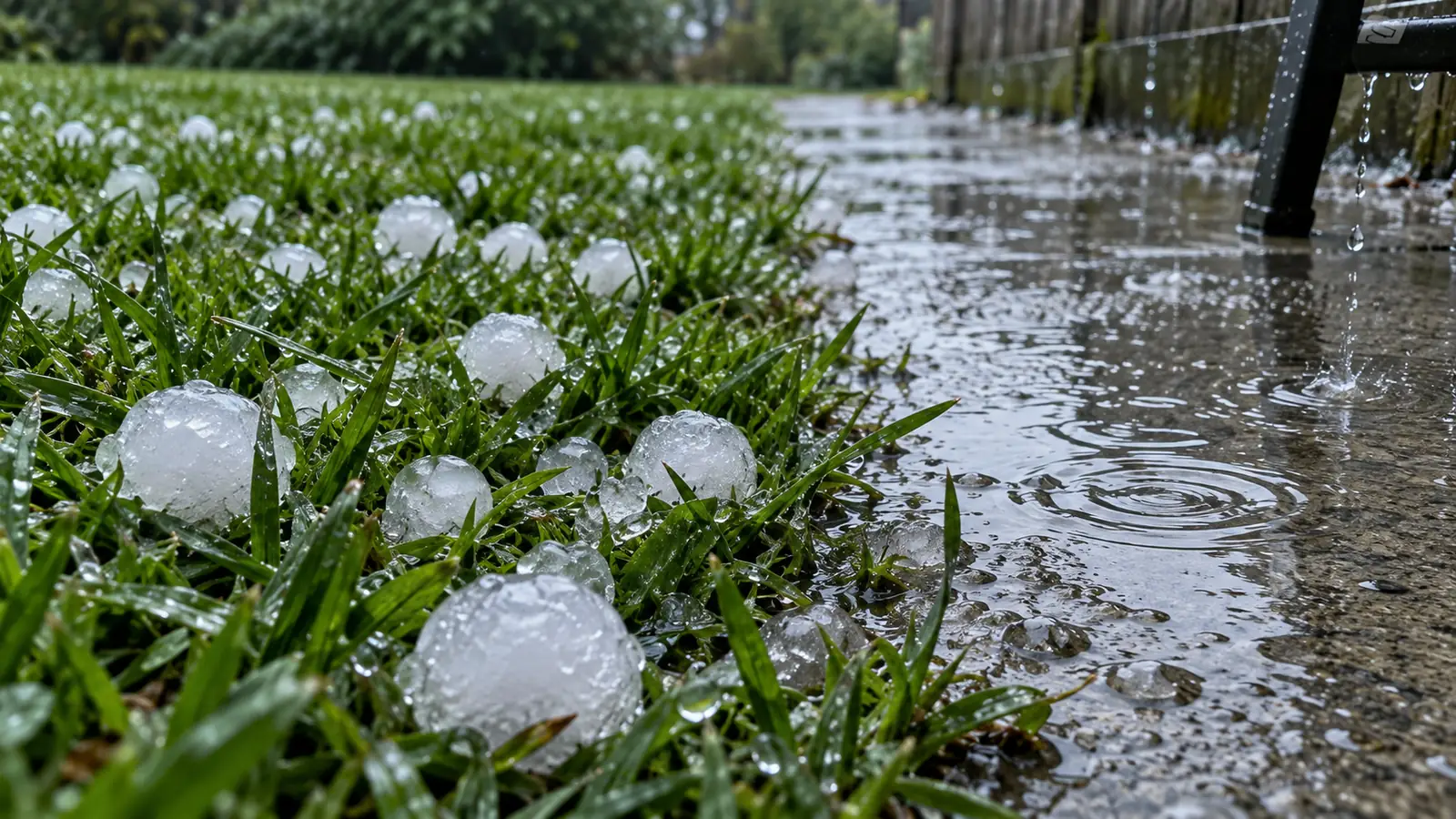
This is the part that surprises people. A thunderstorm is not classed as severe because it is loud, dark or torrential. The National Weather Service uses a threshold: wind gusts of at least 58 mph, hail at least one inch in diameter, or a tornado.
Heavy rain alone does not qualify, no matter how much of it falls. That's why you can be sitting under a genuinely alarming downpour with no warning in effect — and, more importantly, why a storm that looks unremarkable can be warned.
One inch is a quarter coin. That is enough to break windscreens, dent roofs and strip cladding. And 58 mph is enough to bring down limbs onto cars and power lines, which is how most severe thunderstorm damage actually arrives.
The severe thunderstorm watch meaning follows from the same threshold: conditions are favourable for storms that reach it, over a broad area, for several hours.
The Damage Tags Almost Nobody Explains
Since 2021 the National Weather Service has attached a damage threat category to severe thunderstorm warnings, and it is the most useful thing on the alert.
| Tag | Threshold | Phone alert? |
|---|---|---|
| Base — no tag | 58 mph winds and/or 1 inch hail | No |
| Considerable | 70 mph winds and/or 1.75 inch hail — golf ball | No |
| Destructive | 80 mph winds and/or 2.75 inch hail — baseball | Yes — wireless emergency alert |
The practical consequence is worth stating plainly: most severe thunderstorm warnings do not reach your phone. Only the destructive category triggers a wireless emergency alert. If you rely entirely on phone notifications, you will miss the majority of them — which is the argument for a weather radio, covered in NOAA Weather Radios.
What to Do With Each
During a watch: bring in anything that becomes a projectile — garden furniture, bins, trampolines, the parasol. Park away from trees if you can. Charge phones. Then carry on, paying attention.
During a warning: go inside a substantial building, move away from windows, and stay there until it passes. Interior rooms are better. If there's a tornado risk in the same system, go to the room you'd use anyway — Tornado Preparedness.
If you're driving, the useful move is to get out of the vehicle's exposure rather than to keep going. Hail does not care how good your tyres are, and a parked car under a tree is a worse bet than a parked car in the open.
How today's outlook is built, and how to read the probabilities before any of this is issued, is in Tornado Tracker & Live Map. The wider kit for storm season is in Storm Preparedness & Kits.
Learn the threshold — 58 mph, one inch — and the word "destructive". Those two facts change how you read every alert you get from now on.
FAQ: Severe Thunderstorm Watch vs Warning
What is the difference between a severe thunderstorm watch and warning?
A watch means conditions favour severe storms across a wide area for several hours. A warning means a storm has met the criteria and is affecting a specific small area now.
What makes a thunderstorm "severe"?
Wind gusts of at least 58 mph, hail of at least one inch in diameter, or a tornado. Heavy rain alone does not qualify however intense it is.
Will my phone alert me?
Only for warnings tagged destructive — 80 mph winds or 2.75 inch hail. Base and considerable warnings do not trigger a wireless emergency alert, so most of them never reach your phone.
What do "considerable" and "destructive" mean?
Damage threat categories the NWS attaches to warnings. Considerable is 70 mph or 1.75 inch hail; destructive is 80 mph or 2.75 inch hail and triggers a phone alert.
Can a severe thunderstorm produce a tornado?
Yes, sometimes without a separate tornado warning being issued first. That is one reason to take the severe warning seriously rather than waiting for an upgrade.
Is it safe to drive through one?
Preferably not. Hail, sudden crosswinds and falling limbs are the immediate hazards, and flooded roads are the one that actually kills people. Never drive into standing water.
Sources
- National Weather Service — severe thunderstorm warning criteria and damage threat categories
- National Weather Service — "Destructive" severe thunderstorm warnings and wireless emergency alerts
- NOAA Storm Prediction Center — severe thunderstorm watch issuance
- Ready.gov — thunderstorm and lightning safety
This page is general information. When a warning is active or an emergency is underway, follow local authorities, National Weather Service alerts and emergency services before any general guidance. See our Editorial Policy and Sources & Fact-Checking.