
Storm preparedness is mostly about two things that happen at different speeds: the hour before the wind arrives, and the three days afterwards when the power is off and a tree is lying across the drive.
Most guides cover the first and skip the second, which is backwards — the outage and the clean-up are what households actually experience.
How We Chose
We haven't tested storm kits as products, and this page doesn't rank them. What it does is separate the items that genuinely change a three-day outage from the ones that fill a box, using National Weather Service and Ready.gov guidance plus the failure patterns that recur after every widespread outage: dead phones, no light, no information, and nobody knowing where the water shut-off is.
Where a household already owns a general emergency kit, this is an add-on list rather than a replacement — which is cheaper and more likely to actually happen.
The Storm Preparedness Kit, Honestly
A storm preparedness kit is not its own category. It is the standard household kit with a wind-and-outage layer on top. Start with Emergency & Survival Kits or 72-Hour Kits and add only these.
Light that isn't your phone. A lantern for the room and a torch per person. The phone is your communications, not your lighting — see Emergency Lighting & Lanterns.
A way to be told. Most severe thunderstorm warnings never reach your phone, and cell sites fail. A weather radio covers both gaps — NOAA Weather Radios.
A way to charge. Power banks, charged. A car charger. Enough to keep one phone alive for three days, not to run a household.
Water, and a way to store more. Well pumps stop with the power. Filling the bath before a forecast storm costs nothing.
Food that needs no cooking. The stove may be out and the barbecue is outside-only, always.
Cash in small notes. Card terminals go down with the network.
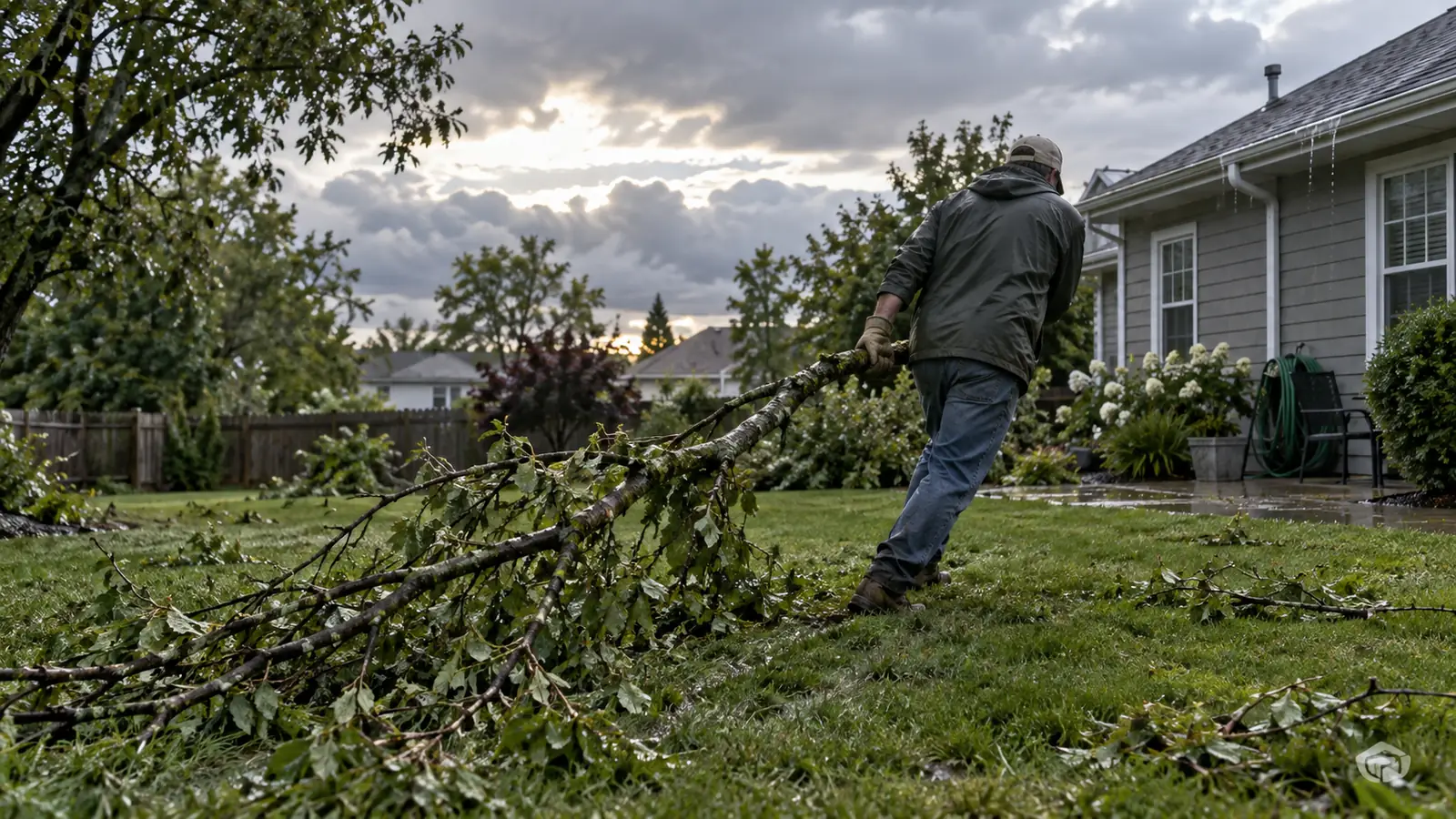
Work gloves and sturdy shoes by the door, for the clean-up rather than the storm.
The storm preparedness checklist that matters most is short enough to do in ten minutes when a watch is issued: bring in the garden furniture, bins and trampoline; park away from trees and out from under branches; charge everything; fill the bath; and put shoes and a torch in the interior room.
Afterwards: the Part Nobody Plans For
The storm ends and the actual work starts. Three things, in order.
Check for hazards before anything else. Lines down, gas smell, water near electrics, anything resting on the structure. If a line is down, stay well back and call the utility — not the fire service unless something is burning.
Photograph everything before you move it. Wide shots and close-ups, including the serial numbers of anything ruined. Insurers ask for pre-cleanup images and households almost never have them. Keep the receipts for anything you buy to make the place safe or habitable, because that's often reimbursable.
Then deal with the tree. And this is where the honest advice is to stop.
Storm damage tree removal is not ordinary tree work. A limb held under tension releases unpredictably when cut, a trunk leaning on a roof is carrying load you can't see, and anything within reach of a power line is out of bounds entirely. Chainsaw injuries spike after every major storm, and they happen to competent people doing something they've done a hundred times in normal conditions.
For emergency tree removal, use a company that is insured and can prove it, and ask for the certificate rather than a verbal yes. Be direct about the line: any tree touching or near a power line is the utility's problem first, and a good contractor will tell you that themselves. Get the scope in writing — felling, cutting up, and hauling away are three different prices, and "removal" means different things to different firms.
Be wary of anyone who turns up unsolicited asking for cash up front. Storm-chasing contractors are a documented pattern after every major event, and the local firm with a two-week wait is usually the better outcome.
Longer outages, and what actually keeps a household running through one, are covered under Emergency Kits, Bags & Shelter.
Look up at your trees this weekend, and put a torch in the interior room. Those two do more than anything you can buy.
FAQ: Storm Preparedness & Kits
What should be in a storm kit?
Your general emergency kit plus lighting that isn't a phone, a weather radio, charged power banks, extra water, no-cook food, small cash and work gloves. It's an add-on layer, not a separate kit.
What should I do in the hour before a storm?
Bring in anything that can fly, park away from trees, charge everything, fill the bath, and put shoes and a torch in your interior room. Ten minutes covers it.
Can I run a generator in the garage?
No, and not near a window or door either. Carbon monoxide is odourless and kills quickly. Generators run outdoors, well away from the building.
Should I clear a fallen tree myself?
Not if it's under tension, resting on a structure, or anywhere near a power line. Storm-damaged trees behave differently from healthy ones, and chainsaw injuries spike after every major storm.
How do I choose a tree removal company after a storm?
Ask for proof of insurance rather than a verbal assurance, get the scope in writing — felling, cutting up and hauling are priced separately — and be cautious with anyone arriving unsolicited wanting cash up front.
What does my insurer need?
Photographs taken before you clear anything, wide and close, plus receipts for whatever you spend making the property safe or habitable. Most households clear first and photograph second.
Sources
- National Weather Service — severe thunderstorm and wind safety guidance
- Ready.gov — thunderstorms, power outages and post-storm safety
- CDC — carbon monoxide and generator safety
- CDC / NIOSH — chainsaw and storm clean-up hazards
This page is general information and not insurance or contracting advice. When a warning is active or an emergency is underway, follow local authorities, National Weather Service alerts and emergency services before any general guidance. See our Editorial Policy and Sources & Fact-Checking.