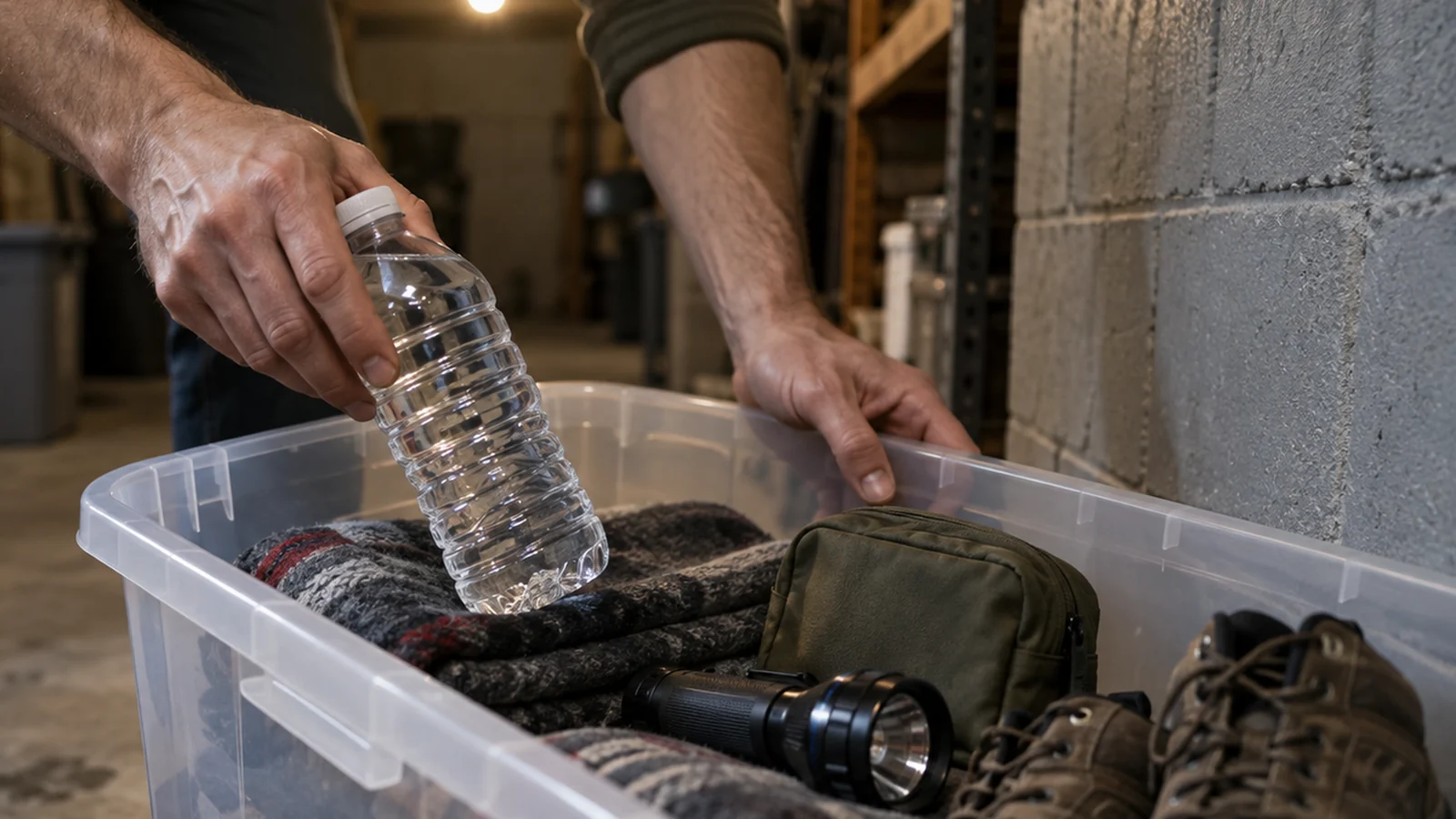

Tornado shelter supplies are a short list, and the shortness is the point. You are not living down there. You are spending somewhere between ten minutes and a few hours in a small space, and then dealing with whatever is on the other side of the door.
That second part is what most lists forget, and it's where the useful items are.
The List That Stays in There
Everything below lives in the shelter permanently. Anything you plan to carry in during a warning is something you will not have.
Sturdy shoes for every person. The single most regretted omission. What's on the floor afterwards is glass and nails, and people shelter in whatever they were wearing, which at 2am is nothing.
Head protection. Bike, sports or work helmets. The cheapest meaningful safety item on this whole site, and the one most households already own without thinking to put it there.
A torch per person, plus a spare set of batteries. Head torches are better because they leave hands free. Nothing with a flame.
A whistle per person. Weightless, needs no power, and carries through debris. Buy the plastic ones; metal ones freeze to lips in cold.
Water. Sealed bottles, rotated annually. A few litres, not a stockpile.
A small first aid kit that stays put — see First Aid Kits for what makes one worth having.
A weather radio or a charged power bank. You want to know when the warning has ended without opening the door to check.
Blankets. Concrete is cold, shock makes people colder, and a blanket over the head is also debris protection.
What People Forget
A storm shelter supplies list written by someone who has never used one tends to be heavy on food and light on the things that actually come up.
Medication. A few days of anything anyone genuinely can't skip, plus a written list of what the household takes. If a pharmacy is shut afterwards, the written list is what gets it replaced. Emergency Documents covers the wider version.
Something for the children. A shelter is dark, loud and frightening. One familiar object per child, kept there, does more good than an extra litre of water.
A phone charger that fits. Not the good one from your bedside — a spare that lives in the shelter and never leaves.
Toilet provision. Unglamorous and occasionally necessary. A bucket with a lid and a few bags covers it.
Work gloves. For the door and for whatever you move afterwards.
A pet carrier or lead. Frightened animals bolt, and a loose dog outside after a storm is a second emergency.
Keeping It Alive
A shelter supply store has one enemy, and it isn't cost. It's the household raiding it. The torch migrates to the kitchen drawer, the batteries go into a toy, and nobody notices until the night it matters.
Two habits fix that. Don't store anything you'll want for normal life — buy the cheap duplicate and leave it there. And check it once a year, on a date tied to something you already do, ideally in the month before your regional peak. When that is, is in Tornado Season.
The annual check is short: water in date, batteries fresh, shoes still fitting the children, medication current. Write the date on the lid of the box so the check takes a glance.
This page is about what goes inside. Choosing the shelter itself, what it costs and who installs it, is in Tornado Shelters. If you don't have one, the interior-room version works the same way — Tornado Preparedness.
Print the list, put shoes in the shelter tonight, and set the annual check. That's the whole job.
FAQ: Tornado Shelter Supplies
What should I keep in a tornado shelter?
Shoes, head protection, a torch and whistle per person, water, a small first aid kit, blankets, a weather radio or power bank, medication and a written medication list. Nothing that burns.
How much water do I need?
A few litres in sealed bottles, rotated yearly. This is a short stay, not a siege — the longer-term supply belongs with the household kit, not in the shelter.
Why no candles or camping stoves?
A shelter is a small sealed space. Anything burning produces carbon monoxide, which is odourless and kills before it's noticed. Battery light only.
What's the most forgotten item?
Shoes. People shelter in whatever they were wearing, and the floor afterwards is broken glass. A whistle is a close second.
How often should I check the supplies?
Once a year, ideally in the month before your region's peak. Check water dates, batteries, children's shoe sizes and medication, then write the date on the box.
Is the printable list free?
Yes. No email address, no account, nothing bundled. Every printable on this site works the same way.
Sources
- FEMA — safe room occupancy and sheltering guidance
- National Weather Service — tornado safety recommendations
- CDC — carbon monoxide poisoning prevention in enclosed spaces
- Ready.gov — emergency supply guidance
This page is general information. When a warning is active or an emergency is underway, follow local authorities, National Weather Service alerts and emergency services before any general guidance. See our Editorial Policy and Sources & Fact-Checking.