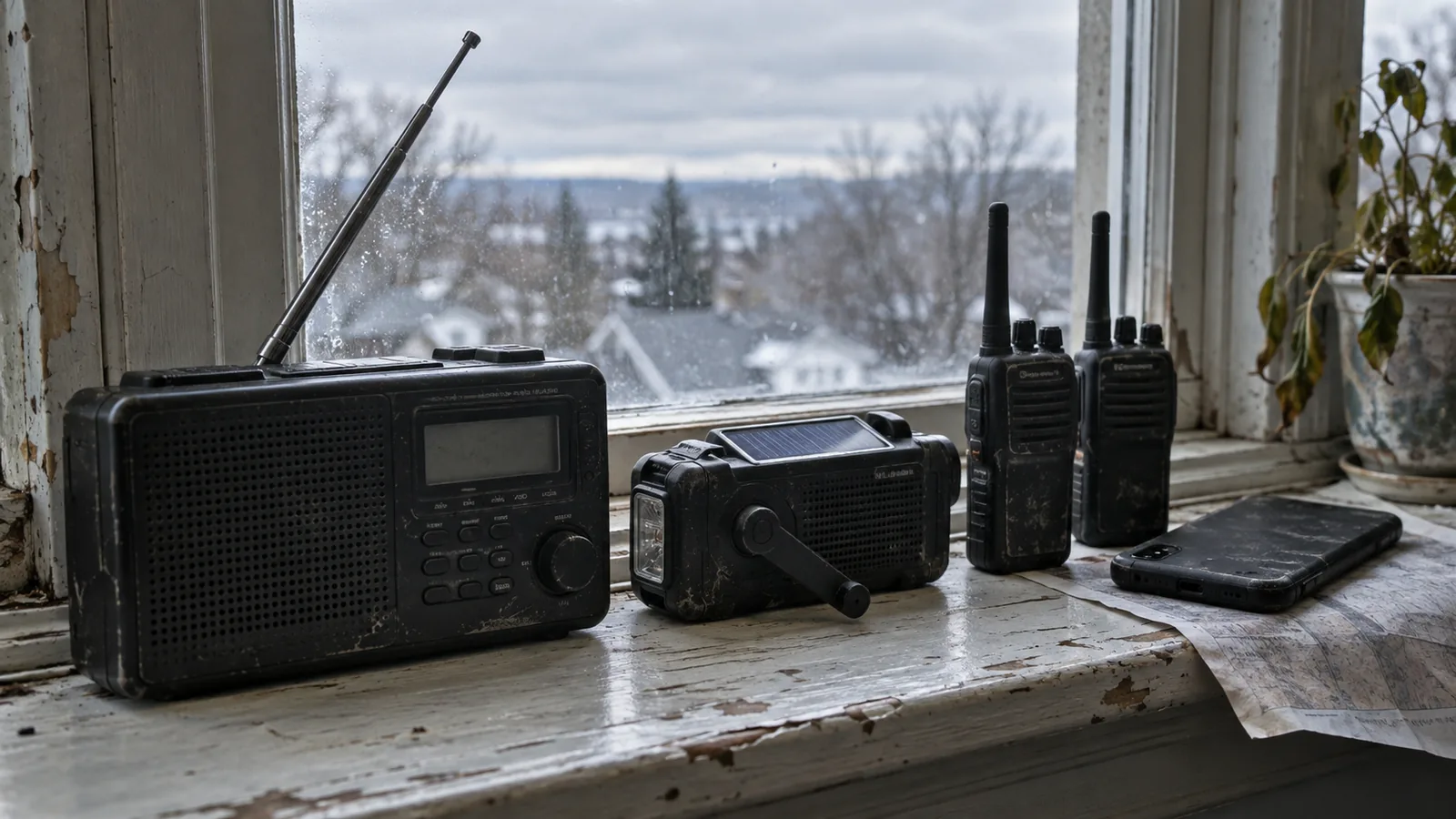

Nine guides live here, and they exist because every way of being warned fails differently. Phone alerts need a cell site. Internet alerts need power. A weather radio needs neither, but it needs batteries.
That's the whole argument for layers. Pick one channel and you've picked its failure mode too.
Alerts: What Reaches You Without Asking
Three systems carry emergency alerts to a household, and only one enrols you automatically. That one covers imminent threats and nothing else — no road closures, no boil-water notices, no shelter openings.
Wireless Emergency Alerts explains the automatic layer, including which categories you can switch off and the Android crash loop nobody documents properly. Emergency Alerts in My Area covers the county signup almost nobody has. Emergency Alert Apps is the honest answer to whether you need one at all.
Radios That Receive
A receiver is the layer that survives the cell network going down, and the two kinds do genuinely different jobs.
A NOAA weather radio is a home alerting appliance: it sits silent for months, then wakes you at 3am because a warning was issued for your county. A crank and solar radio is the one that leaves the house — it always turns on, and it barely charges a phone. The frequency chart is the printable that goes next to whichever you own.
Radios That Transmit
Talking back is a different problem, and the honest version is unflattering: a two-way radio advertised at thirty-five miles reaches the end of the street, and nothing on those channels is monitored for you.
Within a few hundred metres they're genuinely useful, and they keep working when towers are congested. Beyond coverage entirely, a satellite messenger is the only thing that reaches anyone — and the subscription matters more than the hardware.
TWO-WAY RADIO
Talking to people nearby when the network is gone. Cheap, licence-free, and nobody official is listening.
SATELLITE MESSENGER
Reaching rescue from beyond all coverage. Needs a subscription, and the SOS goes to a real coordination centre.
Light, Because It's the Same Outage
Lighting sits here rather than with the kits, because the event that takes your radio is the event that takes your lights, and both are decided by the same thing: how the device gets its power on night three.
Every lantern on the shelf is bright enough. What separates them is whether they're battery, rechargeable, crank or solar — and whether the one you own is the one that's flat.
If you only do one thing after reading this page: check your alert settings, then put a receiver that doesn't need a cell tower somewhere you sleep.
Sources
- FEMA — IPAWS and Wireless Emergency Alerts
- NOAA / National Weather Service — NOAA Weather Radio frequencies, coverage and SAME codes
- FCC — FRS, GMRS and MURS rules, licensing and fees
- Manufacturer specifications and published field testing, checked September 2026
This page is general information. When a warning is active or an emergency is underway, follow local authorities, National Weather Service alerts and emergency services before any general guidance. See our Editorial Policy and Sources & Fact-Checking.